Mayday Flowers
The Garden in Winter
Winter is the season when the garden shows its bones and the gardener finally has time to think. There are more flowers than most people expect, a windowsill full of forced bulbs to look after, and a short list of outdoor jobs that are far easier now than in the rush of spring.
Structure, seed heads and stems
From late November until the bulbs push through, a flower garden is mostly line and texture. The beds that look best in January are not the tidiest ones. They are the ones where somebody decided in October to leave the strong stems standing and only cut down what turns to mush.
The plants worth leaving are those with stiff stems and a defined seed head. Coneflowers (Echinacea and Rudbeckia) keep their dark domes for months. The whorled seed heads of Phlomis russeliana stack up the stems like little brown pagodas. Stonecrops (Hylotelephium, the old border sedums) turn the colour of milk chocolate and hold a cap of snow beautifully. Sea hollies, globe thistles, alliums, teasels and the papery moons of honesty all earn their place. Among the grasses, the upright feather reed grass (Calamagrostis) and most forms of Miscanthus stand through all but the heaviest snow, and they move in the wind when nothing else does.

Coloured stems
Coloured stems are the other winter trick. Red and yellow stemmed dogwoods (Cornus alba and Cornus sericea types) glow when low sun comes through them, and the white-washed stems of the ghost bramble look almost luminous at dusk. The colour is strongest on young wood, which is why these shrubs are cut hard in early spring. Birch bark, especially the white Himalayan birch, does the same job at a larger scale.
Snowdrops, aconites and hellebores
The small winter flowers are the ones that make people go out in boots to look. They open in short spells of mild weather, close up again in the cold, and somehow survive being frozen solid night after night.
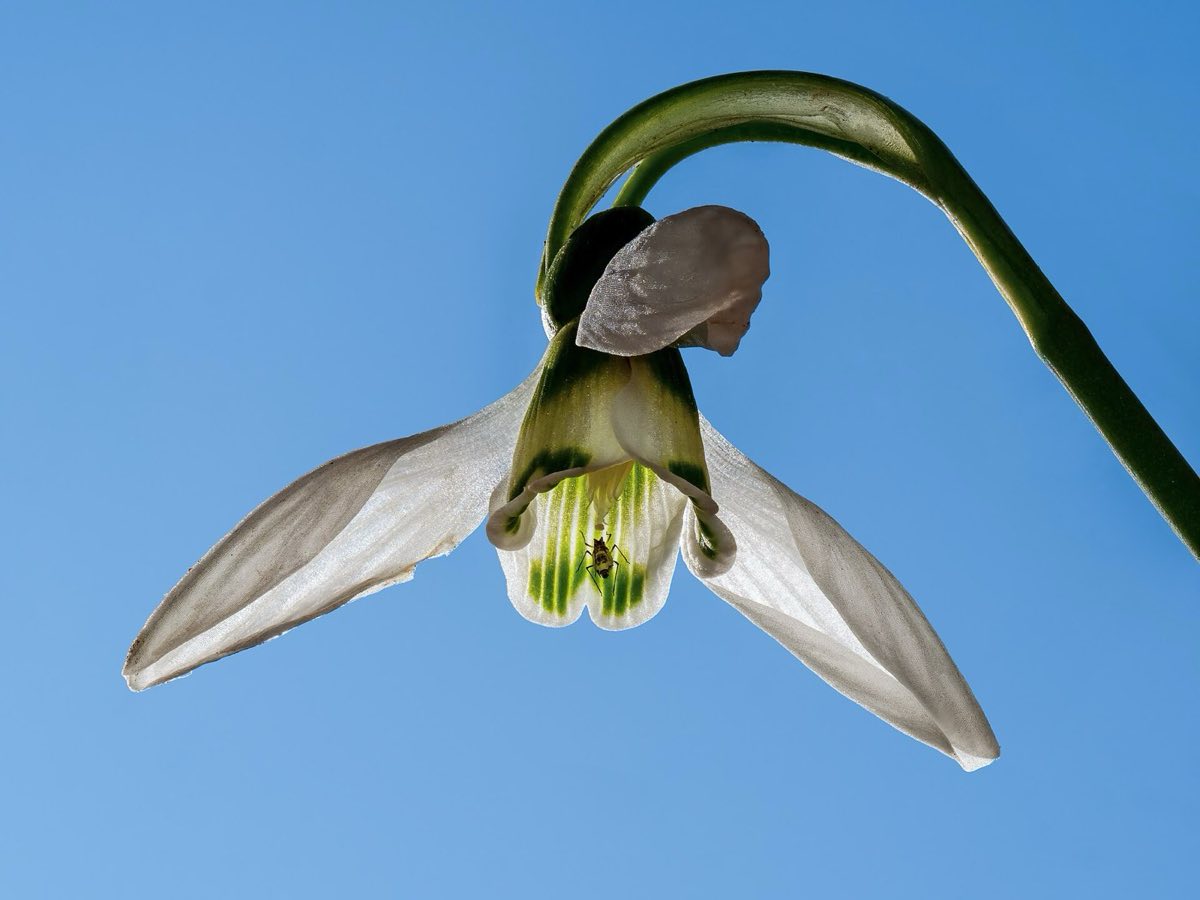
Common snowdrop Galanthus nivalis
Flowers: late January to March. Height: 10 to 15 cm.
Nodding white flowers with three outer petals and a shorter green-marked inner cup. They prefer soil that stays slightly moist in summer, under deciduous shrubs or at the edge of a lawn. Dry bulbs bought in autumn often fail, so the reliable way to establish them is to plant clumps "in the green", just after flowering while the leaves are still up. Divide congested clumps at the same time, replanting at the same depth as before.
Winter aconite Eranthis hyemalis
Flowers: February to March. Height: 5 to 10 cm.
Bright buttercup yellow cups, each sitting on a ruff of green leafy bracts. They open only when the sun is on them. Aconites like the same conditions as snowdrops and do well on chalky soils. The small tubers dry out easily, so soak them overnight before planting in autumn, or better, move them in the green. Once settled they seed around and form a yellow carpet under trees.
Christmas rose Helleborus niger
Flowers: December to March. Height: 20 to 30 cm.
Wide, pure white saucers that often age to pink, held low over dark leathery leaves. More particular than its cousins: it wants humus-rich soil that does not dry out, some shade in summer and protection from slugs. Flowers splashed with soil after heavy rain can be kept clean with a layer of leaf mould around the plant.
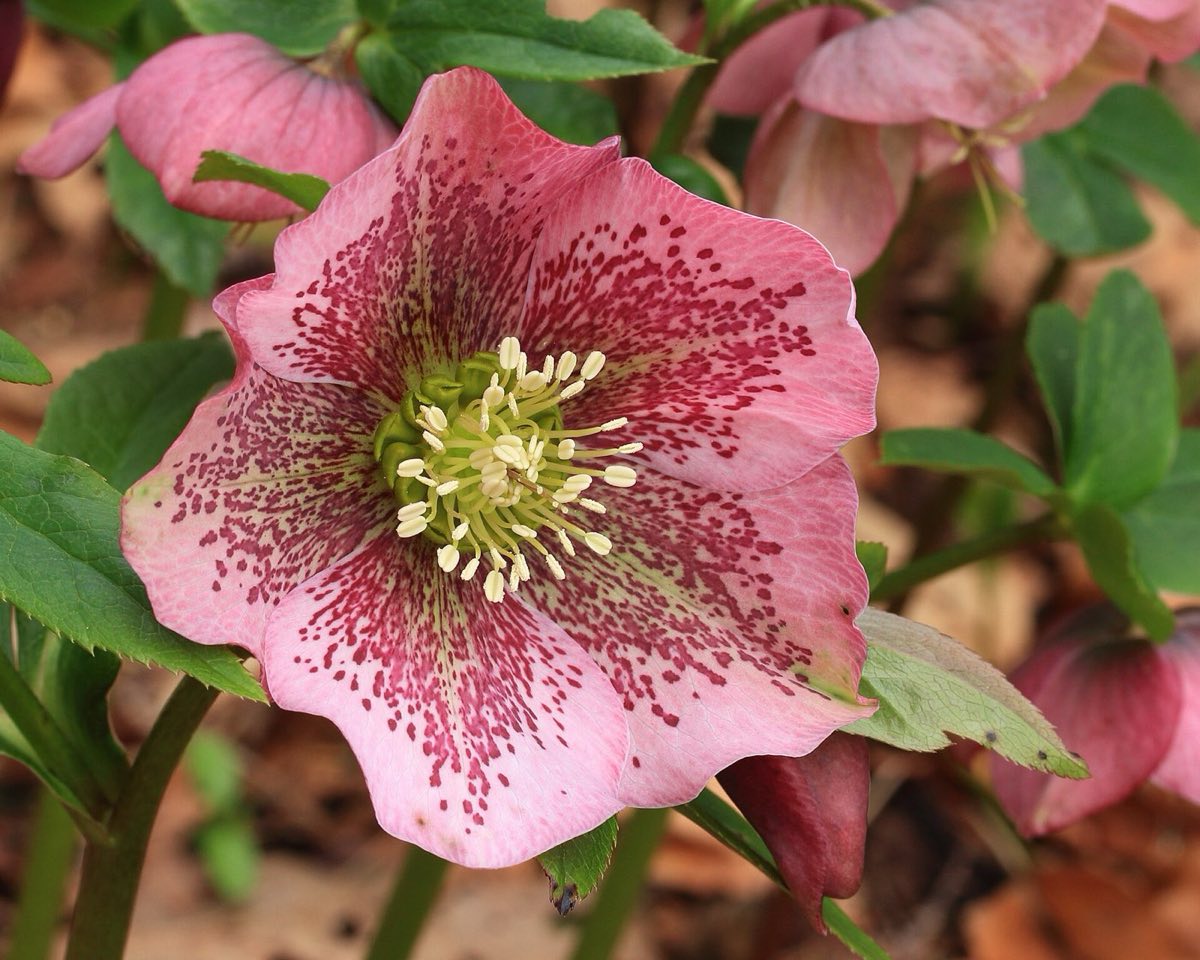
Lenten rose Helleborus × hybridus
Flowers: February to April. Height: 30 to 45 cm.
The garden hellebores, with outward or downward facing flowers in white, cream, green, pink, slate and deep plum, plain or spotted, single or double. Very long-lived, happy in part shade on most soils, and inclined to seed about. Seedlings are variable, which is half the fun. All parts are poisonous and the sap can irritate skin, so wear gloves when cutting.
Cutting back hellebore leaves
The old leaves of Lenten roses tend to flop over the emerging flower buds in midwinter, and they are often marked with black blotches of hellebore leaf spot. Cutting every old leaf off at the base in December or January does two things at once: the flowers are shown off properly, and the main source of the fungus is removed before the new leaves arrive. Bin or burn the cut leaves rather than composting them.
Do not do this with the stemmed hellebores such as Helleborus foetidus or H. argutifolius, which carry their flowers on top of leafy stems. Those are tidied after flowering by cutting the spent stems out at the base.
Scented winter shrubs
Winter shrubs flower when there are very few insects about, and many of them make up for it with scent that carries a surprising distance on still, cold air. Place them near a path or the back door so you walk past them every day, because you will not go out of your way in sleet to smell them.
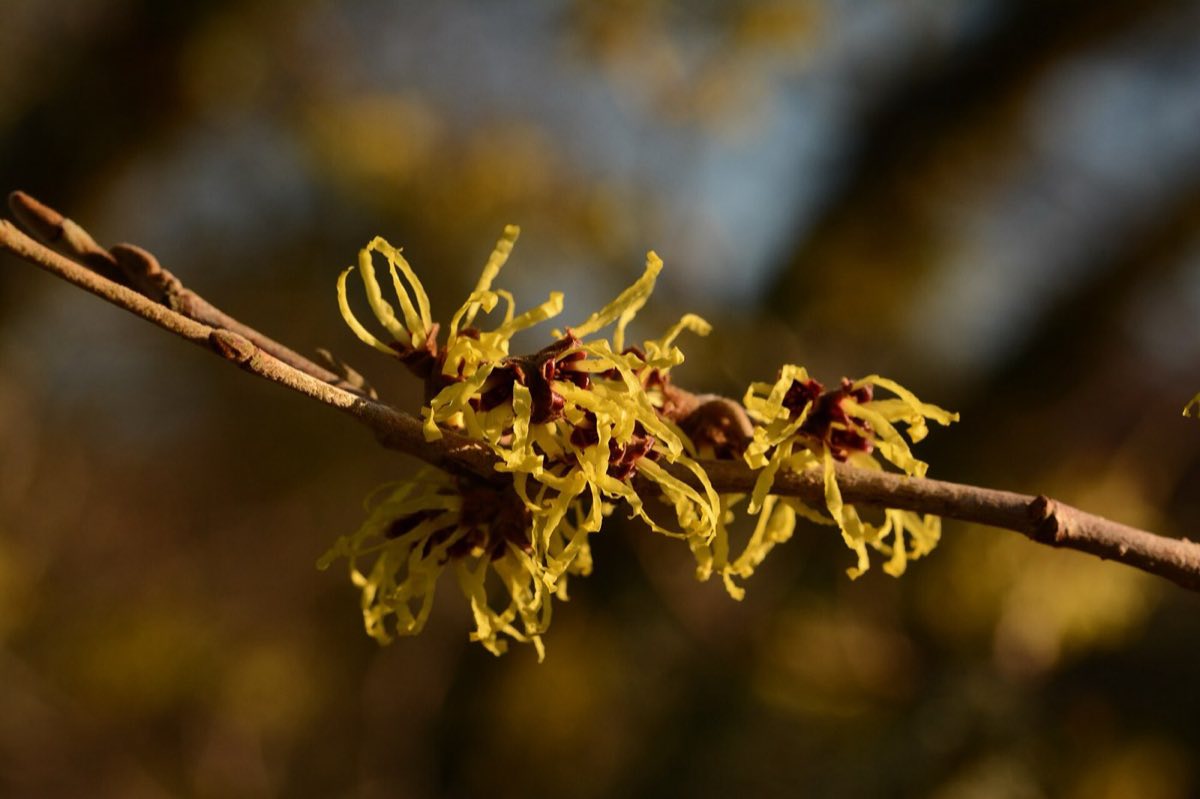
Witch hazel Hamamelis × intermedia and H. mollis
Flowers: January to March. Height: 2 to 4 m.
Clusters of narrow, crimped petals like strips of coloured paper along bare branches, in yellow, orange, copper or red. The yellow forms are usually the most strongly scented, a clean spicy sweetness. The petals curl up on frosty nights and unfurl again as it warms. Witch hazels want neutral to acid soil that stays moist, a sheltered spot and patience: they are slow and resent moving. Most are grafted, so remove any shoots that appear from below the graft. Prune very little, and only straight after flowering.
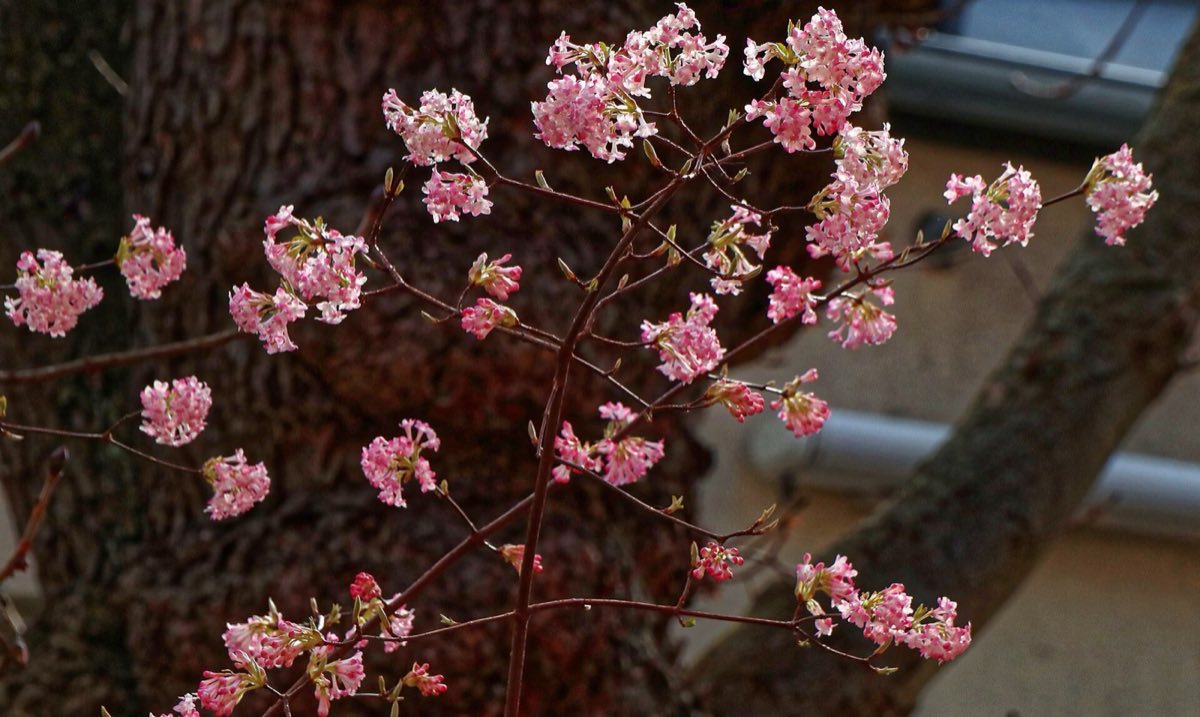
Winter flowering viburnum Viburnum × bodnantense
Flowers: November to March. Height: 2.5 to 3 m.
Tight clusters of pink buds opening to pale pink, very fragrant tubular flowers on upright bare stems. It flowers in flushes whenever the weather relents, so a cold snap browns the open flowers but more follow. Easy on any reasonable soil. Every few years after flowering, cut one or two of the oldest stems to the ground to keep it young and stop it becoming a thicket of bare legs.
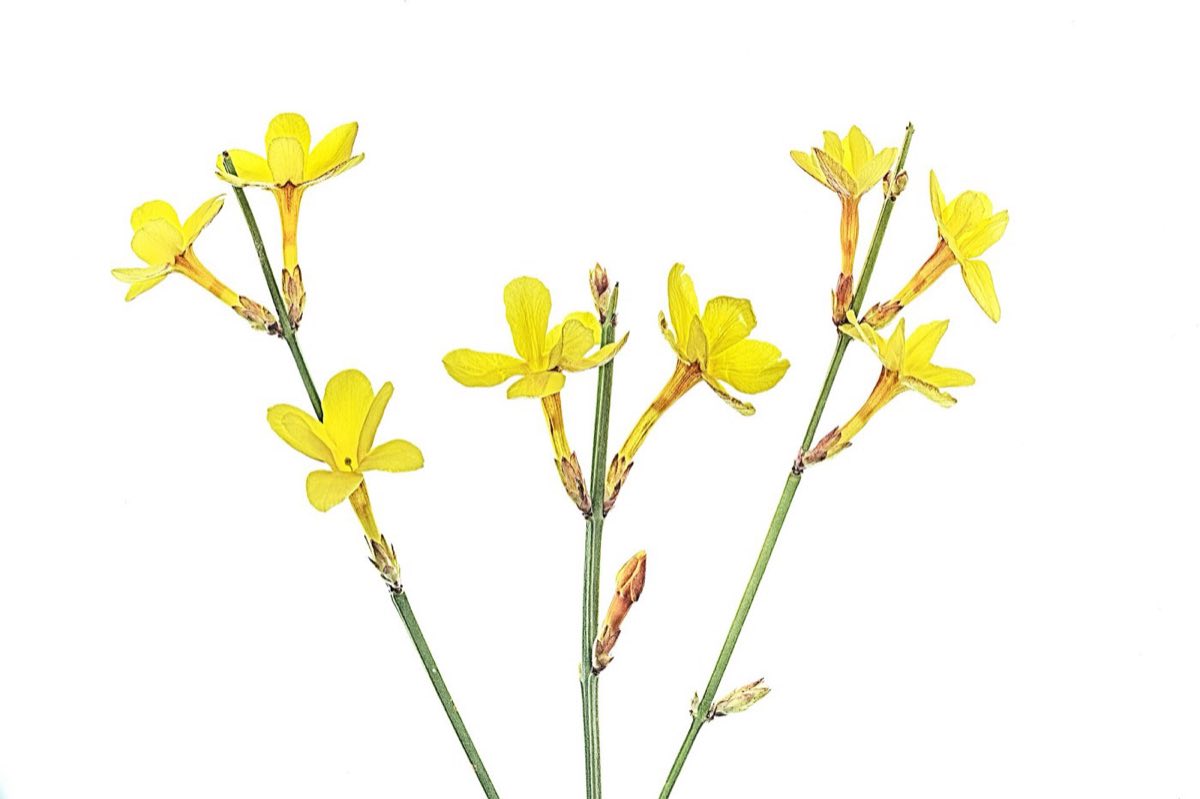
Winter jasmine Jasminum nudiflorum
Flowers: November to March. Height: up to 3 m against a support.
Bright yellow, unscented starry flowers along green, whippy stems. It is a lax, scrambling shrub rather than a true climber, so it needs tying in on a wall or trellis, or it can be allowed to tumble over a low wall. Stems root wherever they touch the ground. Prune straight after flowering, cutting the flowered shoots back to a strong pair of buds, and take out a few old stems at the base each year.
Forcing bulbs indoors
Forcing means persuading a bulb to flower weeks or months earlier than it would outdoors, by giving it a short artificial winter and then bringing it into warmth. Hyacinths, paperwhite narcissi and amaryllis are the classic three, and each needs slightly different handling.
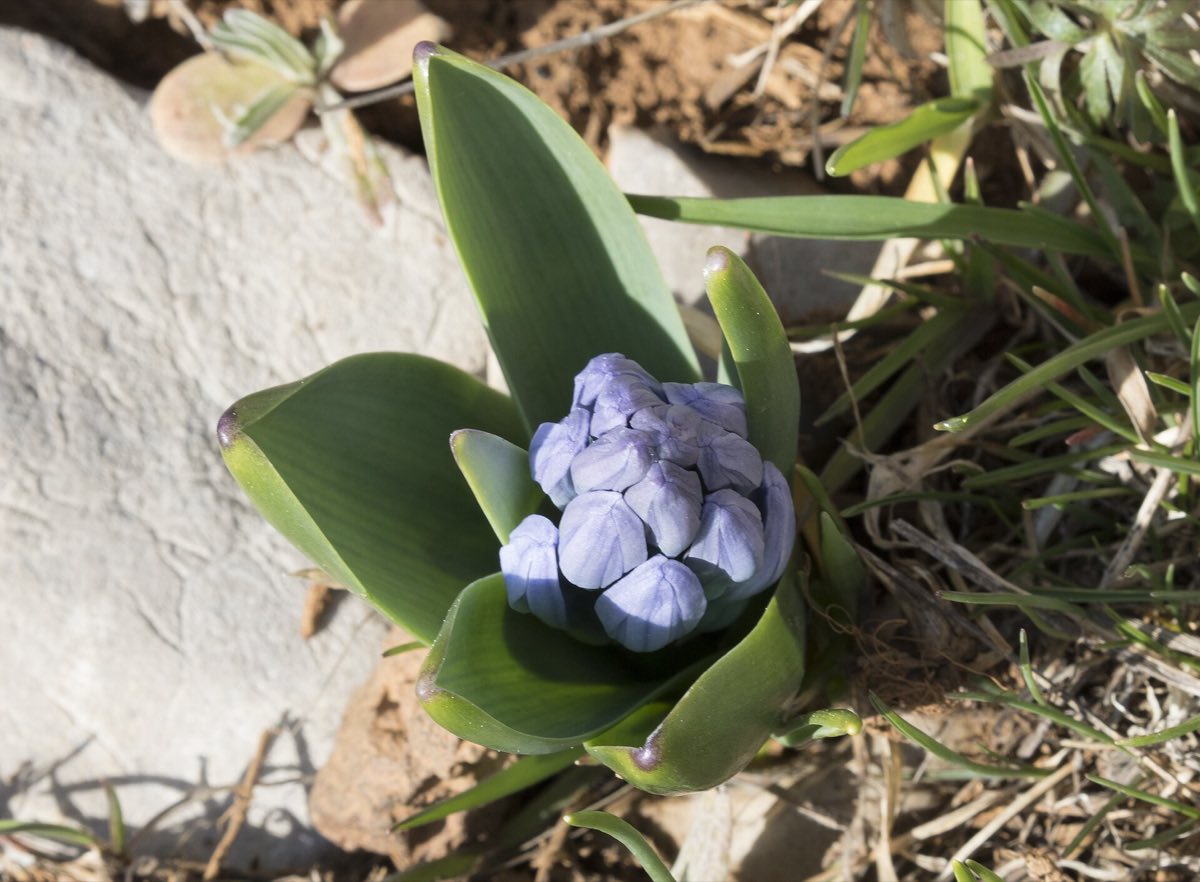
Hyacinths
For flowers at midwinter, buy bulbs sold as "prepared", which have been given a period of warm and then cool storage that shortens the time they need. Plant them in September or early October, either in bulb fibre or multipurpose compost with the tips just showing, or perched in a hyacinth glass with the water level a few millimetres below the base of the bulb. The bulb must never sit in water or it rots.
Then comes the part people skip. The pots or glasses need 10 to 12 weeks somewhere cool and dark, ideally around 5 to 9 °C: an unheated shed, a garage or a cold cellar. Check the compost occasionally and keep it just moist. Bring them out only when the shoots are 3 to 5 cm high and, in a glass, when the roots fill the bottom. Give them a few days in a cool, lightly shaded room before moving them into full light and warmth. Bulbs brought into a warm room too early produce short, stunted flowers jammed down among the leaves.
Paperwhites
Paperwhite narcissi are the easiest bulbs to force because they need no cold period at all. Set them shoulder to shoulder on a 5 cm layer of gravel or pebbles in a bowl without drainage holes, add more gravel to hold them upright, and pour in water until it just touches the base of the bulbs. They flower four to six weeks later, so planting a bowl every fortnight from early November gives flowers right through the winter.
The scent is strong and musky; some people love it and some cannot stay in the same room. In warm houses the stems stretch and flop. Keeping the bowl in a cool, bright place helps, and a long-used trick is to replace the water, once the shoots are about 5 cm tall, with a very weak alcohol solution of roughly one part clear spirit to seven parts water. It shortens the stems noticeably without harming the flowers. Paperwhites are not hardy in a cold-winter garden and are usually discarded afterwards.
Amaryllis
The big trumpet bulbs sold as amaryllis are Hippeastrum, from South America, and they behave quite differently from hardy bulbs. Choose a heavy pot only 2 to 3 cm wider than the bulb, plant with the top third of the bulb above the compost, and water once to settle it. Then keep the compost barely moist in a warm room, around 20 °C, until the flower stem appears. Overwatering before there is growth is the main cause of rot. Flowers usually open six to ten weeks after planting.
Turn the pot every day or two so the stem grows straight. After flowering, cut the stalk off near the bulb but keep the leaves, and feed and water the plant through summer. In early autumn stop watering, let the leaves die back and keep the bulb dry and cool for eight to ten weeks before starting it again. A well-fed bulb flowers every year.
| Bulb | Cold period | Weeks to flower after bringing into warmth | Plant for midwinter flowers |
|---|---|---|---|
| Prepared hyacinth | 10 to 12 weeks at 5 to 9 °C | 3 to 4 | September to early October |
| Paperwhite narcissus | None | 4 to 6 from planting | Late November |
| Amaryllis | None (dry rest after the previous season) | 6 to 10 from planting | October to November |
| Crocus, small irises, grape hyacinth | 12 to 15 weeks cold | 2 to 3 | September to October |
Flowering houseplants
A few houseplants are at their best in the darkest months. Most of them dislike the same things: dry air, radiators, draughts and wet roots. The common thread is that they prefer a cooler room than people do.
- Christmas cactus (Schlumbergera). A forest cactus, not a desert one, so it likes moderate watering and bright indirect light. Buds form in response to short days and cool nights in autumn. Once buds appear, avoid moving the plant or letting it dry out, or it drops them.
- Florist's cyclamen (Cyclamen persicum). Lasts for months in a cool, bright room at 10 to 15 °C and collapses within weeks in a warm one. Water from below by standing the pot in a saucer for twenty minutes, so the crown of the tuber stays dry. Pull off spent flowers and yellow leaves with a sharp twist at the base.
- Poinsettia (Euphorbia pulcherrima). The coloured parts are bracts; the true flowers are the small yellow knobs in the centre. Keep it away from cold draughts on the way home and in the house, and water only when the surface of the compost feels dry.
- Moth orchid (Phalaenopsis). Flowers for two or three months. Water by soaking the pot for ten minutes once a week or so, then let it drain completely. After flowering, cutting the stem just above a node often produces a side spike.
Planning and ordering seeds
The best garden plans are written in January with cold feet and a pencil. Walk the garden, or look through last summer's photographs, and write down three lists: what worked and should be repeated, what failed and why, and the gaps where nothing was in flower.
Checking old seed
Before ordering, go through the seed tin. Many flower seeds stay viable for several years if kept cool and dry, but some lose vigour quickly. Delphiniums, scabious and some members of the daisy family are best sown fresh, while sweet peas, nasturtiums, cosmos and zinnias usually keep for three years or more. If you are unsure, do a simple test: count ten seeds onto damp kitchen paper, fold it into a plastic bag and keep it somewhere warm. After a week or two, the number that sprout tells you the percentage you can expect. Fewer than five out of ten means it is time for a fresh packet, or at least for sowing twice as thickly.
Making a sowing plan
A sowing plan is simply a list of what to sow, where and when, worked backwards from the expected last frost. In a garden where frosts run into late April, half-hardy annuals such as zinnias, cosmos and tagetes are sown indoors from late March to April, sweet peas in late autumn or in February, and hardy annuals directly outdoors in April. The month by month calendar sets out the timings, and seeds and propagation covers technique.
Every winter I write the same note on the first page: sow less, sow later, label everything. And every spring I sow too much, too early, and spend June trying to remember which tray was which.
Tool care
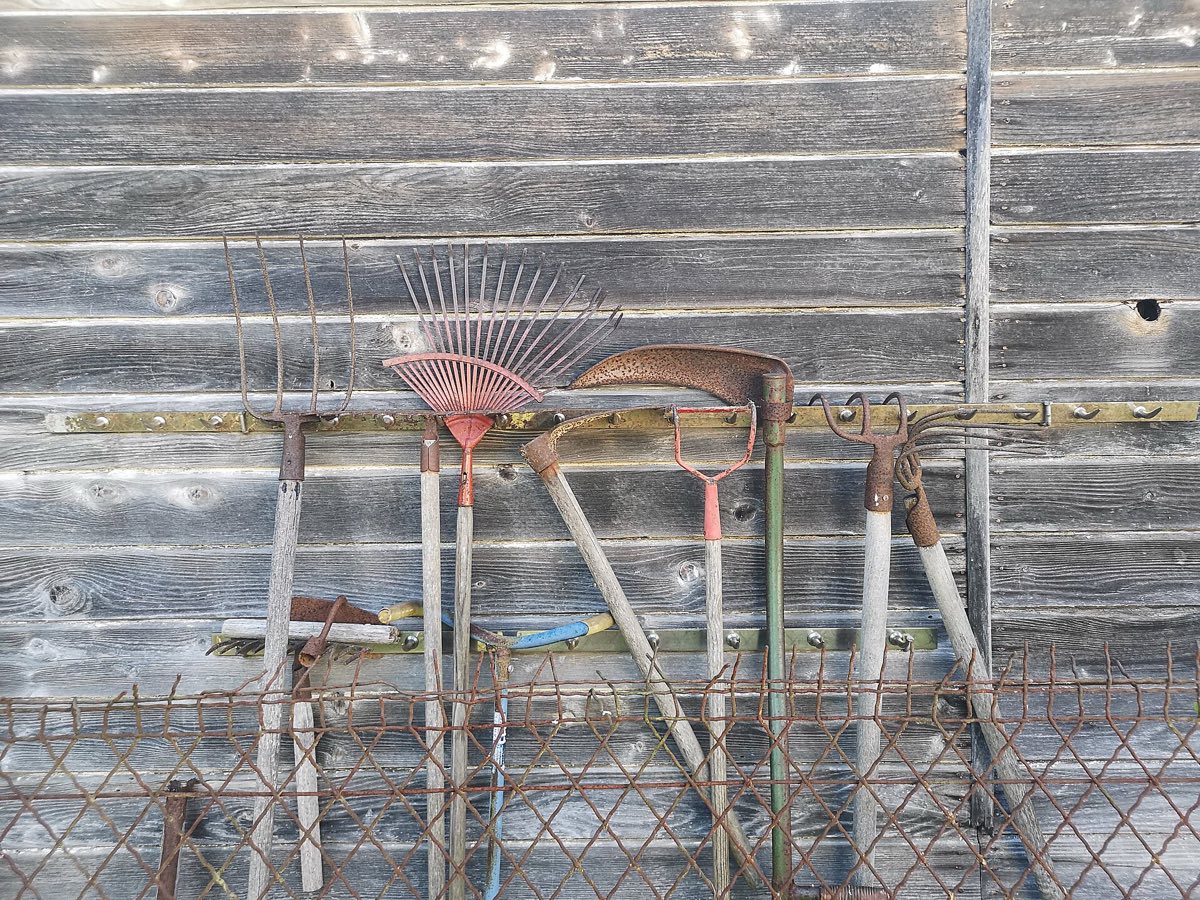
A wet afternoon in the shed with a radio is the right time to put tools in order. Good tools that are cleaned and sharpened last for decades; neglected ones rust, blunt and tear plant tissue, which lets disease in.
- Clean. Scrape dried soil off spades, forks and hoes with a stiff brush or a block of wood, then wash and dry them. Remove sap from secateur blades with a cloth and a little white spirit or a scouring pad.
- Sharpen. Secateurs are sharpened only on the bevelled side of the cutting blade, with a fine file or a diamond sharpener, keeping to the original angle. A few strokes on the flat side remove the burr. Spades and hoes take a file along the edge, enough to cut through roots rather than bounce off them.
- Oil. Wipe metal with a light oil. Rub wooden handles with linseed oil and let it soak in; it keeps the wood from drying, cracking and giving splinters.
While you are in the shed, wash and stack pots and seed trays for spring, and drain hoses before they split. Clay pots left outdoors full of wet compost are the ones that crack; store them dry and upside down.
Protecting plants from frost
Plants that are hardy in your climate do not need wrapping. It is worth remembering this, because a great deal of winter protection is done to plants that would have been fine. Protection is for three groups: plants on the edge of hardiness, plants in pots, and plants that start into growth too early.
Plants in pots
A plant in the ground has a huge mass of soil around its roots that freezes slowly. The same plant in a pot has its roots exposed on every side, and they can freeze solid in a single cold night. Roots are far less hardy than stems. Group pots together against a house wall, raise them on pot feet so they drain freely, and wrap the pots themselves (not the plant) in hessian, bubble wrap or old blankets in the coldest spells. Glazed and thin terracotta pots crack when wet compost inside freezes and expands; well-made frostproof pots and good drainage reduce the risk.
Borderline plants
For perennials that are almost but not entirely hardy, such as penstemons, some salvias and agapanthus in cold gardens, the danger is cold combined with wet. A dry mulch of straw, bracken or leaves held in place with netting over the crown keeps it from freezing hard and stays airy. Do not use wet compost as a winter mulch over such plants. Tree ferns and cordylines are wrapped with fleece around a stuffing of straw, leaving the top open enough for air to move.
Fleece
Horticultural fleece gives a few degrees of protection, enough to save emerging shoots, early flowers or newly planted seedlings from a short frost. Use a heavier fleece of around 30 g per square metre for winter rather than the thin spring grade, and do not leave it wrapped tight for weeks over evergreens: they need light and air. Take it off on mild days.
Frost heave and frosted lawns
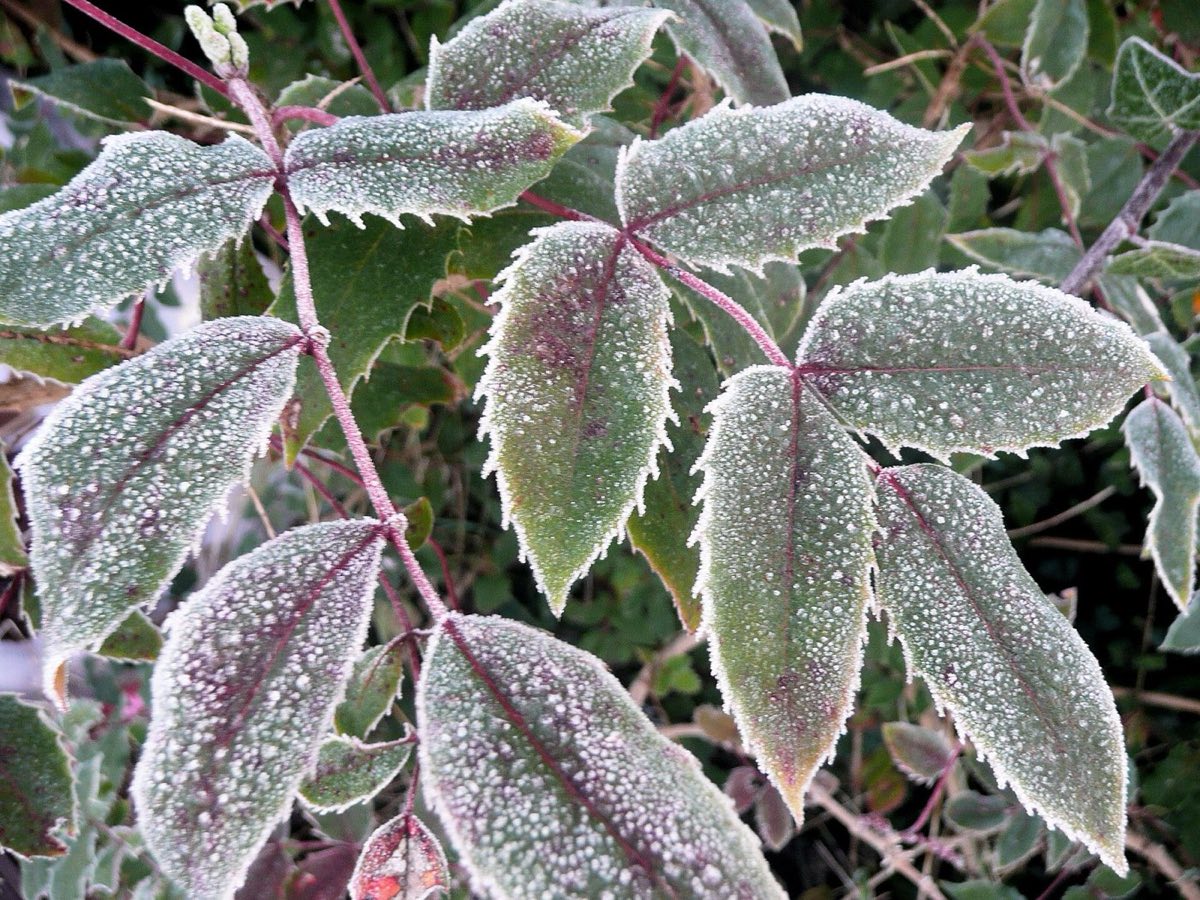
Repeated freezing and thawing lifts small and recently planted plants out of the ground, leaving their roots exposed. After a thaw, walk round and firm them back in gently with your heel or fingers. Autumn-planted perennials and young shrubs are the most likely to suffer.
Keep off frosted lawns. Walking on frozen grass breaks the cells of the leaf blades, and the footprints turn brown and stay visible for weeks. The same applies to soil: digging or treading on wet, frozen beds destroys structure that takes months to recover.
Snow, wind and wet
A blanket of snow is more friend than enemy. It insulates the soil beneath, keeping roots and bulbs at a steady temperature just below or around freezing while the air above drops much lower. Leave snow lying on beds and borders.
The damage comes from weight. Wet snow piling up on evergreen hedges, conifers and multi-stemmed shrubs can splay them open or snap branches, and a hedge that has been pushed apart rarely closes again neatly. After a heavy fall, brush or shake snow off evergreens gently, working upwards from the bottom with a broom so that a falling load does not land on the lower branches.
Feeding birds
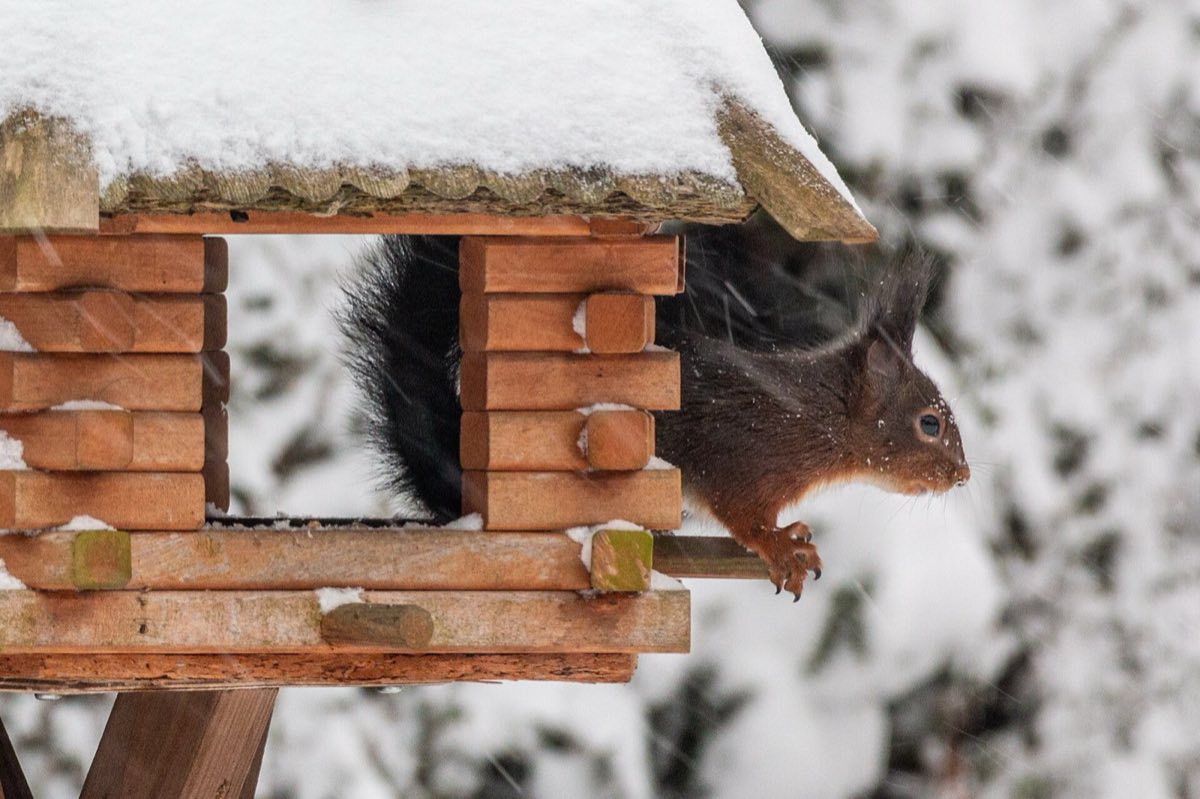
A garden with seed heads, berries and a few dense shrubs already feeds birds. Adding feeders in winter, when natural food runs short and days are too short to forage enough, brings many more of them close to the house, and a garden full of birds in winter usually has fewer aphids and caterpillars the following spring.
- Sunflower hearts are the most useful single food, eaten by finches, tits and sparrows, and they leave no husks to tidy up under the feeder.
- Fat balls and suet blocks give tits, woodpeckers and wrens energy for the long nights. Remove any plastic mesh before hanging them, because small birds catch their feet in it.
- Nyjer seed in a special fine feeder attracts goldfinches and siskins.
- Apples and soft fruit cut in half and scattered on the ground are welcomed by blackbirds and thrushes, which do not use hanging feeders.
- Water matters as much as food. Keep a shallow dish topped up and float a ball on it or simply pour on warm water in the morning to free it from ice. Never add salt or antifreeze.
Hygiene and consistency
Birds that come to feeders in numbers can pass on disease, so clean feeders every week or two with hot soapy water and let them dry before refilling. Move ground feeding spots from time to time so droppings do not build up. If you see sick, fluffed-up birds at the feeder, take everything down for two or three weeks.
Late winter is also the time to put up nest boxes, ideally by the end of February, facing between north and east so they avoid the hottest sun and the wettest winds.
Pruning in late winter
Late winter, before buds break, is pruning time for a particular group of plants. The wood is bare, so you can see the shape of the plant, and the cuts heal quickly once growth starts. In a cold-winter garden much of this work falls in February and March, during dry spells when the wood is not frozen.
| Plant | When | What to do |
|---|---|---|
| Wisteria | January to February | Cut the summer-shortened side shoots back to two or three buds from the main framework. Fat flower buds are easy to tell from the slim leaf buds. |
| Late flowering clematis | February to March | Cut all stems back to a pair of healthy buds about 20 to 30 cm above the ground. |
| Bush and shrub roses | Late February to March | Remove dead, damaged and crossing stems, then shorten the rest to outward-facing buds. See the roses guide. |
| Butterfly bush | March | Cut last year's stems back hard, to a low framework 30 to 60 cm high. |
| Coloured stem dogwoods | March | Cut all or one third of the stems to near the base for bright young growth. |
| Ornamental grasses | February to March | Cut deciduous grasses to near the ground before new shoots appear. Comb dead leaves out of evergreen grasses instead. |
What not to prune now
Leave alone anything that flowers on last year's wood in spring and early summer: forsythia, flowering currant, mock orange, weigela, lilac and the early clematis. Pruning them now removes this year's flowers; they are pruned straight after flowering. Do not prune cherries, plums and other stone fruit in winter, because the wounds are open to silver leaf and bacterial canker when growth is dormant. Their pruning waits for summer.
Reading and keeping records
The quiet weeks are also the reading weeks. A gardening book read in January sinks in differently from one skimmed in June, because there is time to look up the plant, walk out to the bed and imagine it there.
Records are the other half of this. Memory is unreliable about gardens. Everyone remembers the year the sweet peas were wonderful; nobody remembers that they were sown in October that year instead of March. A simple notebook with dates, kept loosely but consistently, becomes the most valuable gardening reference you own within three or four years.
What is worth writing down
- The date of the first and last frosts, and the lowest temperature you see.
- Sowing dates, germination dates and the date things first flowered.
- Where bulbs were planted, with a rough sketch, so you do not slice through them with a spade in July.
- Varieties that did well or badly, and the reason if you know it.
- Pests and diseases, when they appeared and what helped.
- Plants given or received, cuttings taken, divisions made.
The garden journal on this site is a cleaned-up version of exactly this kind of notebook. If you start your own this winter, do not try to make it beautiful. Make it honest and dated.