 Mayday Flowers
Bulbs
A bulb is a flower packed and waiting: plant it in autumn, forget it, and it appears on cue as the snow goes. With a little planning, bulbs give flowers from the first thaw in March to the last mild days of October. This guide covers the main spring, summer and autumn bulbs, and how to plant, keep and protect them.
Spring bulbs
Spring bulbs come from places with cold winters and dry summers, which is why they suit a garden that freezes for months. They need the cold: without a long chill, most will not flower at all. In my garden the season starts with snowdrops pushing through the last of the snow in late March and ends with alliums in June.
Snowdrop Galanthus nivalis
Flowers: March to April. Height: 10 to 15 cm.
The first flower of the year, with nodding white bells marked green on the inner petals and a faint honey scent on a sunny day. Snowdrops prefer light shade and soil that does not dry out in summer. Dry bulbs often fail; plants moved just after flowering, still in leaf, establish far better.
Crocus Crocus vernus, C. tommasinianus
Flowers: April. Height: 8 to 12 cm.
Goblets in purple, white, yellow and striped forms that open wide in sunshine and close in dull weather. The slender lilac C. tommasinianus seeds itself freely and is less attractive to mice than the fat Dutch hybrids. Early bees depend on them.
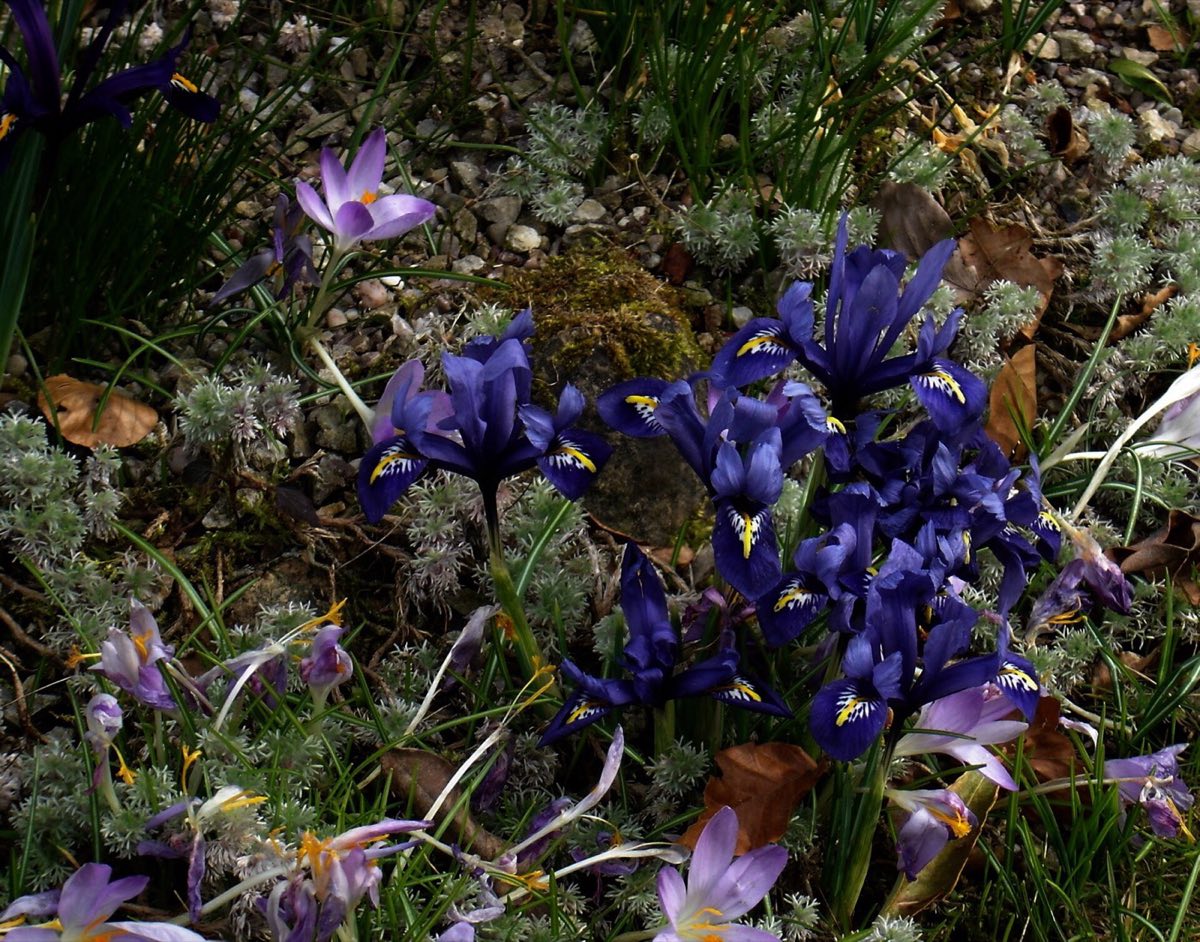
Dwarf iris Iris reticulata
Flowers: late March to April. Height: 10 to 15 cm.
Small, jewel-like irises in deep blue, violet and pale sky blue, marked with yellow. They need sharp drainage and a sunny spot, and are often best in pots or a gravel bed. In heavy soil they tend to flower well once and then split into many small, non-flowering bulblets.
Siberian squill Scilla siberica
Flowers: April. Height: 10 to 15 cm.
Nodding bells of an intense, electric blue. Completely hardy, happy in sun or part shade, and quick to spread by seed into carpets under shrubs and trees.
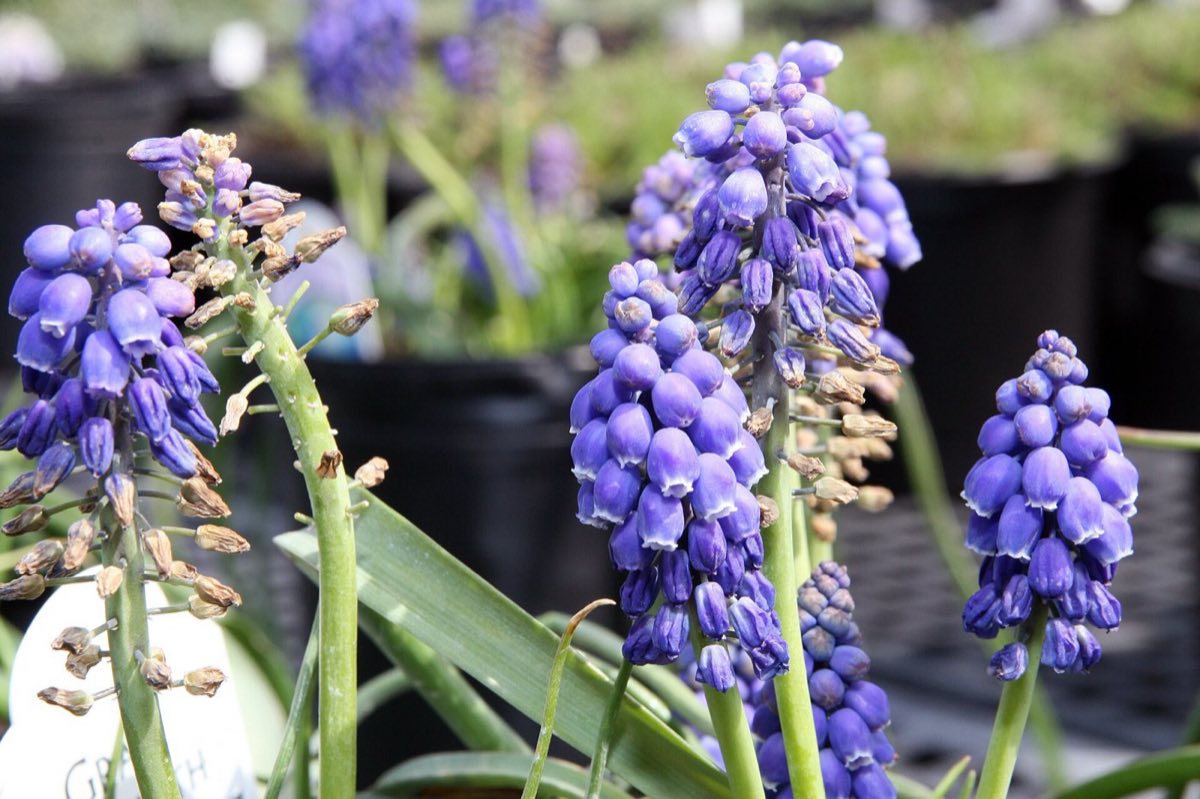
Grape hyacinth Muscari armeniacum
Flowers: late April to May. Height: 15 to 20 cm.
Dense spikes of small blue bells with a sweet, slightly musky scent. Easy anywhere and spreads quickly, sometimes too quickly. Its grassy leaves appear in autumn and look untidy all winter, so plant it where that does not matter.
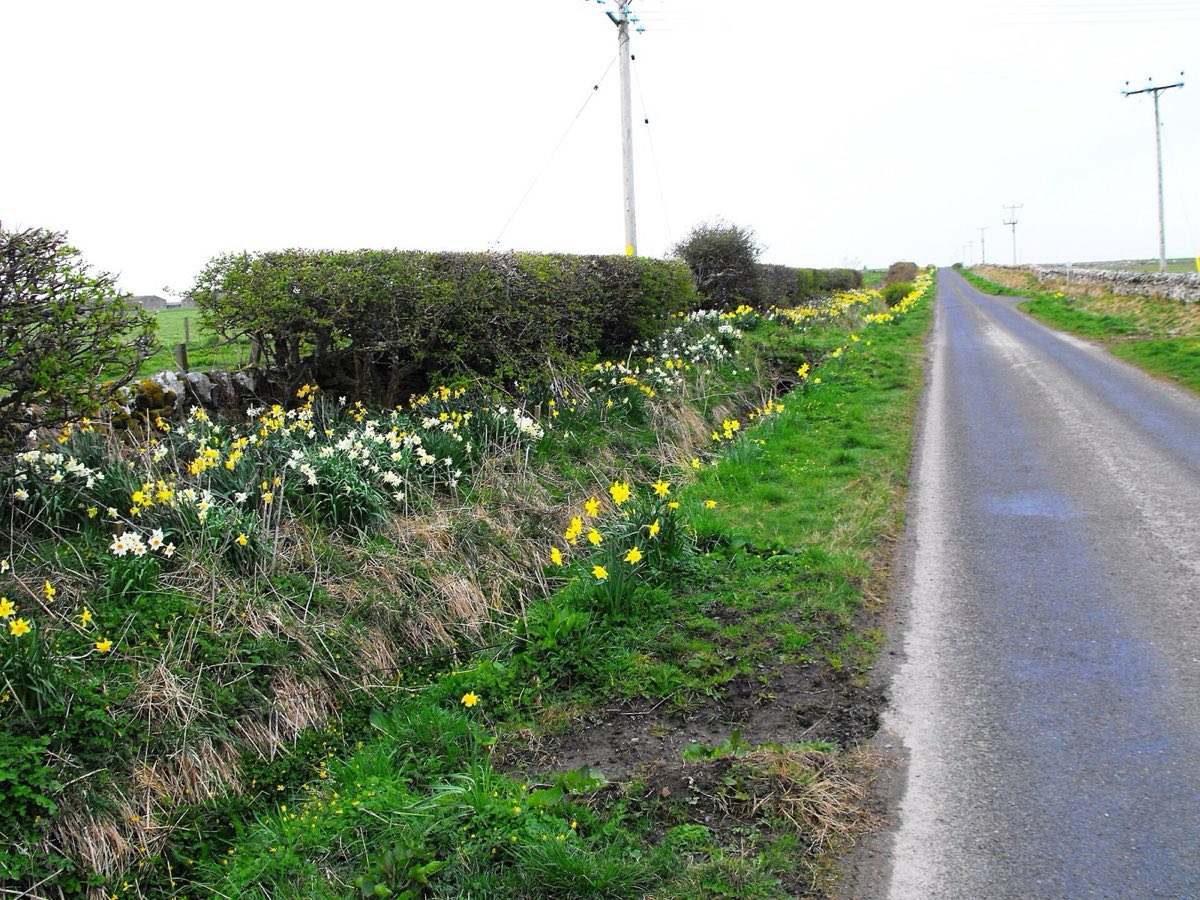
Daffodils Narcissus
Flowers: late April to May. Height: 15 to 50 cm.
From tiny early types to the late, white, red-eyed pheasant's eye, which carries a strong sweet scent. Daffodils are reliable perennials, increase year after year, and are poisonous, so rodents leave them alone. The scented jonquil and poeticus types are the most rewarding to grow near a path.
Tulips Tulipa
Flowers: late April to late May. Height: 10 to 70 cm.
Large hybrid tulips give the boldest colour of spring but often flower well only for a year or two before dwindling. Darwin hybrids and many single late types return more reliably, especially if planted deep. Small species tulips, such as the starry yellow and white Tulipa tarda, are true perennials in sunny, well-drained spots.
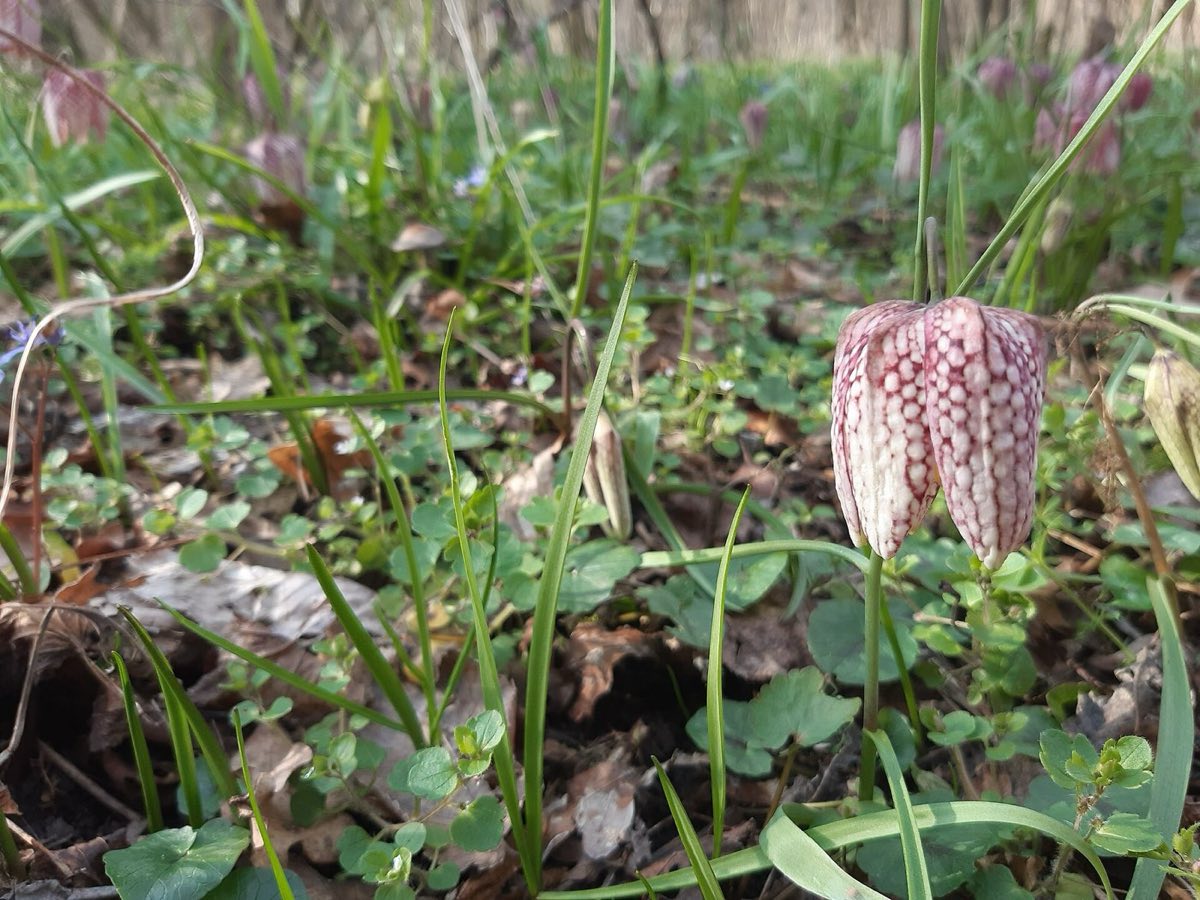
Fritillaries Fritillaria meleagris, F. imperialis
Flowers: May. Height: 25 to 100 cm.
Two very different plants. Snake's head fritillary has nodding, chequered purple or white bells and loves damp grass. The crown imperial is a towering plant with a ring of orange or yellow bells under a tuft of leaves, and a foxy smell said to deter rodents.
Ornamental onions Allium
Flowers: late May to June. Height: 30 to 120 cm.
Spheres of tiny star-shaped flowers, mostly purple, held on bare stems. They bridge the gap between spring bulbs and summer perennials and look superb rising through roses and catmint. The seed heads stay decorative for weeks. Their leaves begin to yellow before flowering, so hide them behind other plants.
Summer bulbs
Summer bulbs are a mixed group. Some, like most lilies, are fully hardy and stay in the ground. Others, like gladioli, come from warmer places and must be planted in spring and lifted in autumn in a cold climate. Dahlias are grown from tubers rather than bulbs and have their own page.
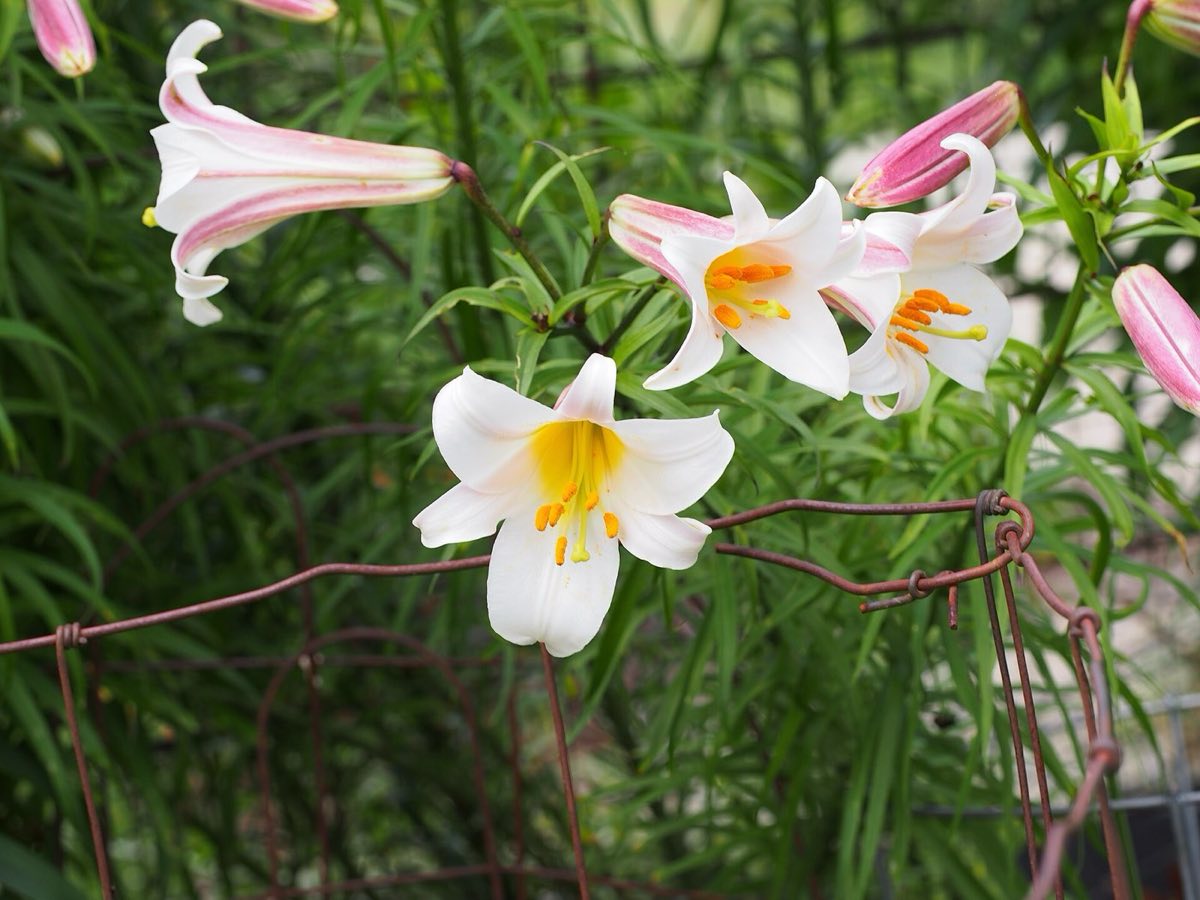
Lilies Lilium
Asiatic lilies flower first, in late June and July, in bright, upward-facing colours, and are very hardy but mostly unscented. Trumpet lilies such as the white, wine-backed regal lily follow in July with a scent that fills the garden in the evening. Oriental lilies flower last, in August, with huge, heavily perfumed flowers; they prefer acid soil and are a little less hardy. Martagon lilies, with small turk's cap flowers, grow in light shade and live for many years undisturbed.
Lilies like their heads in the sun and their roots in cool, shaded soil, so plant them among low perennials. Good drainage is essential: lily bulbs rot in winter wet.
Gladioli Gladiolus
Tall spikes of open flowers in almost every colour, loved for cutting. Large-flowered hybrids are not hardy and are planted from late April to early June. Planting a batch every two weeks gives flowers from late July to September. Plant them deep, about 15 cm, so they need less staking. The smaller, more graceful Gladiolus communis types are hardier and can stay in the ground in a sheltered, well-drained spot under a thick mulch.
Crocosmia Crocosmia
Arching sprays of small flowers in scarlet, orange and yellow above sword-shaped leaves, from July into September. The large red types are the hardiest and survive cold winters with a mulch of leaves over the corms. Smaller orange and yellow hybrids are less reliable and can be lifted and stored like gladioli. They make excellent cut flowers and the seed heads are attractive too.
Autumn bulbs
A handful of bulbs flower in autumn, when they seem to appear out of nowhere on bare stems. They need to be planted in late summer, as soon as they are available, because they are already preparing to flower when you buy them.
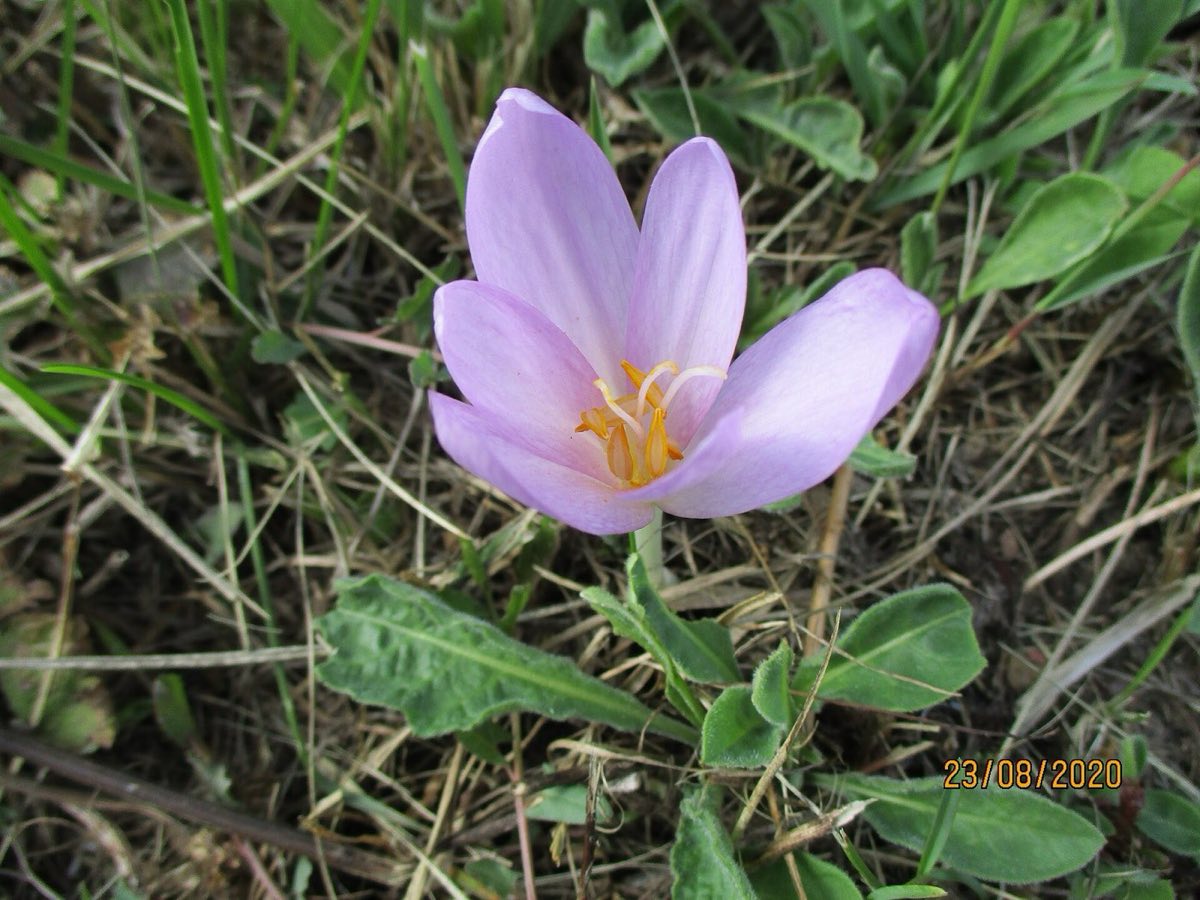
Colchicum
Colchicum autumnale and its hybrids produce large, pink or lilac goblets in September, sometimes still sitting in the paper bag on the shed shelf if you forget to plant them. They are often called autumn crocus, but they are not crocuses: colchicums have six stamens, crocuses three. The leaves appear in spring, large and glossy, and flop untidily as they die in June, so plant colchicums in grass or among shrubs rather than at the front of a border. All parts of the plant are poisonous.
True autumn crocus
Several real crocuses flower in autumn. Crocus speciosus has lilac-blue flowers with darker veins in September and October and spreads well in grass. The saffron crocus, Crocus sativus, needs a hot, dry summer to flower reliably and is a gamble in a cool garden. Plant all of them in August, 8 cm deep.
Nerine
Nerine bowdenii produces heads of glistening, crimped pink flowers in September and October. It tolerates only light frost, so in a garden with long, hard winters it is best grown in a pot, with the neck of the bulb at the surface, and moved into a cool, frost-free place from late October to April. It flowers best when crowded, so leave it in the same pot for years.
When and how to plant
Spring bulbs are planted in autumn, while the soil is still warm enough for them to make roots before it freezes. In a garden where frost starts in late October, aim for September and early October. Daffodils, snowdrops and small bulbs go first, because they root early. Tulips are the exception: they are planted last, in early to mid October, when the soil has cooled, which reduces the risk of tulip fire disease.
Buy bulbs that are firm and heavy for their size, without soft patches, mould or deep wounds. A loose papery skin does not matter. Bigger bulbs give more and bigger flowers. Plant them as soon as possible; small bulbs in particular dry out in storage.
Nearly all bulbs need good drainage. On heavy clay, add a handful of grit to the bottom of each hole or plant in a raised bed. Set the bulb pointed end up; if you cannot tell which end is which, plant it on its side and it will sort itself out. Plant in groups rather than lines: odd numbers and irregular drifts of 7, 15 or 25 look natural, while single rows look like soldiers.
Planting depth and spacing
The general rule is to plant a bulb at two to three times its own height, measured to the base of the bulb. In light soil and in cold climates, err on the deeper side; in heavy clay, a little shallower. Most gardeners plant too shallowly, which leads to floppy stems, bulbs that split into small non-flowering pieces, and easy pickings for squirrels.
| Bulb | Depth to base | Spacing | Plant | Flowers |
|---|---|---|---|---|
| Snowdrop | 8 to 10 cm | 5 to 8 cm | September, or in leaf after flowering | March to April |
| Crocus | 8 cm | 8 cm | September | April |
| Dwarf iris | 8 to 10 cm | 5 to 8 cm | September | Late March to April |
| Scilla | 8 cm | 5 to 8 cm | September | April |
| Grape hyacinth | 8 to 10 cm | 8 cm | September | Late April to May |
| Daffodil | 12 to 15 cm | 10 to 15 cm | September | Late April to May |
| Tulip | 15 to 20 cm | 10 to 15 cm | Early to mid October | Late April to May |
| Snake's head fritillary | 8 to 10 cm | 8 to 10 cm | September | May |
| Crown imperial | 20 cm | 30 cm | Late August to September | May |
| Large allium | 15 to 20 cm | 20 to 30 cm | September to October | June |
| Lily | 15 to 20 cm | 25 to 30 cm | Autumn or April | July to August |
| Gladiolus | 12 to 15 cm | 15 cm | Late April to early June | August to September |
| Crocosmia | 8 to 10 cm | 15 cm | April | July to September |
| Colchicum | 10 cm | 15 to 20 cm | August | September |
| Autumn crocus | 8 cm | 8 cm | August | September to October |
| Nerine | Neck at surface | 10 cm | April, in a pot | September to October |
Naturalising in grass
Naturalising means planting bulbs in grass or under trees and leaving them to spread and multiply on their own, as though they had arrived by themselves. It is the cheapest way to get a big effect over the years, and a lawn studded with crocuses in April is one of the loveliest sights of the year.
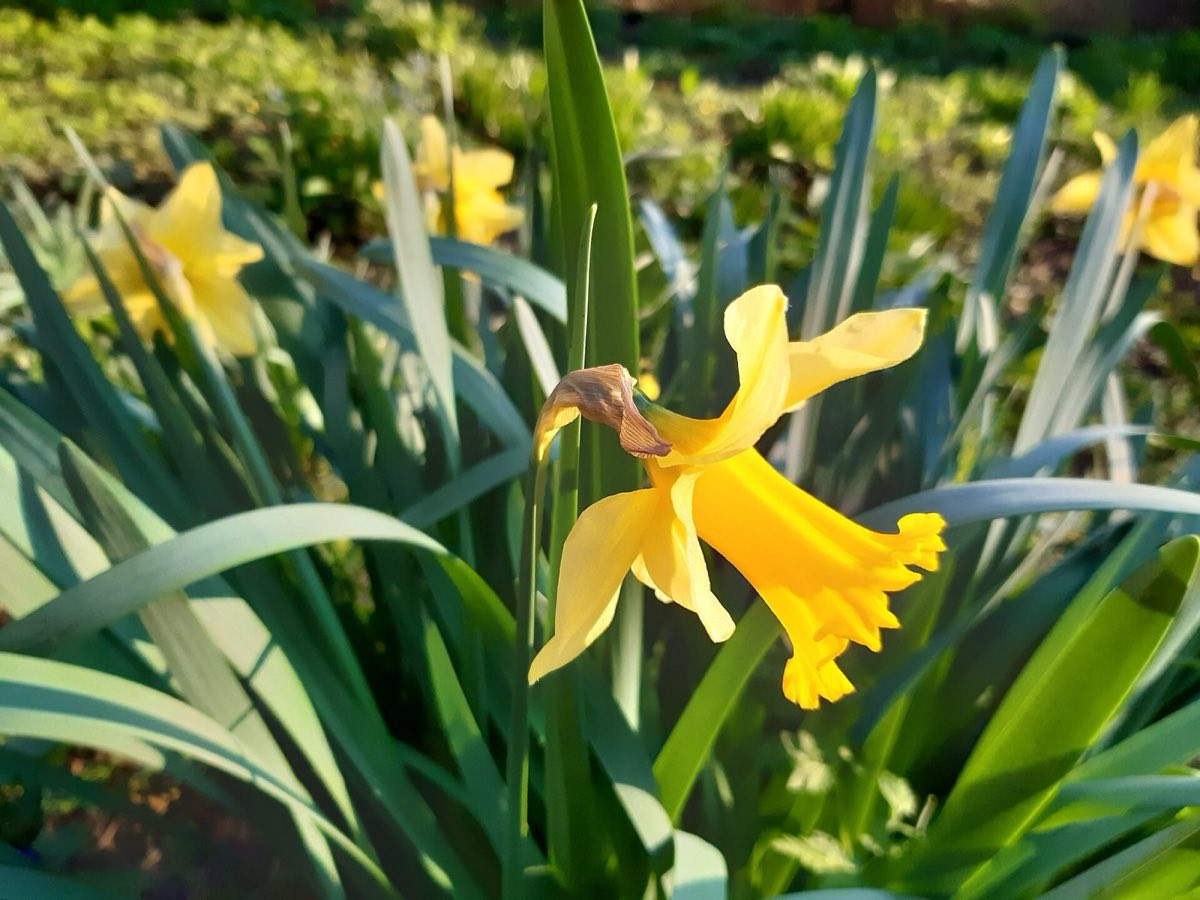
Which bulbs
The best choices are crocuses, especially C. tommasinianus, snowdrops, scillas, daffodils of the smaller and wild-looking kinds, snake's head fritillaries in damp grass, colchicums and autumn crocuses. Tulips rarely naturalise well in grass, since they compete poorly with turf roots.
How to plant
For a natural look, toss handfuls of bulbs gently across the area and plant each one where it lands, adjusting only those that land in a heap. For large bulbs use a long-handled bulb planter or a narrow spade: cut a slot, lever it open, drop the bulb in and tread the turf back. For small bulbs, lift a flap of turf with a spade, loosen the soil beneath, scatter the bulbs and fold the turf back down.
Mowing
The key to success is patience with the mower. Bulb leaves must be left for at least six weeks after flowering to feed the bulb for next year. In practice, grass with crocuses can be cut from late May, while grass with daffodils or fritillaries should be left until late June. Treat that patch as a small meadow, with longer grass and wild flowers, and the untidiness becomes part of the effect.
Bulbs in pots and lasagne planting
Pots of bulbs by the door bring spring right up to the house, and you can plant varieties that would not cope with your soil, such as dwarf irises in a heavy clay garden. Use a pot at least 30 cm deep with a drainage hole, and a free-draining mix of potting compost with a quarter of grit.
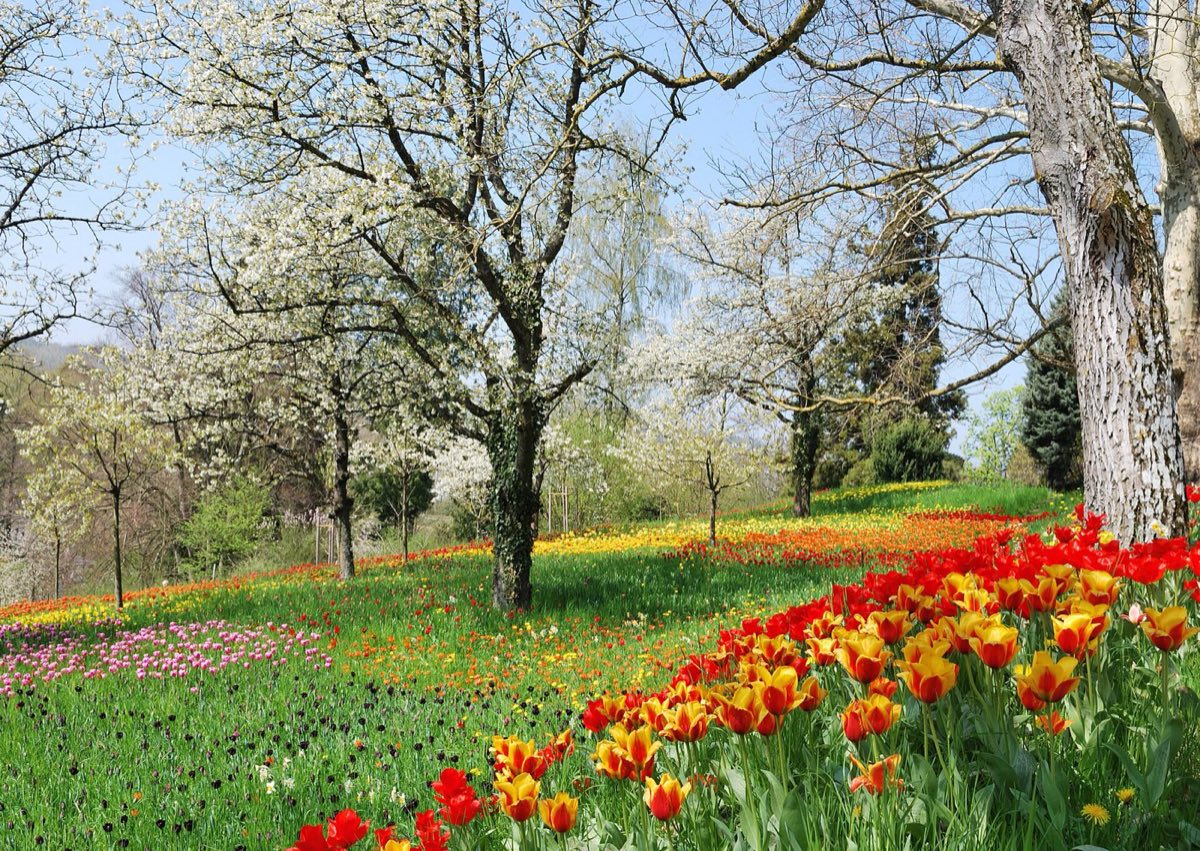
Lasagne planting
Lasagne planting layers several types of bulb in one deep pot, so they flower one after another or together. The largest, latest bulbs go at the bottom and the smallest, earliest at the top. The shoots of the lower layers simply grow around the bulbs above.
- Put 5 cm of compost in a pot at least 35 to 40 cm deep.
- Bottom layer: tulips, almost touching.
- Cover with 5 cm of compost, then a layer of daffodils.
- Another 5 cm of compost, then crocuses, scillas or grape hyacinths.
- Top up to 3 cm below the rim.
Pots in a cold winter
Bulbs in the ground are protected by the soil, but in a pot the roots are exposed to the cold on all sides. Where frost lasts from late October to April, a pot can freeze solid, which kills roots and can crack terracotta. Move planted pots into an unheated shed, garage or cold greenhouse for the coldest months, or group them against the house wall, wrapped in hessian or bubble wrap. Another good method is to sink the pots into a bed of soil or a trench and lift them out in April. The compost should stay just moist, never wet. Bring them into full light as soon as shoots appear.
After flowering
What you do after the flowers fade decides whether the bulbs flower again next year. The leaves are rebuilding the bulb, making next year's flower bud inside it.
- Deadhead tulips, daffodils and large alliums by snapping off the seed pod, so the plant does not waste energy on seed. Leave the stem, which also feeds the bulb. Small bulbs such as scilla and snowdrops are best left to set seed and spread.
- Leave the leaves for six weeks or until they turn yellow. Do not knot, plait or tie daffodil leaves: it looks neat but cuts their ability to make food.
- Feed with a liquid feed high in potash every week or two while the leaves are green, especially bulbs in pots and tulips you hope to keep.
- Water bulbs in pots until the leaves die, then let them dry.
Daffodils that produce only leaves are called blind. The usual causes are overcrowding after years without division, leaves removed too early, shallow planting or dry springs. Lift congested clumps when the leaves die down and replant the largest bulbs at once, further apart.
Lifting and storing
Most hardy bulbs are best left in the ground. Lifting is worthwhile in three cases: tulips you want to keep in good condition, tender summer bulbs, and congested clumps that need dividing.
Spring bulbs
Lift tulips in late June or early July, when the leaves have turned yellow and pull away easily. Shake off the soil, cut off the dead stems and leave the bulbs to dry for a few days in an airy, shaded place. Discard any soft or diseased bulbs. Store them in paper bags, net sacks or open trays somewhere dry and well ventilated at about 15 to 20 °C over summer, and replant in October. Daffodils can be treated the same way but are usually happier left alone.
Summer bulbs
Lift gladioli in October, after the first frost has touched the leaves. Cut the stems to 2 to 3 cm and dry the corms for two weeks. Then snap off the shrivelled old corm at the base of the new one, and keep the little cormlets if you want to grow them on. Store in a dry, frost-free place at 5 to 10 °C. Non-hardy crocosmias can be stored the same way, and nerines in their pots are simply moved under cover and kept almost dry.
Check stored bulbs every few weeks. Remove any that are soft, mouldy or shrivelled before the problem spreads.
Pests: mice, squirrels and lily beetle
Most bulbs are trouble free, but a few pests can wipe out a planting. More general advice is on the pests and diseases page.
Mice and voles
Mice and voles eat crocus and tulip bulbs underground through autumn and winter, often leaving nothing but empty holes. They avoid daffodils, snowdrops, alliums and fritillaries, which are poisonous or bitter. Where rodents are a problem, plant crocuses and tulips in cages of wire mesh with holes no larger than 1 cm, or in pots. In lawns, the small C. tommasinianus survives better than the fat Dutch crocuses.
Squirrels
Squirrels watch you plant and dig the bulbs up the same day, attracted by freshly disturbed soil and the smell of the bulbs. Tidy away the papery skins, firm the soil well and plant at the full depth. For tulips and crocuses, lay chicken wire flat over the planting just under the surface or on top, weighted with stones, and remove it when the shoots appear in spring.
Lily beetle
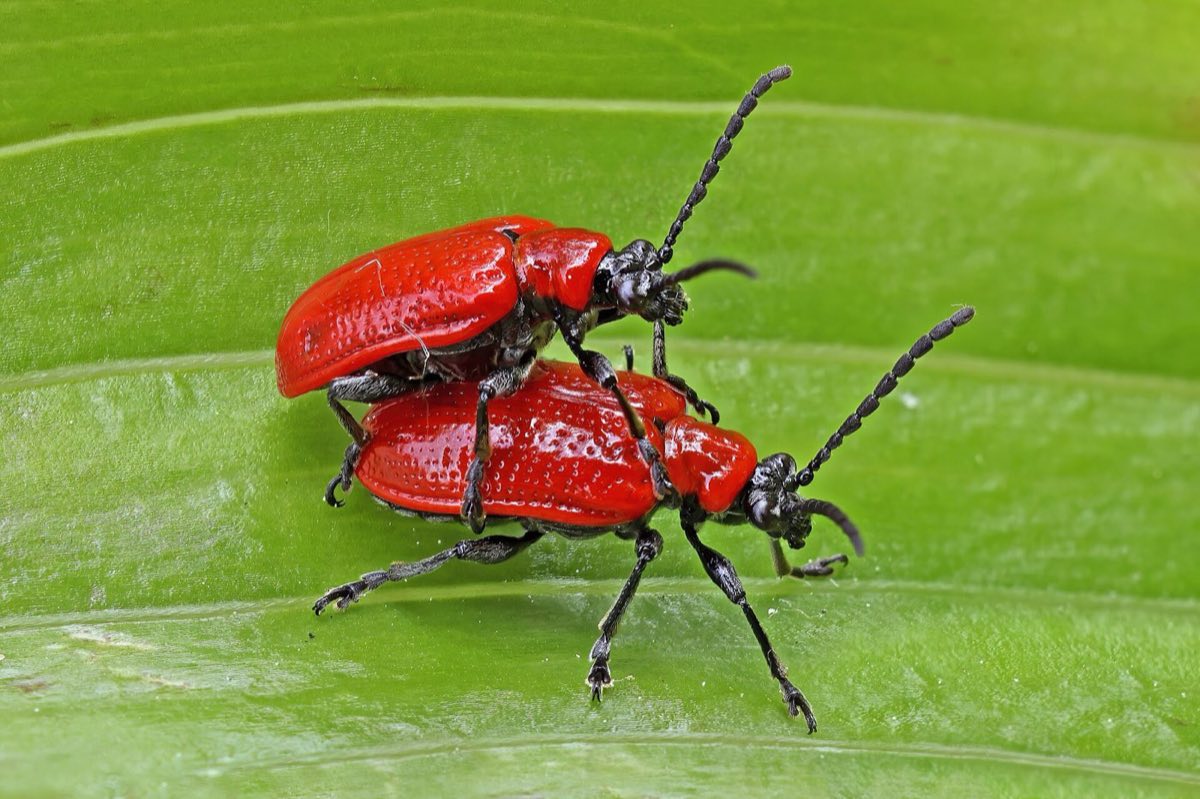
The lily beetle, Lilioceris lilii, is a shiny, scarlet beetle about 8 mm long that feeds on lilies and fritillaries from April to September. Its larvae are worse: orange-red grubs that cover themselves in their own black droppings and strip leaves, stems and buds.
Check plants every few days from the moment shoots appear. Hold a hand or a sheet of paper under the beetle before you grab it, because it drops to the ground and lies on its back, with its black underside making it almost invisible. Squash the beetles, wipe off larvae and the orange egg clusters under the leaves. Daily attention in May and June keeps numbers low.
Forcing bulbs indoors
Forcing means persuading bulbs to flower indoors weeks ahead of their natural time. In the dark weeks after New Year, a pot of scented hyacinths on the windowsill is a real tonic.
Hyacinths
Buy bulbs sold as prepared, which have been given a cold treatment so they flower early. Plant them in September in pots of compost, with their tips just showing, or sit them in a hyacinth glass with the base just above the water. Keep them cold and dark, at about 5 to 9 °C, for ten to twelve weeks, in a shed, cellar or fridge. When the shoots are 3 to 5 cm tall and the roots fill the pot, bring them into a cool, light room at about 10 to 15 °C, and only into warmth once the flower buds show colour. Wear gloves when handling hyacinth bulbs; they can irritate the skin.
Paperwhites and amaryllis
Two bulbs need no cold period at all. Paperwhite narcissi will flower four to six weeks after planting in pots or on a bed of pebbles with water just touching the bases. Their scent is strong and musky. Grow them in a cool, bright place or they become leggy and flop. Amaryllis bulbs, Hippeastrum, are planted with the top third above the compost and flower six to ten weeks later.
Small bulbs
Crocuses, dwarf irises and scillas can be potted in September, left outside in a sheltered spot or cold frame until January, then brought into a cool, bright room. They flower within two or three weeks. Afterwards, forced hyacinths and small bulbs can be planted out in the garden; they need a year or two to recover but often flower again. Paperwhites are usually discarded. For the rest of the bulb year, see the garden calendar and the spring page.