 Mayday Flowers
Roses
Roses have a reputation for being fussy, but most of that reputation belongs to a handful of tender, disease-prone varieties grown in the wrong place. Choose the right type for your conditions, plant it deeply and well, and a rose will outlive most of the other shrubs in the garden. This guide covers what I have learned growing them through long, cold winters.
Rose types
Rose catalogues sort plants into groups that sound technical but are genuinely useful. The group tells you how big the plant gets, whether it flowers once or repeatedly, how hardy it is likely to be and, most importantly, how to prune it. Before falling for a photograph, find out which group a rose belongs to.
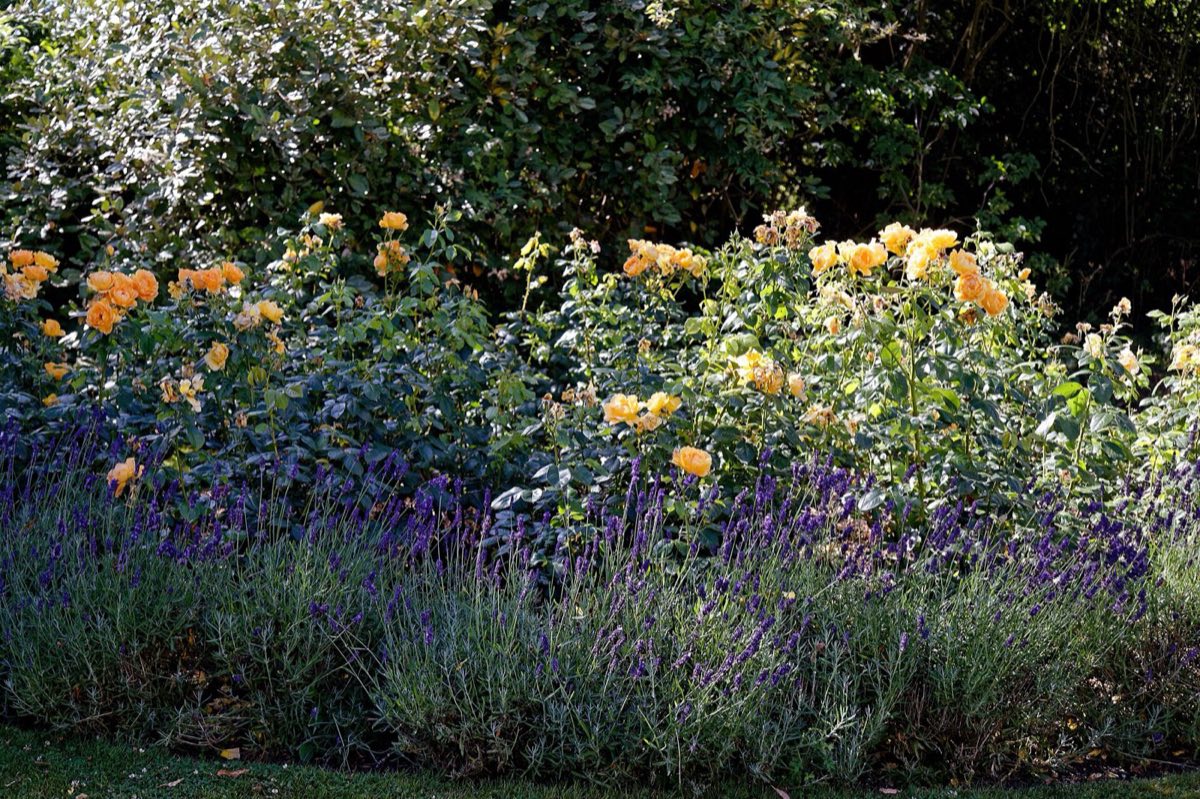
Species roses Rosa rugosa, R. glauca, R. canina
Flowers: June, some repeat. Height: 1.2 to 2.5 m.
The wild roses and their close relatives. Flowers are usually single, with five petals and a boss of golden stamens that bees visit constantly. Most flower once and then carry hips into winter. They are the hardiest and healthiest roses of all. Rosa rugosa has wrinkled leaves and a strong clove scent; R. glauca is grown as much for its grey-purple foliage as for its small pink flowers.
Old garden roses Gallica, Damask, Alba, Centifolia, Moss
Flowers: June to early July, mostly once. Height: 1 to 2 m.
Roses grown in European gardens before the first hybrid teas appeared. The flowers are flat or cupped, packed with petals, often quartered, in soft pinks, crimsons, purples and white, and many are intensely fragrant. Albas and Gallicas are tough enough for very cold gardens. Bourbons and Portlands from the same era repeat but are a little less hardy.
Modern shrub roses Rosa hybrids
Flowers: June to October in flushes. Height: 0.9 to 1.8 m.
A broad group that includes hybrid musks, rugosa hybrids and the English-style shrub roses that combine the cupped flowers and scent of old roses with repeat flowering. They suit mixed borders better than formal beds and are generally healthier than hybrid teas.
Hybrid teas Rosa hybrids
Flowers: late June to October. Height: 0.9 to 1.2 m.
The classic florist's rose: one large, high-centred bloom on a long stem. They repeat well, but the plants are upright and stiff, so they look best in their own bed or in rows for cutting. Many are less disease-resistant than shrub roses, so choosing a healthy variety matters.
Floribundas Rosa hybrids
Flowers: late June to October. Height: 0.6 to 1 m.
Clusters of medium flowers carried almost continuously until the frosts. They give more colour per square metre than any other rose and suit the front of borders, low hedges and large pots.
Climbers Rosa hybrids
Flowers: June to September, most repeat. Height: 2.5 to 4 m.
Long, fairly stiff stems and large flowers. They do not cling by themselves and need tying in to a wall, fence, pillar or arch. Most modern climbers repeat, which makes them the best choice for a doorway.
Ramblers Rosa hybrids
Flowers: late June to July, usually once. Height: 4 to 10 m.
Vigorous roses with long, pliable stems and big trusses of small flowers. Most give one spectacular show of three or four weeks. They are the roses to send up an old tree or along a long fence.
Ground cover roses Rosa hybrids
Flowers: June to October. Height: 30 to 60 cm, spread to 1.5 m.
Low, spreading plants for banks, edges and the rims of raised beds. Despite the name they will not suppress weeds, so the ground must be clean before planting.
Choosing a site
A rose wants at least five to six hours of direct sun a day. In less, it flowers sparsely, stretches towards the light and suffers more from disease because its leaves stay damp for longer. Morning sun is especially valuable, since it dries the dew quickly. On a shady wall, ramblers and the tougher old roses such as Albas will cope, but expect fewer flowers.
Airflow matters almost as much as light. A rose crammed between two walls, or smothered by neighbouring perennials, will be the first plant in the garden to show mildew. Allow 60 to 90 cm between hybrid teas and floribundas and 1 to 1.5 m between shrub roses.
Soil
Roses like a deep, moisture-retentive but well-drained soil, slightly acid to neutral, around pH 6 to 7. Clay is not the enemy many people think: roses grow very well in heavy soil as long as it does not sit wet in winter. Light sandy soil is harder, because it dries out and loses nutrients quickly, so it needs plenty of organic matter and a thick mulch every year. Before planting, dig over an area at least 60 cm across and work in a bucket of well-rotted manure or compost. There is more on this on the soil and compost page.
Planting bare root and potted roses
Bare root roses are dug from the field while dormant and sent out with no soil around the roots. Potted roses are grown in containers and can be planted whenever the ground is workable. Bare root plants are cheaper, usually larger, and establish better because their roots go straight into your soil, but they have a short planting season.
When to plant
Where winters are cold, there are two windows for bare root roses: from mid October until the ground starts to freeze, usually by early November, and from early April until the buds begin to swell. Autumn planting gives roots a few weeks in warm soil; spring planting avoids the risk of frost lifting a new plant. In my garden, where frost can arrive suddenly in late October, I now plant almost everything in spring. Potted roses can go in from April to September.
Planting a bare root rose
- Soak the roots in a bucket of water for one to two hours. If you cannot plant within a week, heel the rose into a shallow trench.
- Dig a hole about 40 cm wide and 40 cm deep. Fork over the bottom and mix a little compost into the soil you removed.
- Trim off broken roots and shorten very long ones to about 25 cm.
- Make a small mound of soil in the hole and spread the roots over it like a skirt.
- Check the depth. Most roses are grafted onto a rootstock, and the swollen knuckle where the stems begin is the graft union. In a cold climate it should sit 5 cm below the soil surface, which protects it from frost and lets the variety make its own roots over time.
- Backfill gradually, shaking the plant so soil runs between the roots, and firm with your heel.
- Water with at least 10 litres, even if the soil is moist.
Roses planted in spring can be cut back straight away to about 15 cm, above an outward-facing bud. Autumn-planted roses are left unpruned until spring.
Planting a potted rose
Water the pot an hour before planting. Dig a hole twice the width of the pot and a little deeper, so the graft union again ends up 5 cm below ground. If roots are circling the rootball, tease a few free so they grow outwards. Plant, firm, water well, and keep watering every few days in dry weather for the first month.
Feeding and watering
A repeat-flowering rose produces shoots, leaves and flowers for four months without a break, and it needs a steady supply of nutrients to do that. Feeding is not a substitute for good soil, though. A rose in rich, well-mulched ground needs far less from a bag.
- April, after pruning: scatter a balanced granular rose feed at the rate on the packet, rake it in and water. Then mulch with 5 cm of well-rotted manure or compost, keeping it a hand's width from the stems.
- Late June to early July: after the first flush, give a second dose. This fuels the repeat flowering.
- End of July: stop feeding. Nitrogen given later produces soft growth that will not ripen before the frosts.
Roses in containers run out of nutrients faster. Give them a liquid feed high in potash every ten to fourteen days from May until the end of July.
Watering
Established roses on decent soil have deep roots and rarely need watering except in drought. New roses, roses against walls and all roses in pots need regular attention. Water deeply and less often: 10 to 15 litres per plant once a week in dry weather does far more good than a splash every evening, because it draws roots downwards. Water at the base and preferably in the morning; leaves that stay wet overnight invite black spot.
The roses against the south wall of the house always flower first and always suffer first. The eaves keep the rain off, and by midsummer the soil there is dust a spade's depth down, even after a wet week.
Pruning by type
Pruning removes dead, diseased and weak wood, opens the centre to the air, and encourages strong new shoots, since most roses flower best on young growth. What changes from group to group is how hard you cut and when.
In a cold climate, the main pruning of bush and shrub roses is done in early spring, not autumn. Wood left over winter protects the buds lower down, and frost dieback can be cut out at the same time. A good signal is the flowering of forsythia, or the moment rose buds begin to swell, usually in mid April.
The basic cut
Use sharp, clean secateurs. Cut about 5 mm above a healthy bud, sloping away from it so rain runs off. Choose an outward-facing bud when you can, so the new shoot grows away from the centre. If the pith in the middle of a stem is brown, keep cutting lower until you reach white pith.
| Rose type | When | How |
|---|---|---|
| Hybrid tea | Early to mid April | Keep 4 to 6 strong canes and cut them to 15 to 25 cm, just above an outward bud. |
| Floribunda | Early to mid April | Cut main stems to 25 to 40 cm and shorten side shoots to two or three buds. |
| Modern shrub roses | Early to mid April | Reduce stems by a third to a half. Every few years remove one or two of the oldest stems at the base. |
| Once-flowering old roses | After flowering, July | Shorten flowered shoots by a third and remove a few old stems. In spring, only tidy dead tips. |
| Species roses | Late winter | Remove dead wood and occasionally an old stem. Do not trim if you want hips. |
| Climbers | Late March to early April | Keep the framework. Shorten flowered side shoots to 2 or 3 buds. Replace one old main stem with a young one every year or two. |
| Ramblers | After flowering, late July to August | Cut one in three of the oldest flowered stems out at the base and tie in new long shoots. |
| Ground cover | Early April | Trim to keep within bounds and remove upright shoots. |
A common mistake is pruning every rose the same way, usually hard. Hard pruning suits hybrid teas grown for large blooms, but it ruins the arching shape of a shrub rose and removes the flowering wood of once-flowering roses altogether.
Training climbers and ramblers
A stem trained horizontally flowers along its whole length, while a stem left to grow straight up flowers only at the top. Bending a stem slows the flow of sap to the tip and wakes the buds along it, and each produces a short side shoot that carries flowers.
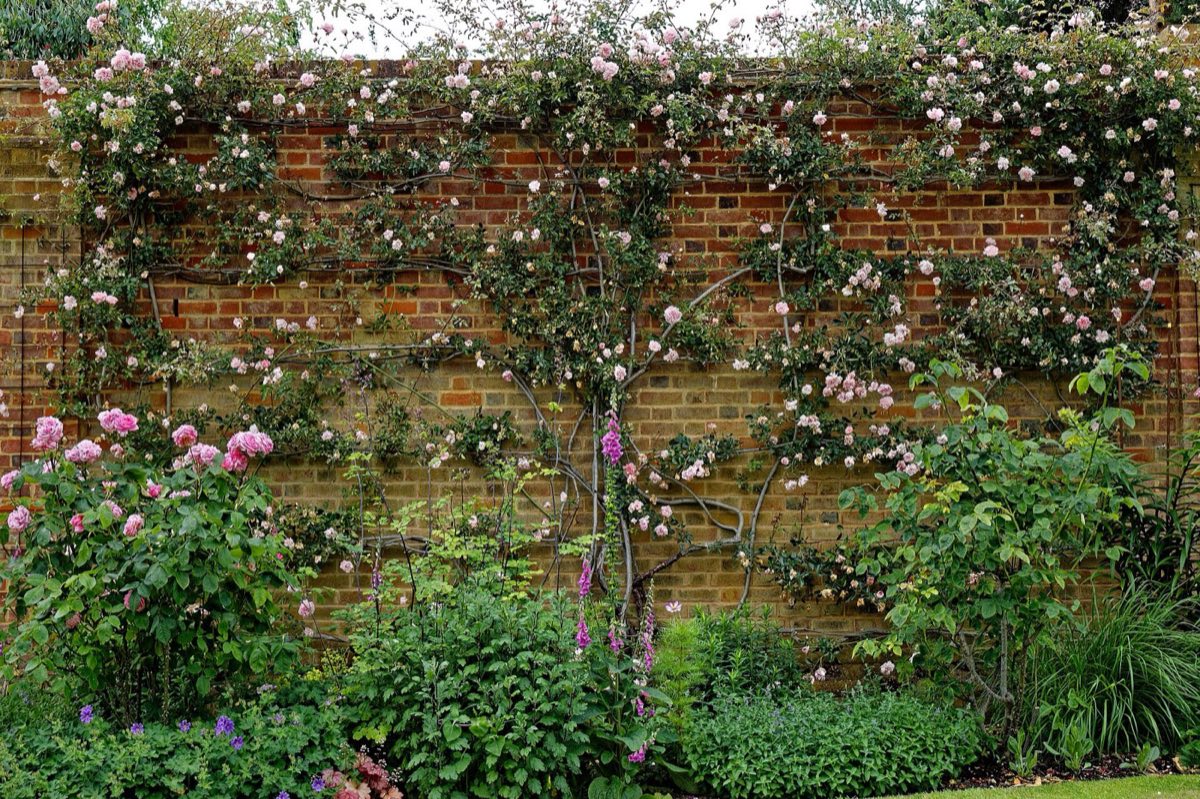
On a wall or fence
Fix horizontal wires about 45 cm apart, held 5 to 7 cm from the wall by vine eyes so air can move behind the plant. Plant the rose 30 to 45 cm out from the wall, where the soil is less dry, and lean the canes towards the wires.
As the main stems grow, fan them out and tie them in as close to horizontal as you can, with soft twine rather than wire. Check the ties every spring and loosen any that bite.
Pillars and arches
On an upright support, wind the main stems in a spiral rather than tying them straight up, which gives side shoots and flowers at every level. For arches, choose a climber of moderate vigour. A rampant rambler on a small arch becomes a thorny tunnel within three years.
Ramblers into trees
Plant a rambler on the windward side of a sturdy tree, about a metre out from the trunk to avoid the driest soil, and guide the first stems up a rope into the lowest branches. After that it finds its own way and needs little pruning. Make sure the tree is strong: a mature rambler is heavy, especially when wet.
Deadheading and hips
A repeat-flowering rose that is allowed to set seed puts its energy into the hips and slows down new flowers, so deadheading is worth doing regularly. For once-flowering roses it makes little difference and only removes the hips.
The old rule was to cut back to the first leaf with five leaflets. Simply snapping off the head just below the bloom works equally well and leaves more leaves to feed the plant. I snap off single blooms as I walk round, and when a whole floribunda cluster has finished I cut the stem back to a strong bud a little further down.
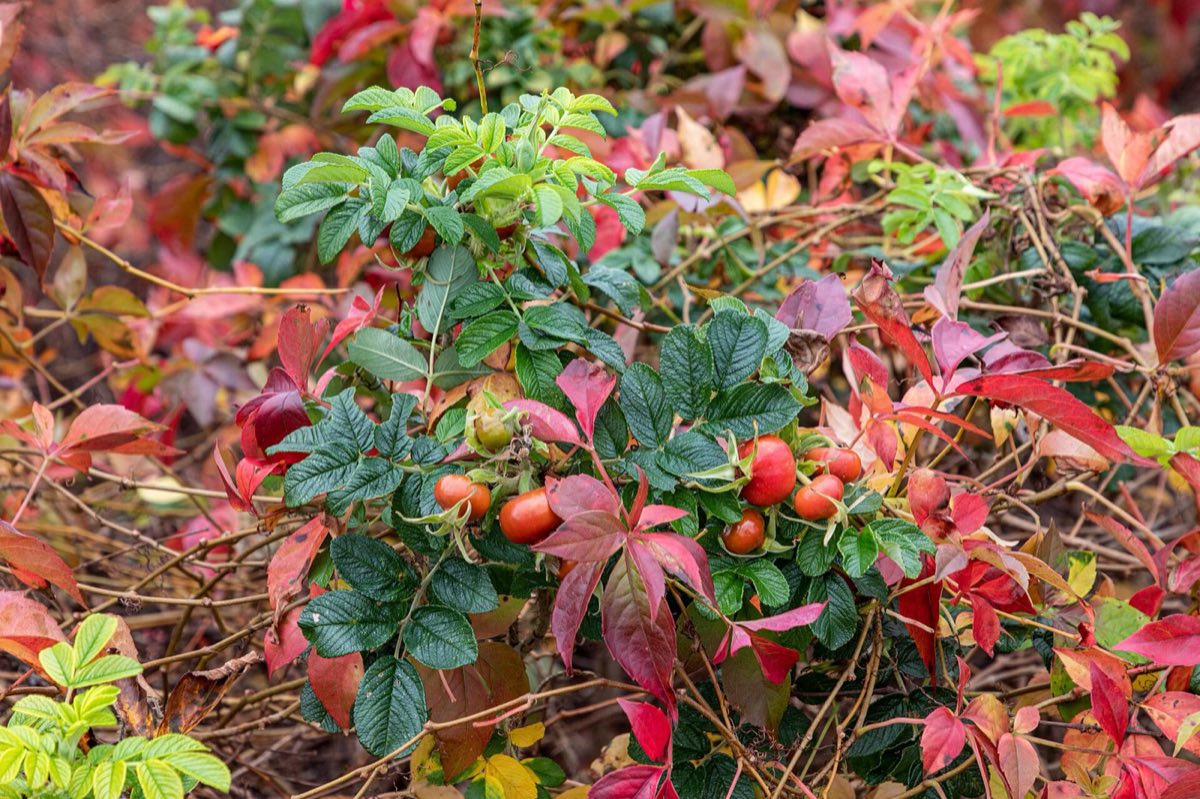
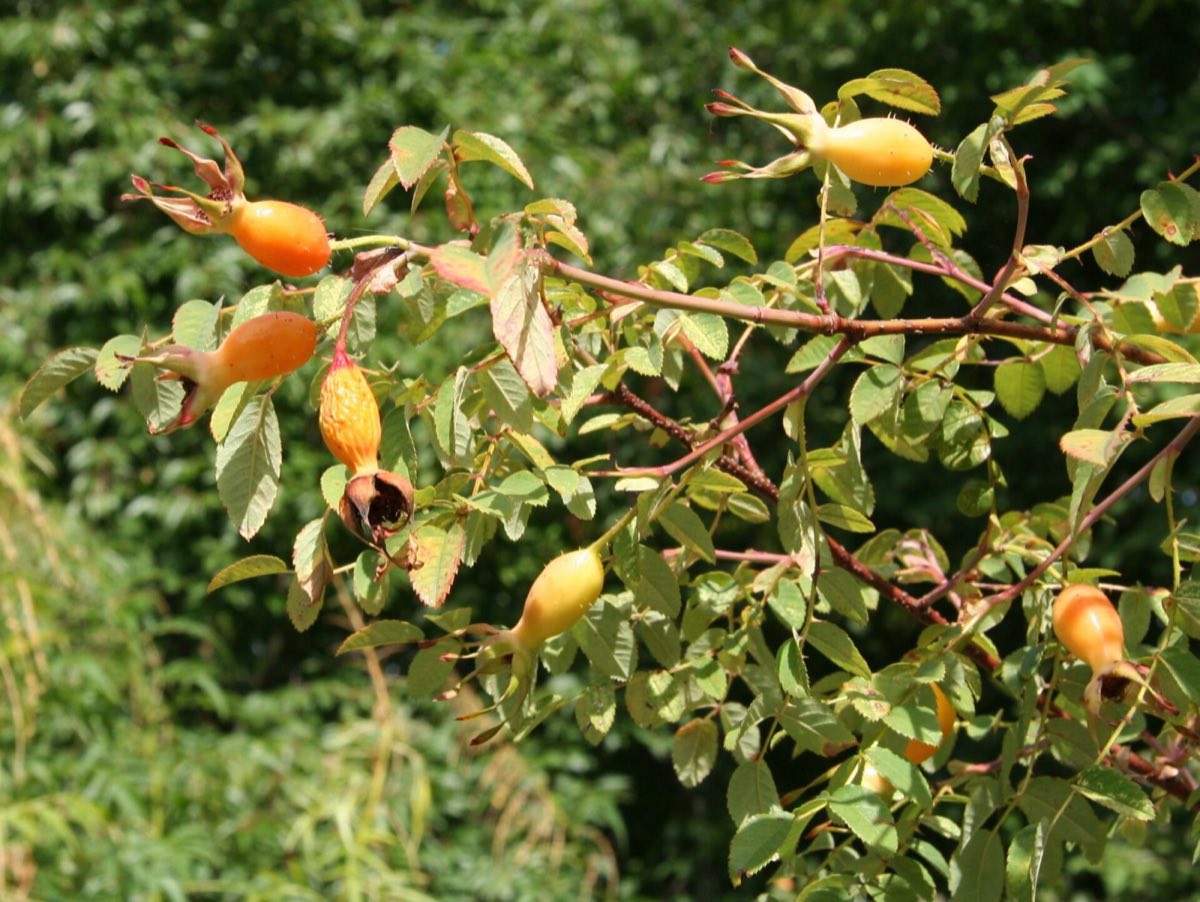
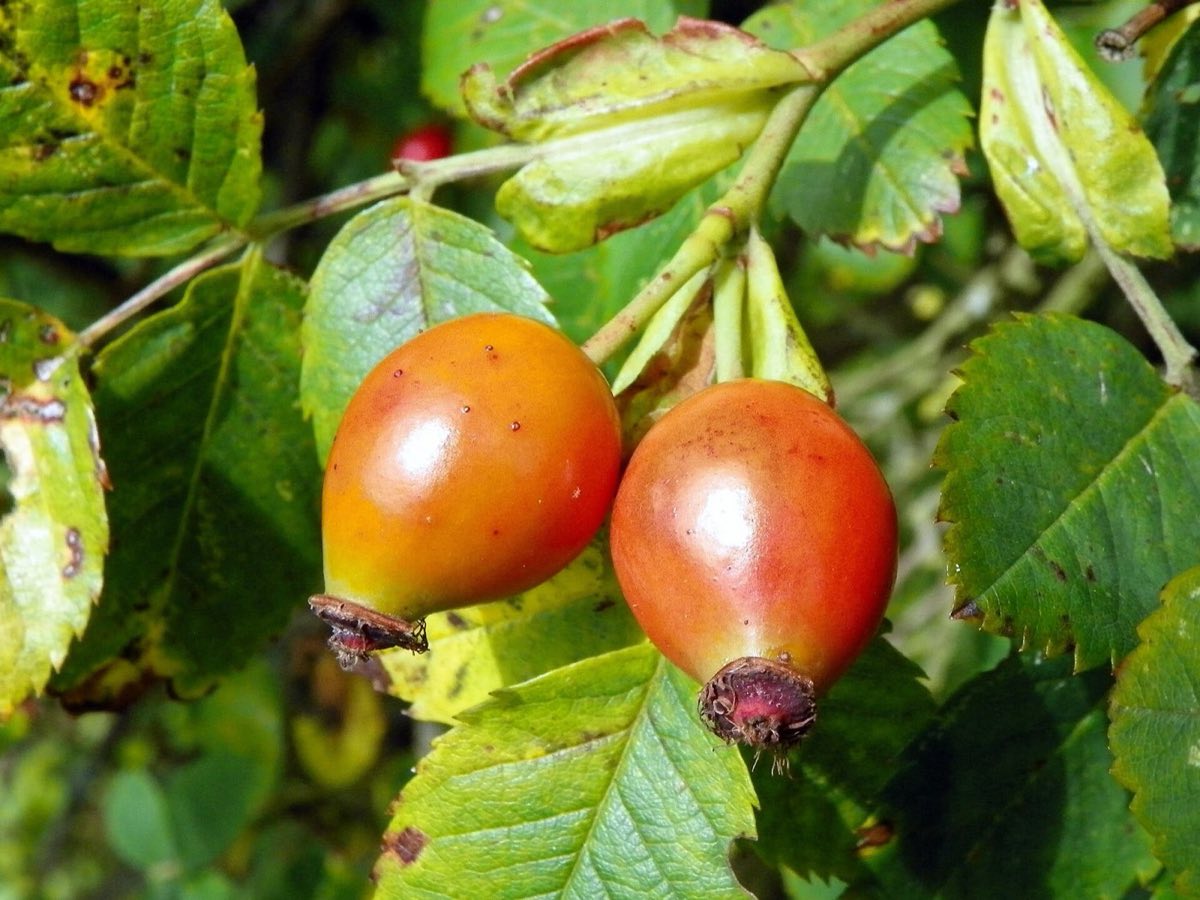
Stop deadheading repeat-flowering roses in early September. Letting the last flowers form hips tells the plant to slow down and ripen its wood, which reduces frost damage.
Species roses, rugosas and many old roses are grown partly for their hips, from the small oval scarlet fruit of the dog rose to the shining orange-red globes of Rosa rugosa. Never deadhead these, and they will give colour from September until birds strip them, often not before January.
Common problems
Most rose problems are worst on stressed plants: roses in shade, in poor dry soil, too close together, or of naturally susceptible varieties. Good cultivation solves more than any spray. For a wider overview, see pests and diseases.
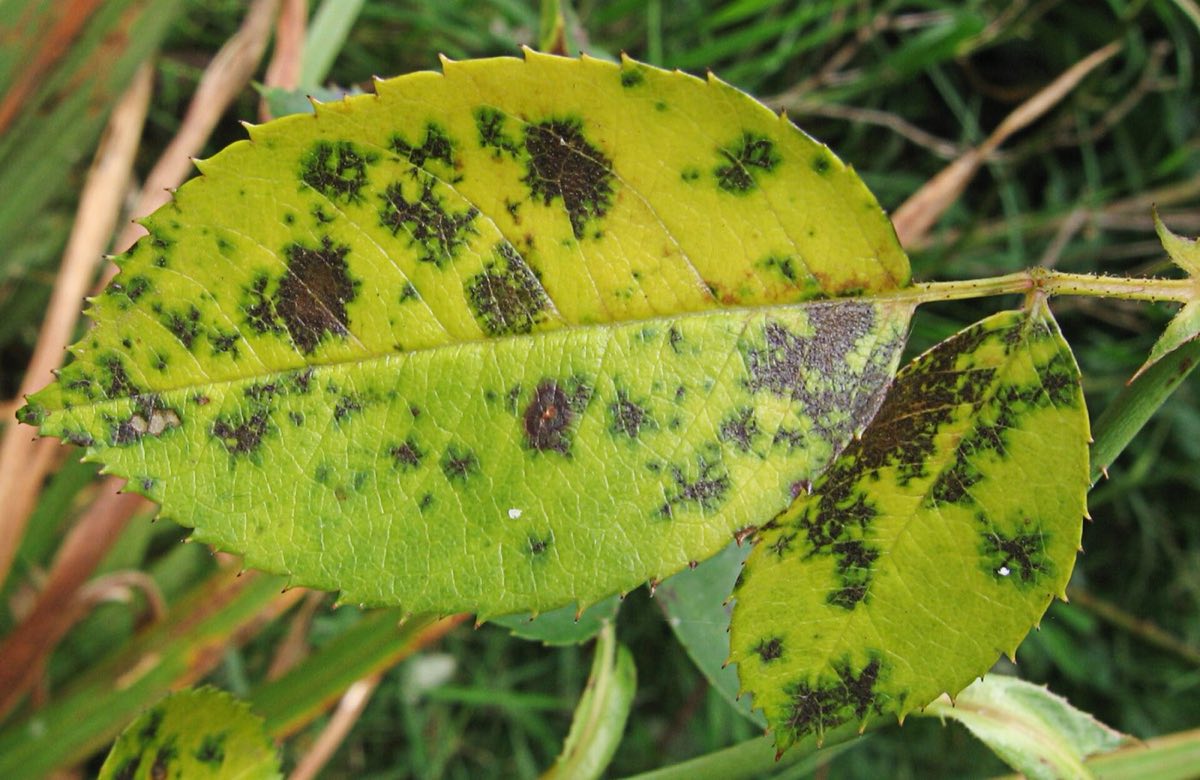
Black spot
The most damaging rose disease in a wet summer. Round black spots with fringed edges appear on the leaves, usually low on the plant from late May. Infected leaves yellow and drop, and a bad case leaves the bush almost bare by August. Spores splash up from fallen leaves in rain. Pick off affected leaves, gather fallen ones all season and do not compost them. A spring mulch buries spores on the soil. If a variety gets it badly every year despite all this, replace it with a resistant one.
Powdery mildew
A white, floury coating on young leaves, shoots and buds. It is worst in dry soil combined with humid air, so it often appears in late summer on roses against walls and in crowded borders. Deep watering, mulching and better spacing help a great deal, and avoiding late nitrogen denies it the soft growth it prefers.
Aphids
Clusters of green or pink insects on shoot tips and buds in May and June. On a healthy rose they rarely do lasting harm. Squash them or wash them off with a jet of water. Within a couple of weeks ladybirds, hoverfly larvae and small birds usually arrive. Insecticides kill these allies too and tend to make the problem last longer.
Rust
Bright orange pustules on the undersides of leaves, with yellow spots above, turning black later in summer. It favours mild, damp weather. Remove infected leaves, clear fallen ones and improve air movement. It rarely kills a rose but weakens it over time.
Balling
A bud swells, shows colour, then fails to open: the outer petals turn brown and papery and stick together until the bud rots. It happens when rain soaks a nearly open bud and sun dries the outer petals into a crust. Roses with very many thin petals are most prone. Gently peeling back the outer petals sometimes saves a bud. In wet climates, choose varieties with fewer, firmer petals for exposed spots.
Roses for scent
Not all roses smell, and some of the most beautiful have hardly any fragrance. Rose scent comes in several distinct families, and once you start noticing them you will bend over every bloom.
- Old rose: the heavy, sweet perfume of Damasks, Gallicas and Centifolias, the scent of rosewater.
- Tea: lighter and cooler, a little like fresh tea leaves, found in many hybrid teas.
- Musk: a sweet, clove-like scent from the stamens that carries on the air. Hybrid musks and many ramblers have it.
- Myrrh: an aniseed note in some English-style shrub roses. People love it or find it medicinal.
- Fruity: hints of lemon, raspberry or apple, common in modern roses.
Scent is strongest when the air is warm and humid, in the morning after the dew lifts and on still evenings, and weakest in cold or hot, windy weather. Plant fragrant roses beside a path, at a doorway or under a window you open in summer. Deep reds and pinks are more often strongly scented than yellows and oranges, and many-petalled flowers generally hold more scent than singles.
Roses in winter
Where frost arrives in late October and lingers until April, winter is the real test of a rose. Rugosas, Albas, Gallicas, species roses and many ramblers come through with no protection at all. Hybrid teas, many floribundas and some climbers can lose all their top growth in a severe winter, and grafted roses can die if the graft union freezes.
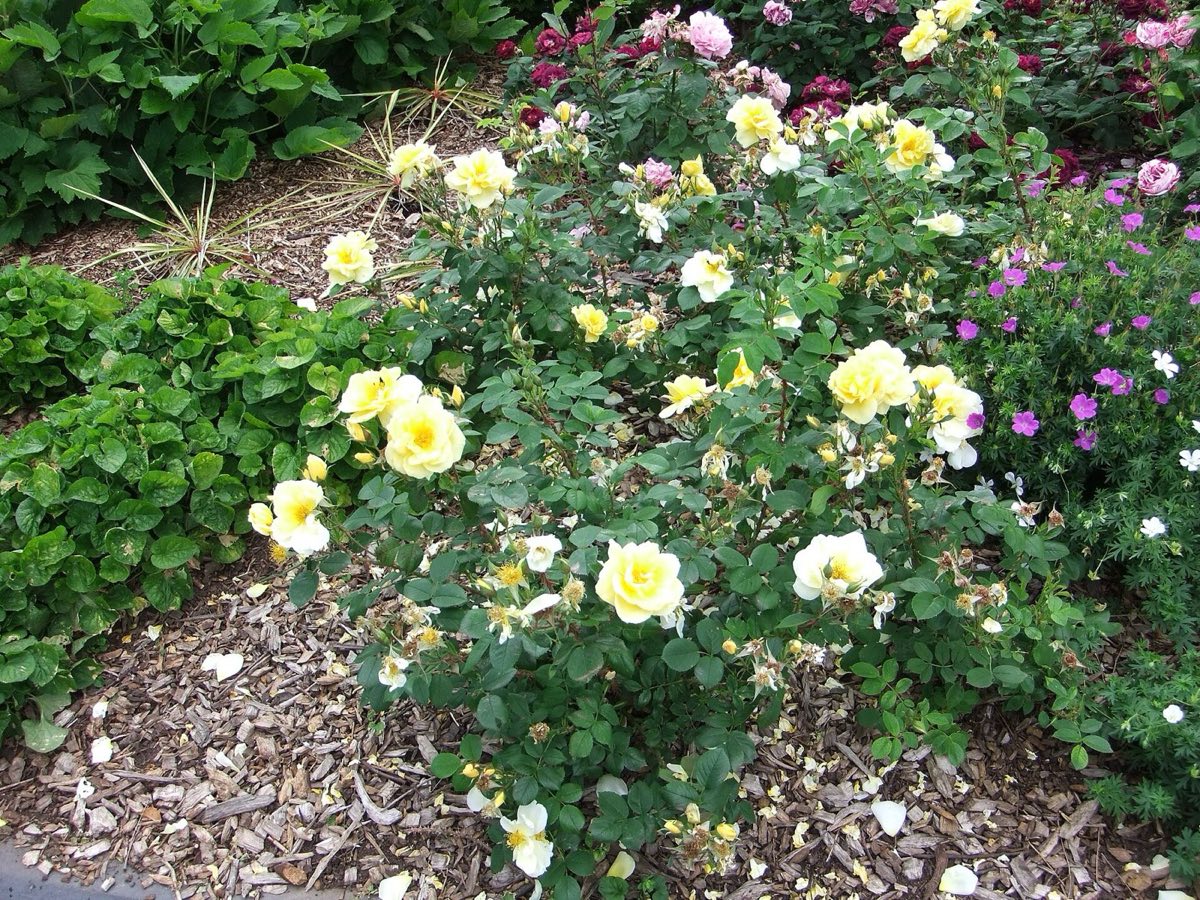
- Stop feeding by the end of July and stop deadheading in early September, so the wood ripens.
- Clear fallen leaves in October, especially from roses that had black spot or rust.
- Shorten very tall stems by about a third in late October, so wind cannot rock the plant. Leave the main pruning until spring.
- Earth up after the first hard frosts, usually in November. Mound soil or compost 20 to 25 cm high over the base of each bush, covering the graft union. Bring the soil from elsewhere rather than scraping it from around the plant.
- Protect standards and tender climbers. Wrap the head of a standard, where the graft sits, in two layers of fleece stuffed with straw. In very cold regions, climbers can be untied, laid along the ground and covered with spruce branches.
Remove the mounds gradually in April, once hard frosts are over and buds start to move.
Companion plants
On their own, even fine rose bushes have bare stems and awkward gaps at their feet. Good companions hide those legs, extend the season and attract beneficial insects. Choose sun lovers that do not compete too hard at the roots, and plant them 30 to 45 cm from the rose so you can still reach in to prune.
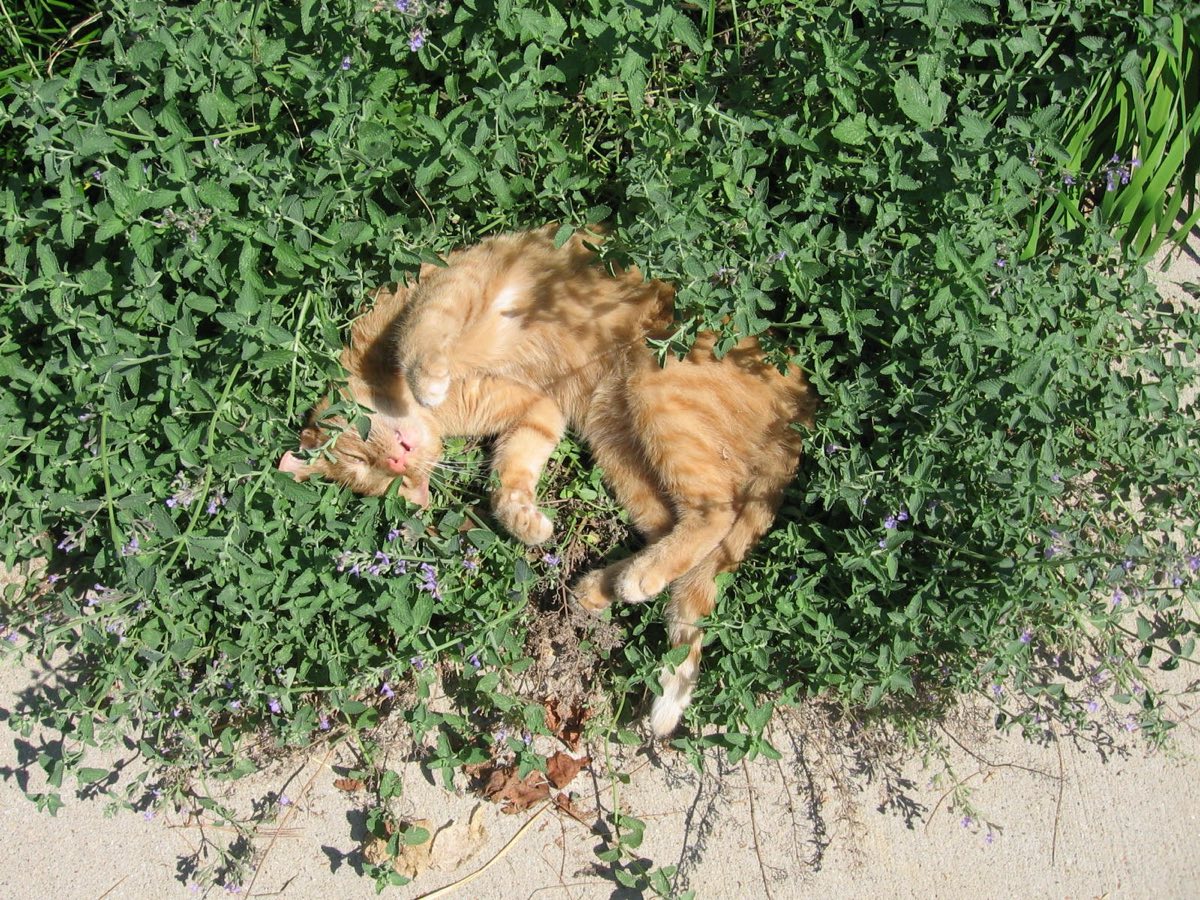
- Catmint (Nepeta): the classic partner, with blue-mauve flowers that return if cut back after the first flush.
- Lady's mantle (Alchemilla mollis): lime-green froth that flatters every rose colour.
- Hardy geraniums: blue and white forms knit together at ground level.
- Alliums: purple globes rising through roses in June. See bulbs.
- Foxgloves and campanulas: spires that contrast with rounded rose flowers.
Clematis are the ideal partner for climbing roses. A late-flowering type that is cut hard back each spring can scramble through a climber and flower after the rose has finished, without either pruning interfering with the other. Plant it about 60 cm from the rose and lead it in with a cane.
Lavender is often paired with roses, but it wants lean, sharply drained soil while roses want richer ground. On heavy soil I find it rots within a few winters. Catmint gives a similar effect and is far more forgiving.
Roses for cutting
Garden roses are looser, more fragrant and shorter-lived than shop roses, but a bowl of them on the table on a June evening is one of the real rewards of growing them. If you want plenty, grow a few bushes for cutting in a row or a cut flower garden, so you are not robbing the borders.

Hybrid teas give long single stems and floribundas give ready-made bunches. Many shrub roses have short, floppy stems better suited to low bowls. Look for strong necks that hold the flower upright, plenty of petals and good scent.
- Cut in the early morning or evening, and carry a bucket of water with you.
- Pick hybrid teas when the bud is about a quarter open and the sepals have folded down; tight buds often fail to open. Pick spray roses when one or two flowers in the cluster are open.
- Cut just above a leaf or bud so the plant can produce another flowering shoot.
- Strip leaves below the water line. Remove thorns only if you must, because the wounds let bacteria in.
- Recut each stem at an angle and stand the roses in deep, cool water in the shade for a few hours before arranging.
Change the water every day or two and recut the stems. Garden roses usually last four to seven days. If a flower droops suddenly, an air bubble may be blocking the stem: recut it under water and stand it in deep water for an hour. Month by month timings are on the garden calendar.