 Mayday Flowers
Spring
Spring in a cold climate is not a gentle season. It arrives in fits and starts, with a week of sunshine followed by snow, and then suddenly everything grows at once. This page follows it from the first snowdrop under the hedge to the last frost of May, with the plants that carry it and the jobs that cannot wait.
Early spring bulbs
The first flowers of the year are almost all bulbs, corms or tubers, and for good reason. A bulb carries its own food store, built up the previous spring, so it can push up flowers within days of the ground thawing, long before any leafy perennial has woken. In this garden that usually means the middle of March, though in a hard year snowdrops have still been under snow in early April.
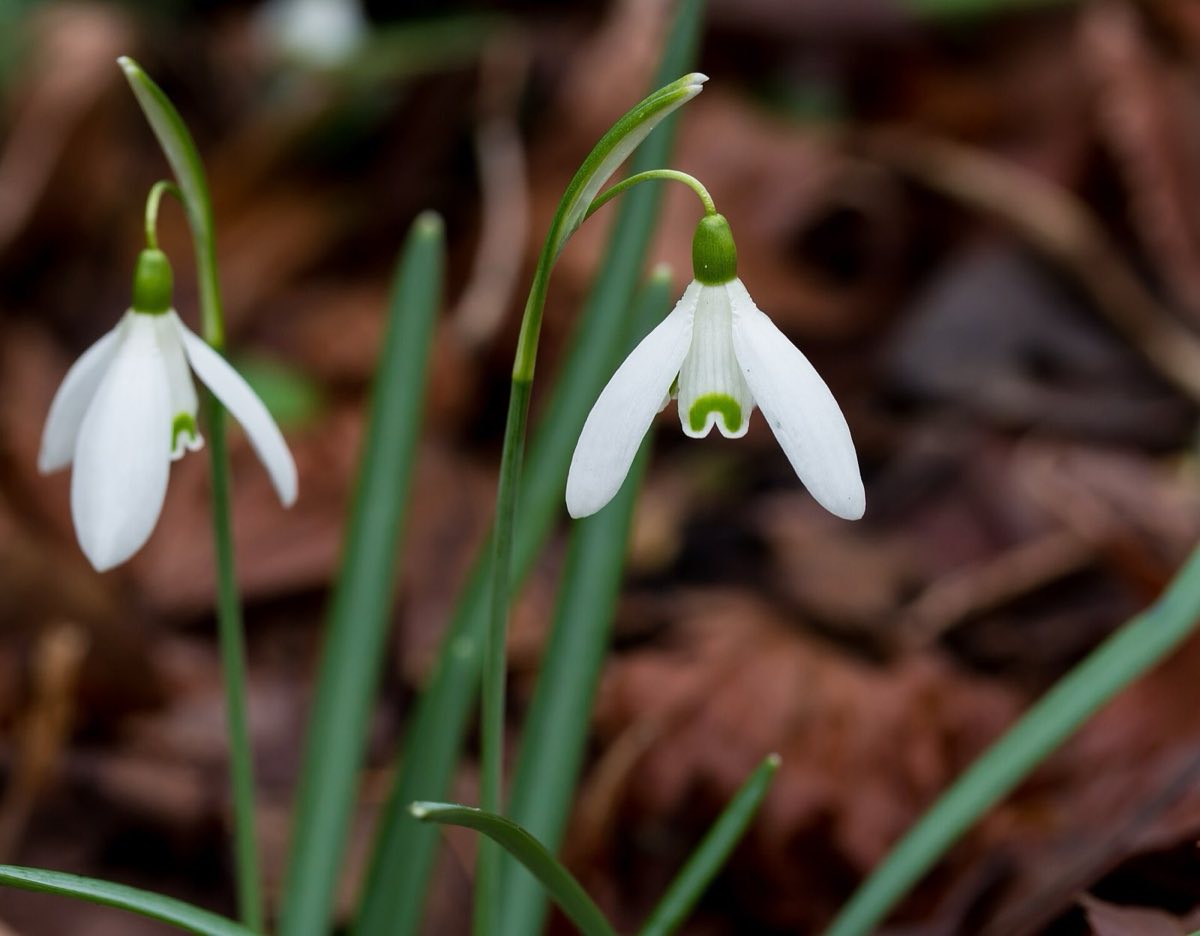
Snowdrop Galanthus nivalis
Flowers: March, sometimes late February. Height: 10 to 15 cm.
Small white bells with a green mark on the inner petals and a faint honey scent you only notice when a clump is warmed by sun. They prefer moist soil with leaf litter and part shade in summer. Snowdrops establish far better when moved "in the green", just after flowering with leaves still attached, than as dry bulbs in autumn, which often fail. Lift a congested clump, split it into groups of five or six bulbs and replant at the same depth.
Winter aconite Eranthis hyemalis
Flowers: March. Height: 8 to 10 cm.
Buttercup-yellow cups sitting on a green ruff of leaves. They open only in sun and seed themselves freely under deciduous shrubs. Dry tubers sold in autumn are often shrivelled; soak them overnight before planting 5 cm deep, or better, beg a clump in leaf from someone who already has them.
Crocus Crocus
Flowers: late March to mid-April. Height: 8 to 12 cm.
The small species crocuses flower first and naturalise well in lawns; the large Dutch types follow a week or two later with fatter goblets in purple, white, yellow and striped. Plant corms 8 to 10 cm deep in autumn. In a lawn, do not mow until the leaves have yellowed, usually six weeks after flowering, or the corms weaken.
Dwarf iris Iris reticulata and relatives
Flowers: late March to April. Height: 10 to 15 cm.
Jewel-like blue, violet or pale yellow flowers on short stems, often with a faint violet scent. They need sharp drainage and a hot dry summer rest. In heavy soil they flower beautifully once and then break into rice-grain bulblets; plant them 10 cm deep with grit, or grow them in pots and the front of a gravel bed.
Squill and glory of the snow Scilla siberica, Chionodoxa
Flowers: April. Height: 10 to 15 cm.
Small blue stars that spread by seed into carpets under shrubs and in grass. Scilla is a deep, almost electric blue with nodding flowers; chionodoxa is paler, upward-facing and has a white eye. Both are completely hardy, need no care and are among the best value of all bulbs.
All of these early bulbs share one need: their leaves must be left alone until they die back naturally. The leaves are making next year's flower. Tidying them away in April, or knotting daffodil leaves as people sometimes do, robs the bulb. The bulbs page covers planting depths, lawns and pots in detail.
Hellebores
Hellebores are the backbone of the early spring garden. They push buds up from the base in late winter, sit under snow without complaint, and open as soon as the weather allows, often in late March here. The flowers last for six to eight weeks because what you see are not true petals but sepals, which stay on the plant and slowly fade to green or bronze as the seed ripens.
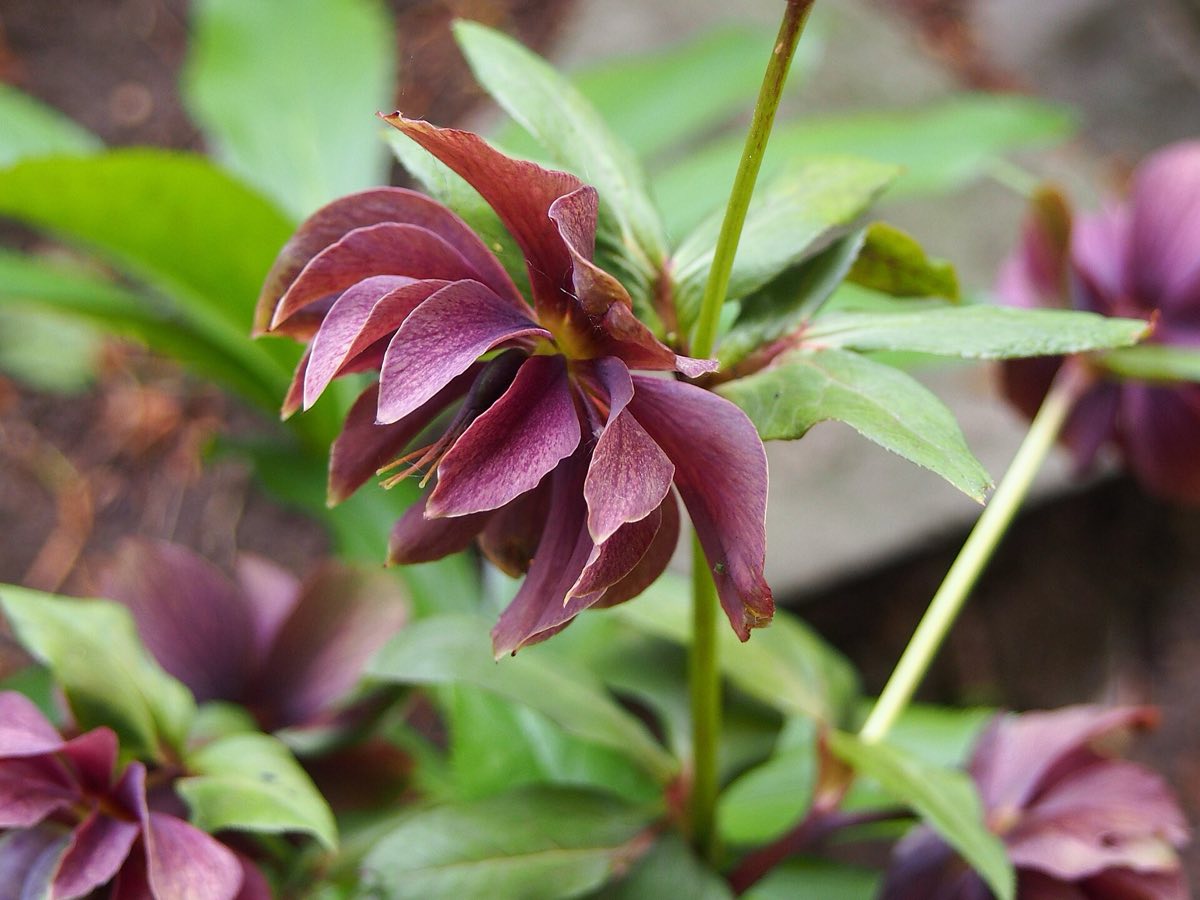
The hellebores most people grow are hybrids of the Lenten rose, Helleborus × hybridus. They come in white, cream, primrose, pink, plum, slate and near-black, single or double, plain or spotted inside. Many are bought in flower in spring, which is the best way to choose, as seedlings vary a great deal.
They want rich, moisture-retentive soil that does not waterlog, and shade from midday sun in summer. Under deciduous trees is ideal: plenty of light in spring when they flower, shelter when it gets hot. Plant with the crown at soil level and mulch with leaf mould each autumn.
Cutting back the old leaves
In late winter, just as the flower buds start to rise, cut away last year's leaves at the base. This shows off the flowers, which otherwise hide under tatty foliage, and removes leaves carrying leaf spot, a fungal disease that shows as round brown or black blotches. Do it before the buds are tall, or you will snip them by accident. New leaves grow up after flowering and stay handsome all summer.
Seedlings
Hellebores seed themselves around the parent plant, and the seedlings take two to three years to flower. They will not be identical to the parent, which is part of the fun. If you want to keep a particular colour, divide the plant instead, though they resent disturbance and may sulk for a season.
Primroses and cowslips
Primroses are the plant that tells you the soil has properly woken. They flower from early April in this garden, sometimes earlier in a sheltered spot, and carry on for six weeks or more. The wild primrose, Primula vulgaris, has soft pale yellow flowers with a darker eye, held singly on short stems above a rosette of crinkled leaves. The scent is faint and green, best caught on a warm still afternoon.
Primrose Primula vulgaris
Flowers: April to May. Height: 10 to 15 cm.
Wants moist, humus-rich soil and light shade, especially from midday sun in summer. It thrives along shady path edges, under shrubs and at the foot of hedges. Clumps can be split after flowering every three years to keep them vigorous.
Cowslip Primula veris
Flowers: late April to May. Height: 15 to 25 cm.
Clusters of small, deep yellow, sweetly scented bells on taller stems. Cowslips like more sun and drier soil than primroses and are lovely naturalised in rough grass that is not cut until midsummer.
Primroses are easily raised from seed sown fresh in summer, or from bought seed given a period of cold. Sow on the surface of moist compost, barely cover, and leave the pot outside in a shady place over winter; germination follows in spring. The bright bedding polyanthus sold in garden centres are short-lived and often struggle in cold winters. The wild types and their close relatives are tougher and far more graceful.
Primroses have two pests worth knowing. Vine weevil grubs eat the roots in winter, causing a plant to collapse suddenly in spring; tip it out of its pot or lift it, and you will find fat white C-shaped grubs. Birds, particularly sparrows, sometimes tear yellow flowers apart for no obvious reason. There is little to be done about the second except to plant enough to share. The pests and diseases page has more on vine weevil.
Forsythia and early shrubs
For a few weeks in mid to late April, forsythia is the loudest thing in the garden. The flowers come before the leaves, so the whole bush turns a solid bright yellow, which can be glorious or garish depending on what is around it. In this garden it stands at the back of the shady strip, where it lights up a dark corner and is softened by blue scillas at its feet.
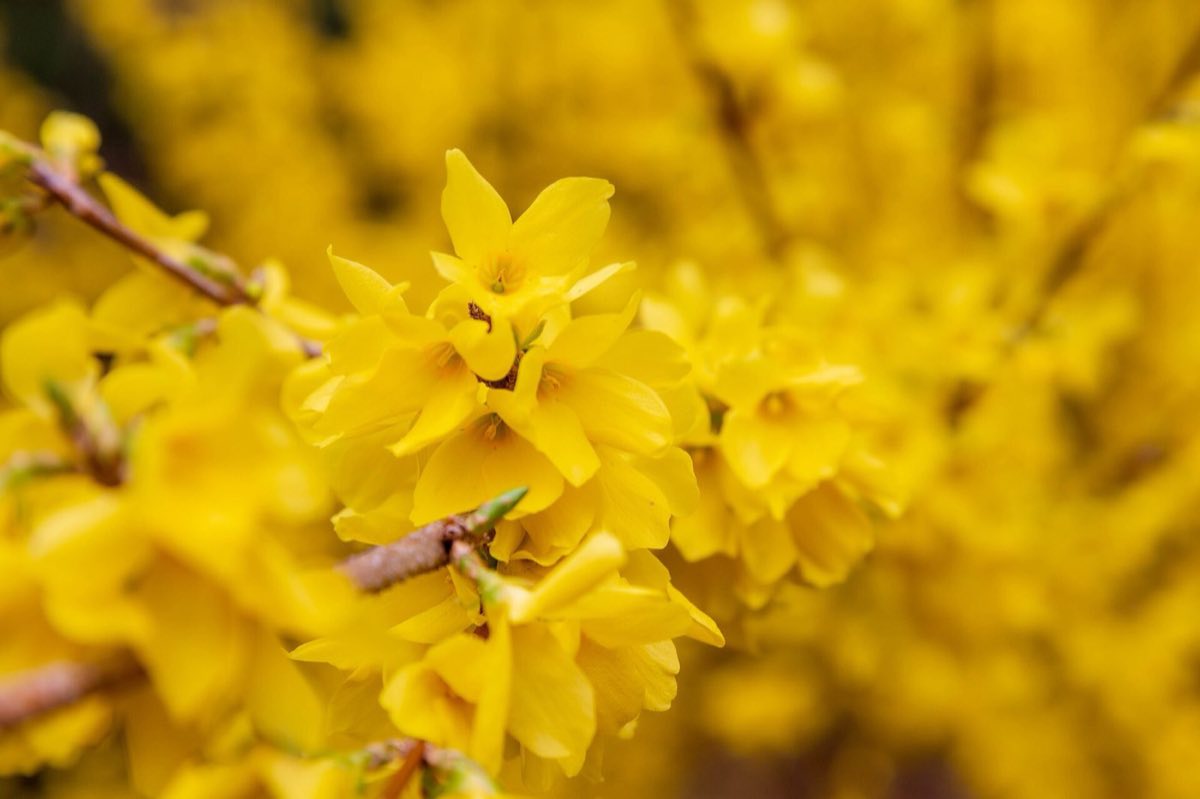
Pruning forsythia
Forsythia flowers on stems made the previous summer, so it must be pruned immediately after flowering, never in autumn or winter. Each year, cut about a third of the oldest stems right down to the base. This keeps the bush open and arching and makes room for strong young shoots that will flower the following spring. Trimming it into a tight ball with shears, as is sometimes done, removes most of next year's flowers and gives a lumpy shape.
Other early shrubs
- Flowering currant (Ribes sanguineum): hanging clusters of pink flowers with a sharp, slightly feline smell that some people love and others do not. Very tough. Prune after flowering like forsythia.
- Daphne (Daphne mezereum): small, upright, with purple-pink flowers clustered tight on bare stems and one of the strongest, sweetest scents of the season. All parts are poisonous. Dislikes being moved.
- Magnolia (hardy star-flowered types): narrow white or pale pink petals on a bare shrub in late April. Frost can brown the flowers overnight, so choose a spot away from the morning sun, which thaws frozen petals too quickly and causes the damage.
Tulips and daffodils
These are the two great bulbs of spring, and they behave so differently that it is worth thinking of them separately. In this garden daffodils open from mid to late April and tulips follow from early May, with a week or two of overlap when both are in flower together.
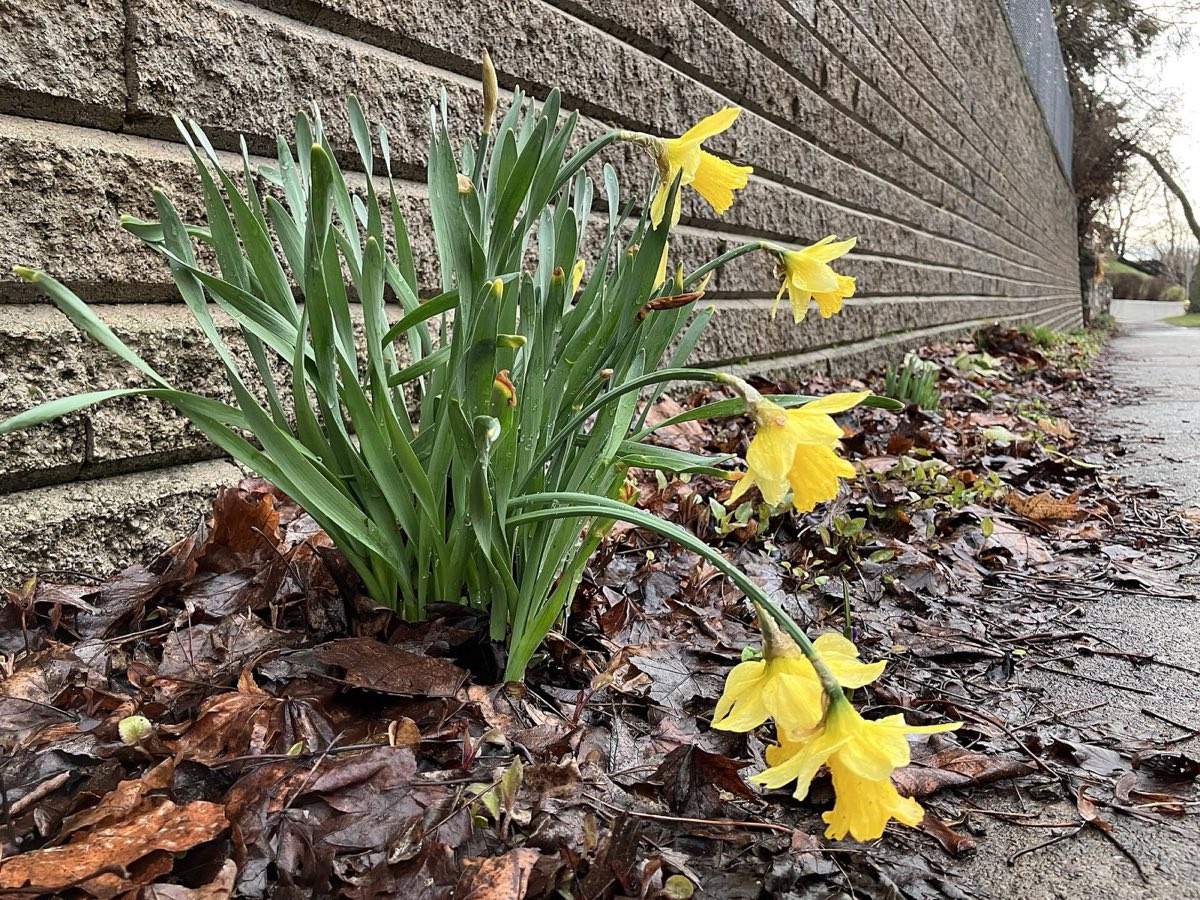
Daffodils
Daffodils (Narcissus) are among the most reliable perennials in any garden. Once planted well, they come back and multiply for decades, survive the hardest winters and are left untouched by deer, voles and squirrels because the bulbs are poisonous. They grow happily in borders, in grass, under deciduous trees and in pots.
Plant them in September, as early as you can get them, because their roots start growing in late summer. Set them 12 to 15 cm deep, measured to the base of the bulb, and 10 to 15 cm apart. In grass, toss a handful of bulbs and plant them where they land; it gives a more natural drift than careful rows.
The range is wide: tall trumpet types, large-cupped, small-cupped, doubles, the multi-headed scented types, and the small dwarf species that suit the front of a border or a rock garden. Small-flowered types tend to weather spring storms better than the large heavy-headed ones, which can be flattened by rain.
The most common problem is "blindness", where bulbs make leaves but no flowers. The usual causes are planting too shallow, crowding after many years, cutting leaves off too soon, or a dry spell in the weeks after flowering. Lift and split congested clumps in early summer as the leaves yellow, and feed with a potash-rich fertiliser after flowering.
Tulips
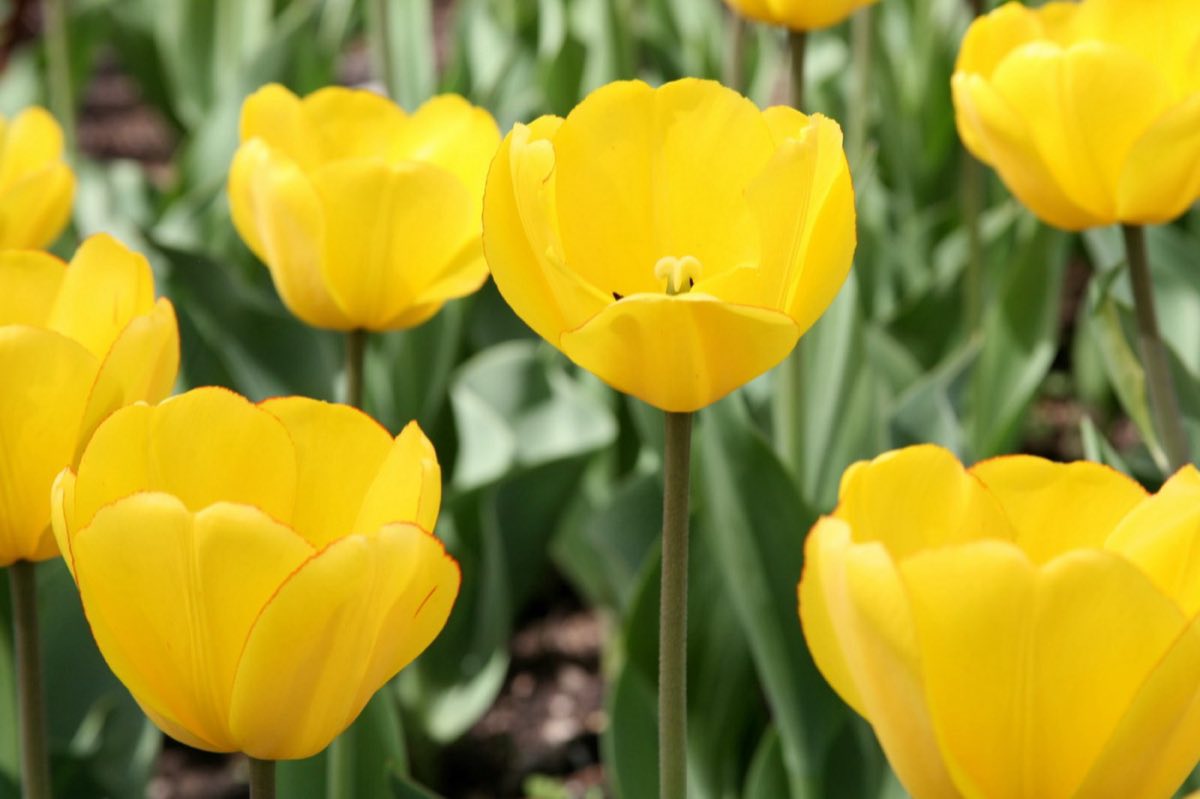
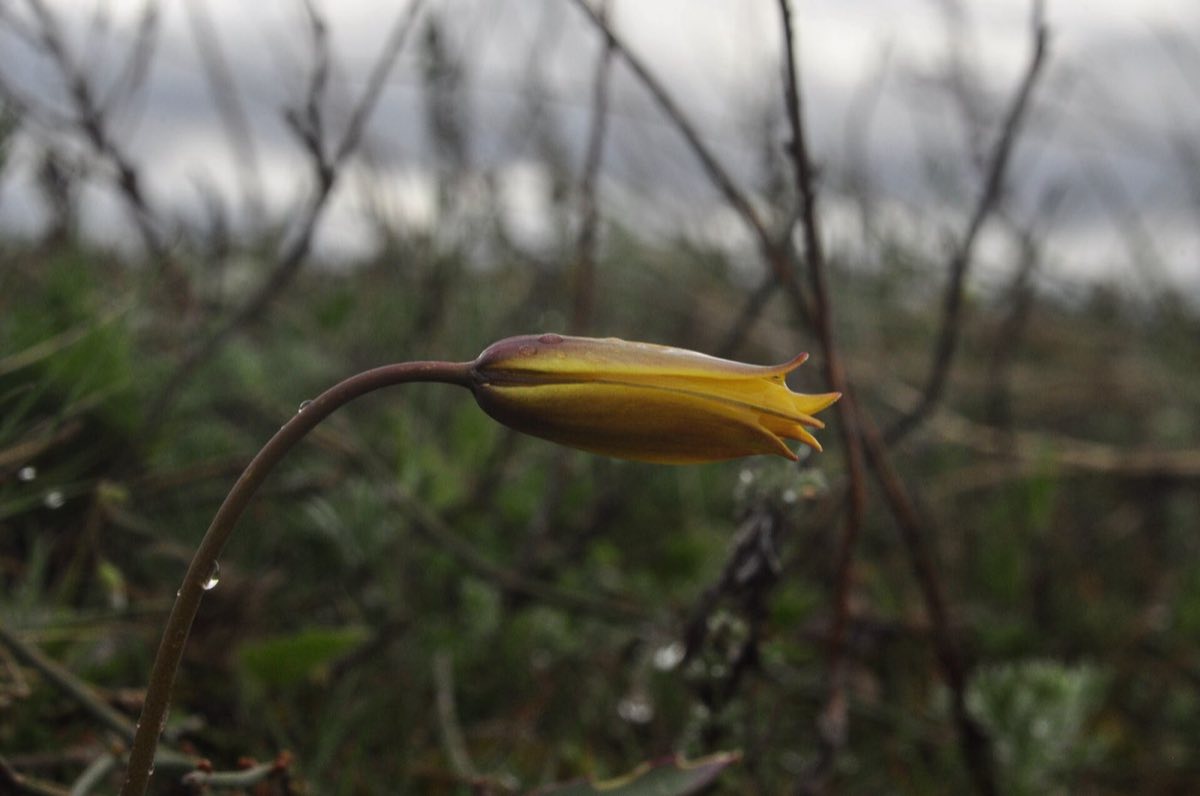
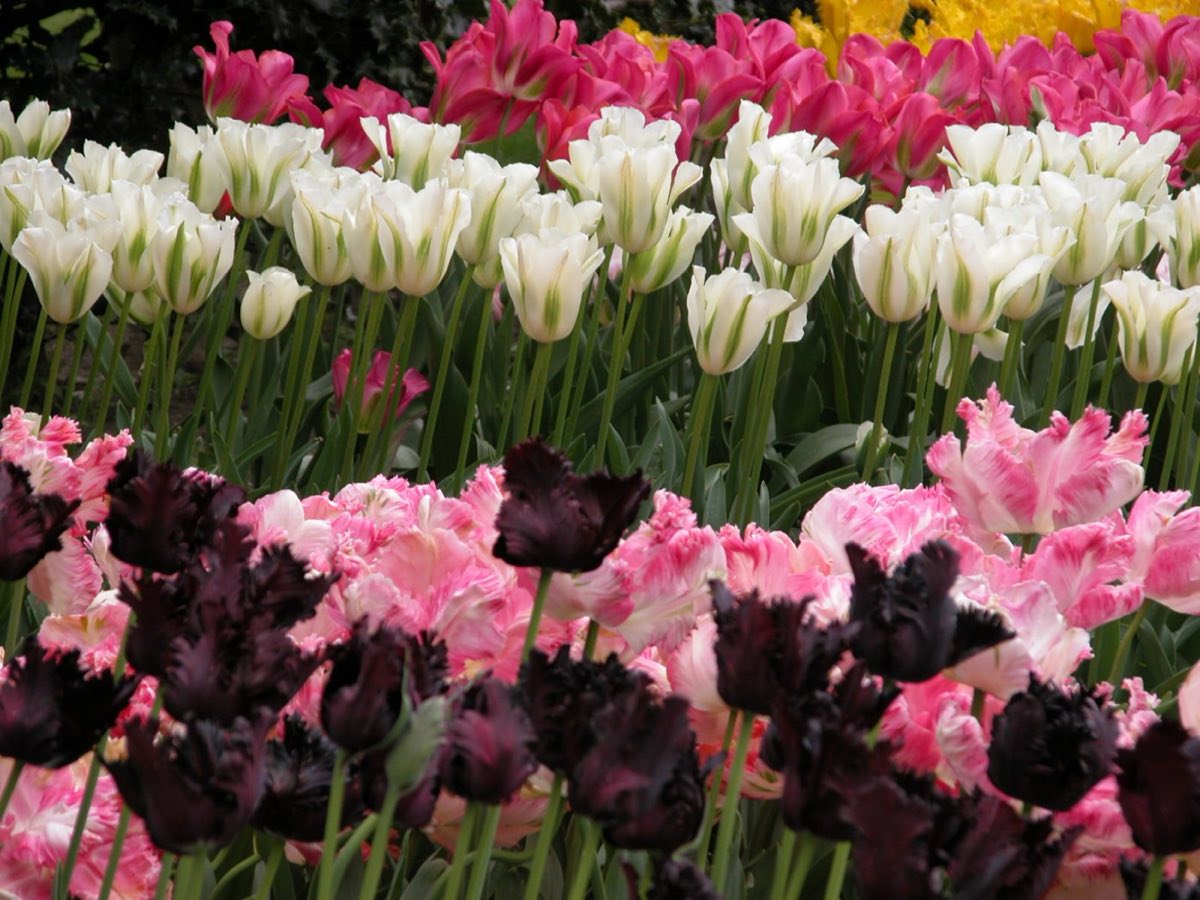
Tulips (Tulipa) come from mountain slopes with cold winters, short wet springs and baking dry summers. Garden soil that stays damp in summer is the opposite of what they want, which is why most tulips decline after the first year or two. Knowing this changes how you grow them.
| Approach | Best tulip types | How |
|---|---|---|
| Grow as annuals | Large-flowered doubles, parrots, fringed, lily-flowered | Plant 15 cm deep in November, enjoy one perfect season, lift and compost or move to the cutting patch |
| Grow as perennials | Darwin hybrids, some single lates, species tulips | Plant 20 to 25 cm deep in a sunny, well-drained spot that dries out in summer; deadhead and leave leaves to die back |
| Naturalise | Small species tulips | Plant 10 cm deep in gravel or at the sunny front of a dry border; they will spread slowly |
Plant tulips later than other bulbs, in late October or even early November, once the soil has cooled. This reduces the risk of tulip fire, a fungal disease that shows as twisted, scorched-looking leaves and spotted flowers. Discard any bulb with grey mould or soft patches at planting, and do not grow tulips in the same patch two years running if you have seen the disease.
Lilac
If one smell stands for May in a cold-winter garden, it is lilac. The common lilac, Syringa vulgaris, is perfectly suited to this climate: it needs a cold winter to flower well, is untroubled by frost, and grows into a large shrub or small tree that will outlive the gardener. The flowers come in dense cone-shaped panicles of lilac, purple, white, pink and deep wine, single or double, and the scent carries across the garden on a warm evening.
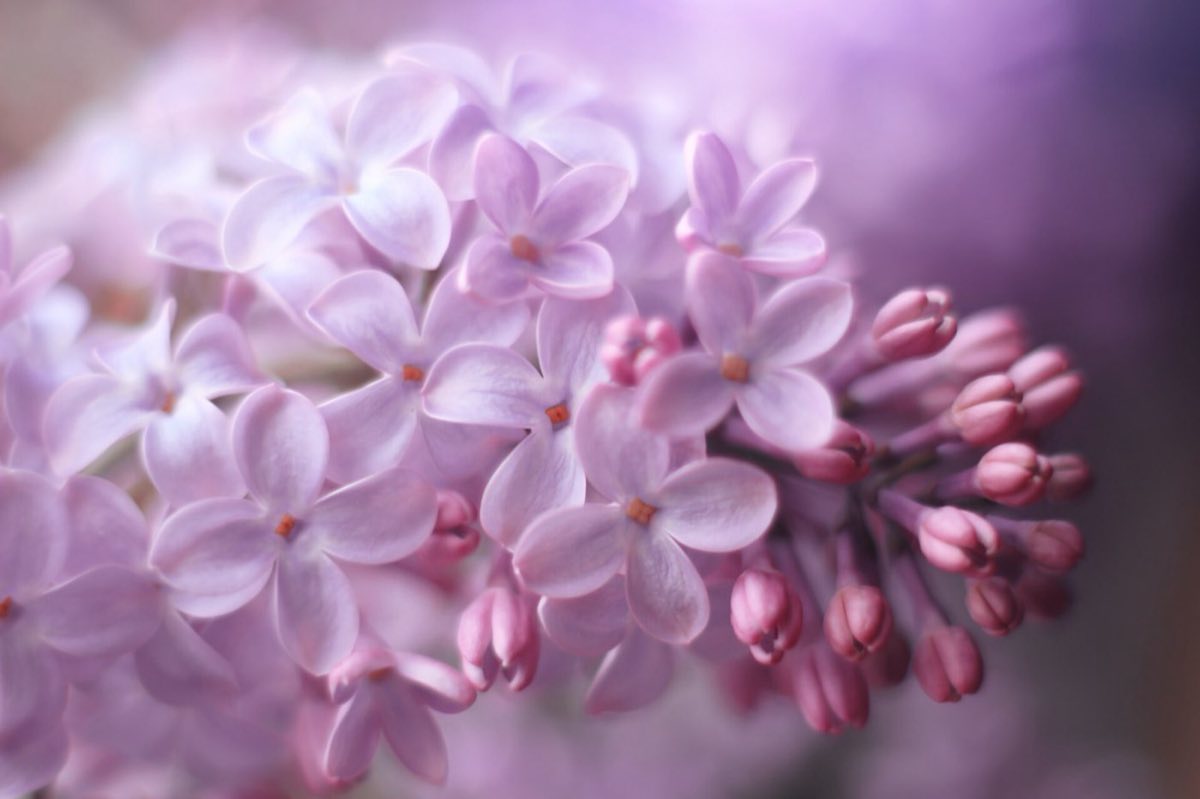
Lilac flowers best in full sun and is not fussy about soil as long as it is not waterlogged. It tolerates lime, which suits it well. Allow plenty of space: a mature bush is easily 3 m tall and as wide.
Pruning lilac
Like forsythia, lilac flowers on buds formed the previous year, so any pruning must be done right after flowering. Snap or cut off the faded flower heads just above the pair of new shoots underneath, which carry next year's buds. An old leggy bush can be renewed by cutting a third of the oldest stems to the base each year over three years.
Common lilac also suckers heavily, sending up shoots from the roots around the main plant. Pull them out while young rather than cutting them at ground level, which only encourages more. If the lilac is grafted, the suckers come from the rootstock and will not flower the same.
For cutting, take stems early in the morning when the panicle is about half open, strip most of the leaves, and split the woody stem end upward by 3 to 5 cm before putting it straight into water. Lilac drinks heavily and wilts quickly otherwise.
Lily of the valley and bleeding heart
Under the apple tree and in the shady corners, May belongs to two very different plants that both love cool, moist, humus-rich soil and dappled light.
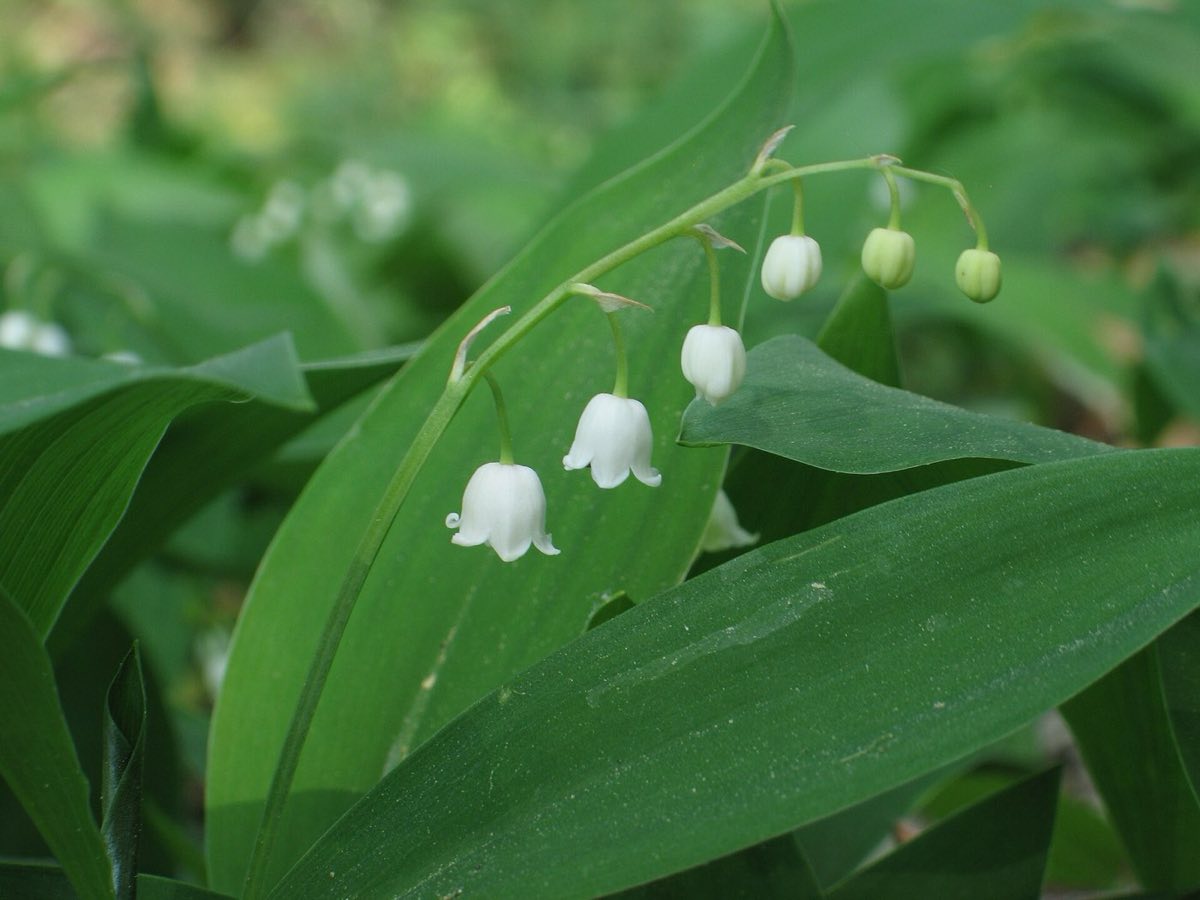
Lily of the valley Convallaria majalis
Flowers: May. Height: 15 to 25 cm.
Small nodding white bells on arching stems, tucked between pairs of broad pointed leaves. The scent is famously strong and sweet. It spreads by creeping rhizomes into dense patches that suppress weeds completely, which makes it perfect ground cover for shade and a nuisance near more delicate plants. It can take two or three years to settle after planting, then suddenly takes off. Plant the rhizome pieces, called pips, just under the surface in autumn or early spring, 10 cm apart. All parts of the plant, including the red berries, are poisonous.
Bleeding heart Lamprocapnos spectabilis
Flowers: May to June. Height: 60 to 80 cm.
Arching stems hung with rows of pink and white heart-shaped flowers, each with a white drop at the tip. There is also a pure white form. The leaves are soft, divided and fern-like. Bleeding heart grows fast in spring and goes dormant by midsummer, leaving a gap, so plant something nearby that fills out later, such as hostas or ferns. Its young shoots are brittle and easily damaged by late frost; they usually recover. Keep it moist in dry springs or it dies down early.
Sowing under cover
A short growing season means many flowers have to be started indoors to bloom in time. The window is narrow. Sow too early and plants become tall and weak before it is safe to put them out; sow too late and they only start flowering when the first frosts are near.
| When to sow indoors | Flowers | Notes |
|---|---|---|
| February | Sweet peas, snapdragons, lobelia, slow perennials | Sweet peas in deep pots or tubes, in a cool bright room or unheated porch |
| March | Cleome, nicotiana, salvias, perennial lupins and delphiniums | Most need 18 to 20 °C to germinate, then cooler and bright |
| Early to mid April | Cosmos, rudbeckia, asters (annual China asters), dahlias from seed | Grow on fast; pot on once |
| Late April | Zinnias, sunflowers, nasturtiums, morning glory | Fast growers that hate root disturbance; sow in individual pots |
Light is the limiting factor
Temperature is easy to provide indoors; light is not. A windowsill gives light from one side only and much less of it than you think. Seedlings stretch toward it and become pale and floppy. Turn trays daily, keep them as close to the glass as possible, and move them to a cooler room once germinated, which slows stretching. A simple shelf with fluorescent or LED tubes 5 to 10 cm above the seedlings makes an enormous difference.
Pricking out
When seedlings have their first true leaves, the second pair that look like the adult plant, move them into individual cells or small pots. Handle them by a leaf, never by the stem, which is easily crushed. Plant them a little deeper than they were growing. A week later they should be visibly larger. The seeds and propagation page covers this in much more depth, including cold stratification for hardy perennials.
Hardening off
Plants raised indoors have soft leaves with a thin protective layer. Moved straight outside, they are scorched by sun, battered by wind and chilled by cold nights. Hardening off is the process of getting them used to outdoor conditions gradually, over about two weeks.
- Days 1 to 3. Put plants outside in a sheltered, lightly shaded spot for two or three hours in the middle of the day. Bring them in well before evening.
- Days 4 to 7. Leave them out for most of the day, with some morning or afternoon sun. Keep them out of strong wind.
- Days 8 to 10. Leave them out all day in full sun, bringing them in only at night.
- Days 11 to 14. Leave them out day and night if the forecast shows no frost and night temperatures above about 5 °C. Hardy annuals can manage lower; tender plants such as dahlias, zinnias and cosmos want 8 to 10 °C at night.
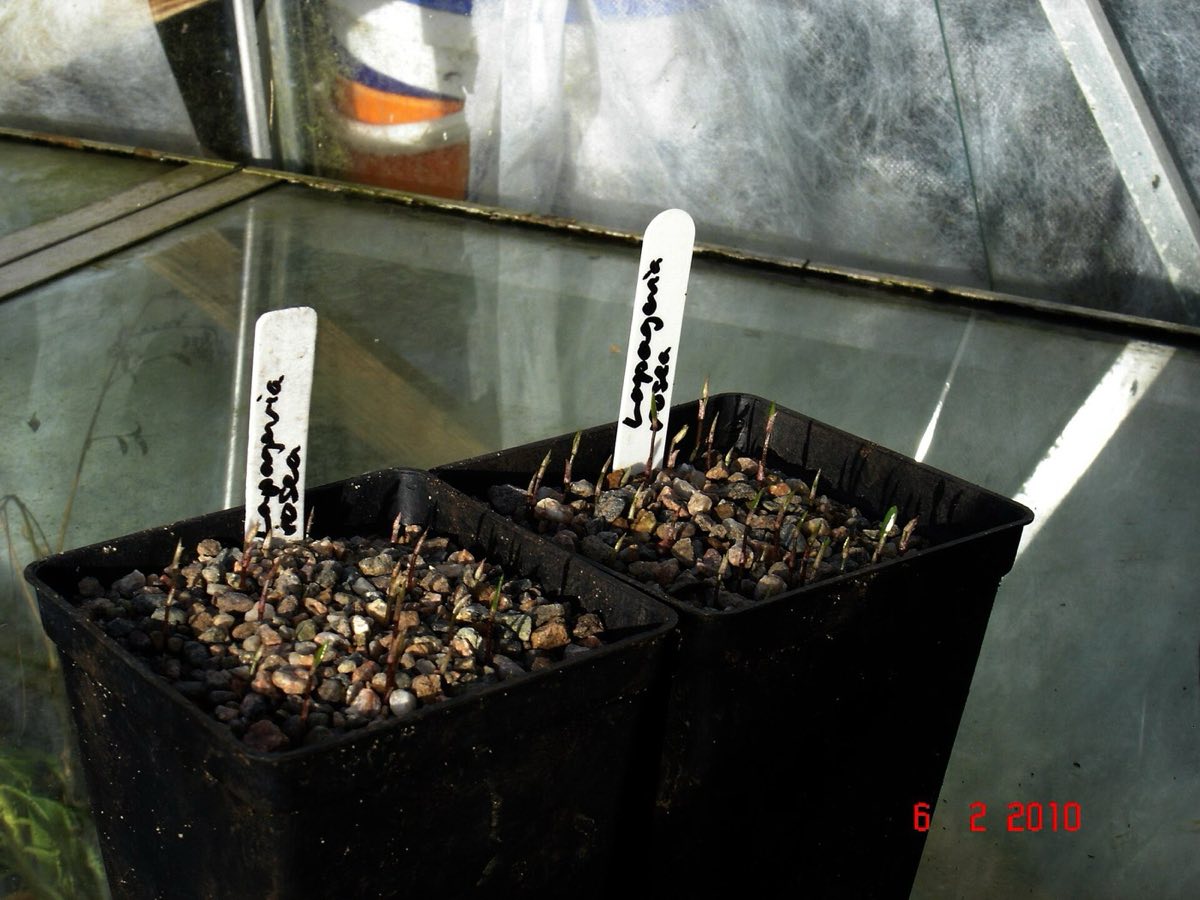
A cold frame makes hardening off much easier. Plants go into it with the lid closed, and the lid is opened a little more each day, then left open at night once it is mild. On a frosty night, close it and cover the glass with an old blanket. Without a frame, a sheltered spot by a south-facing wall with fleece ready works almost as well.
Watch for signs of stress: white or bleached patches on leaves mean sunscorch; purple-tinged leaves on tomatoes, zinnias and similar plants mean they are too cold. Both usually recover if the plant goes back a step for a day or two.
Spring jobs in the border
Between the snow melting and the end of May, the list of jobs is long. The trick is doing them in the right order, as the soil allows.
March: when the soil thaws
- Cut back last year's perennial stems and grasses to just above the new growth. Leave them as late as you can for insects sheltering in hollow stems, but finish before new shoots get tangled in the old.
- Prune summer-flowering shrubs that flower on new wood, such as buddleja and the late-flowering clematis, hard back to a pair of buds.
- Remove winter protection from roses gradually, a little each week, as the frosts ease. The roses page explains spring pruning.
April: when growth starts
- Lift and divide summer and autumn flowering perennials that have become congested or bare in the middle, such as asters, phlox, heleniums and hardy geraniums. Replant the healthy outer sections.
- Spread a 5 cm mulch of compost or leaf mould over bare soil once it has warmed slightly and is moist. Do not bury the crowns of perennials.
- Plant new perennials, shrubs and bare-root roses as soon as the ground can be worked.
- Sow hardy annuals direct outdoors, such as cornflowers, nigella, calendula and poppies, once the soil crumbles.
May: when everything is moving
- Put supports in place for peonies, delphiniums, tall asters and anything else that will flop. Grow-through grids or a cat's cradle of string between canes work well; set them at about two thirds of the final height.
- Deadhead daffodils and tulips, leaving leaves in place.
- Start the slug patrol in earnest, especially around new shoots of delphiniums, lupins and hostas.
- Pinch out the tips of young sweet peas and cosmos when they have three or four pairs of leaves, to make bushier plants.
Late frost protection
The single biggest risk of a cold-climate spring is a late frost after growth has started. A clear, still night in May with a falling evening temperature can bring a frost even after a warm day, and it does most damage to soft new shoots, open blossom and tender plants put out too early.
Reading the signs
Frost is most likely when the sky is clear, there is little or no wind, and the temperature at sunset is already below about 6 °C. Low ground, the bottom of slopes and enclosed hollows collect the coldest air and are hit first. A thermometer placed at plant height in the coldest part of the garden is worth more than any regional forecast.
What to do
- Cover in the evening. Horticultural fleece, old sheets or newspaper laid over plants trap the warmth radiating from the soil. Two layers of fleece protect against a couple of degrees of frost. Hold covers down with stones, and do not let plastic touch leaves directly, as it conducts cold.
- Water the soil earlier in the day. Moist soil holds and releases more heat than dry soil.
- Protect pots. Move containers against the house wall or into a shed overnight.
- Uncover in the morning once the frost has lifted, or plants will overheat under the fleece on a sunny day.
- Shade frosted blossom from morning sun if possible. Much of the damage comes from rapid thawing rather than freezing itself.
After a frost
Frosted leaves look dark, glassy and limp in the morning, then turn brown or black. Do not cut anything back straight away. Wait a week to see where new growth breaks. Hardy perennials such as peonies, bleeding heart and hostas almost always recover, though they may flower less that year. Tender plants that have been frosted, such as dahlias or zinnias, usually need replacing if the growing tip has been killed.
The best protection is patience. In this garden tender plants go out in the last days of May or the first week of June, never earlier, however warm the middle of May feels.
Third week of May, minus 2 °C at dawn after a week of 20 °C days. Fleece on everything tender. The new peony shoots in the island bed took the frost and drooped, but by evening they had stood up again. The magnolia did not, poor thing: brown petals all over the lawn.
Once the frost risk passes, the garden moves quickly into early summer. Peonies, irises and the first roses follow within weeks. The summer page picks up from there, and the calendar has a week-by-week view of spring jobs if you prefer a checklist.