 Mayday Flowers
Dahlias
Dahlias are the flowers of late summer: from August until the first hard frost they produce more blooms the more you cut them. They come from the mountains of Mexico and will not survive a frozen winter in the ground, so in a cold garden they live a double life, growing outdoors in summer and sleeping in a box in winter. This guide follows that whole cycle.
Dahlia forms
Dahlias are classified by flower form, and the range is astonishing: from simple daisies the size of a coin to shaggy blooms as wide as a dinner plate. Each flower head is really a composition of many small florets. The outer ray florets are what we call petals, and the central disc florets carry the pollen. The form depends on how many florets there are and how they are shaped.
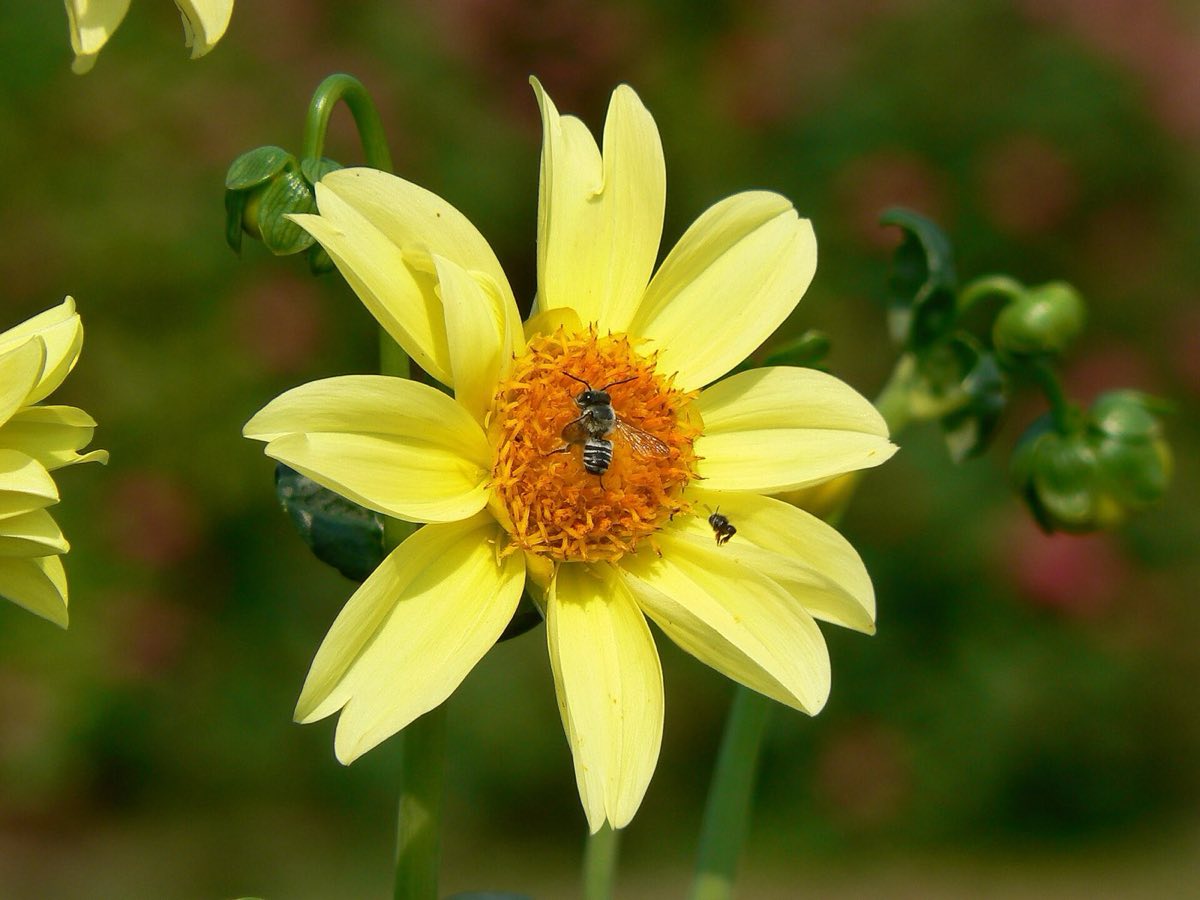
Single Dahlia
Flowers: July to October. Height: 45 to 120 cm.
One ring of flat, broad petals around an open yellow centre. Light and simple, often on plants with dark bronze leaves, and one of the best late summer flowers for bees.
Collarette Dahlia
Flowers: July to October. Height: 75 to 120 cm.
A single ring of outer petals, with a second ring of short, frilly petaloids around the centre, the collar, often in a contrasting colour such as white on crimson. Pollinators can still reach the centre.
Anemone Dahlia
Flowers: July to October. Height: 60 to 100 cm.
One or more rings of flat outer petals around a raised, dense pincushion of elongated tubular florets. Unusual and long-lasting in the vase.
Waterlily Dahlia
Flowers: July to October. Height: 90 to 120 cm.
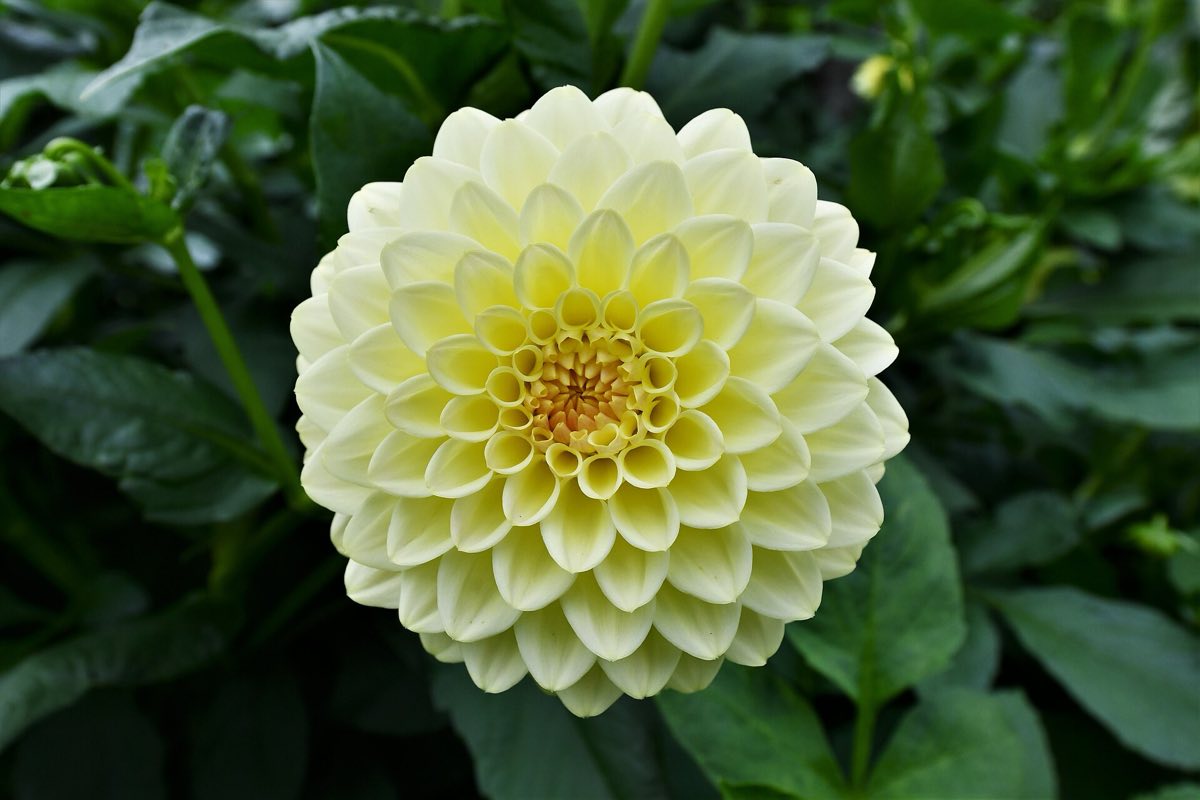
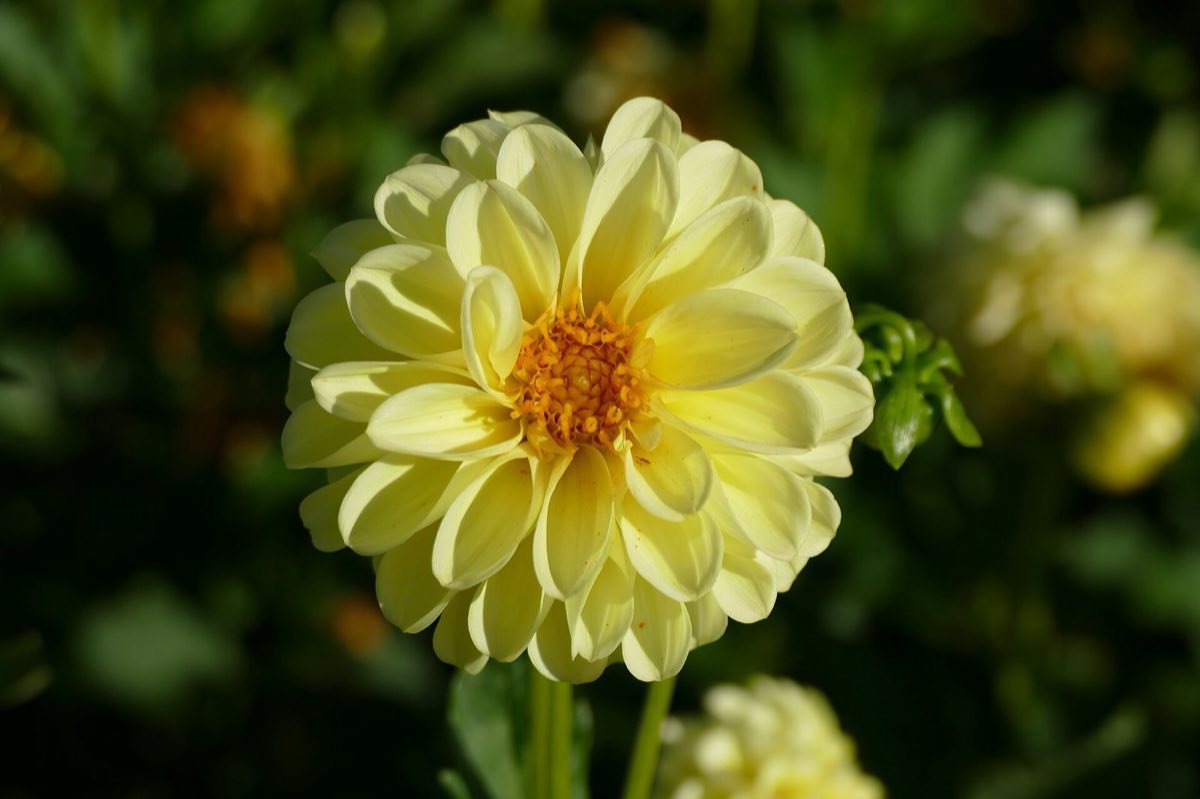
Fully double but shallow, with a few rows of broad, slightly cupped petals, so the side view is flat like a saucer. Elegant, with long stems, and among the best types for cutting.
Decorative Dahlia
Flowers: July to October. Height: 90 to 150 cm.
Fully double with broad, flat petals and no visible centre. The group ranges from miniatures under 10 cm to giants over 25 cm across. The giants need disbudding, staking and shelter.
Ball Dahlia
Flowers: July to October. Height: 90 to 120 cm.
Neat, fully double spheres, usually 8 to 15 cm across, made of petals rolled into tubes for more than half their length. Tough and weather resistant.
Pompon Dahlia
Flowers: July to October. Height: 75 to 100 cm.
Miniature balls under 5 cm across, with tightly rolled petals arranged like a honeycomb. Charming in small arrangements and very productive.
Cactus Dahlia
Flowers: July to October. Height: 90 to 150 cm.
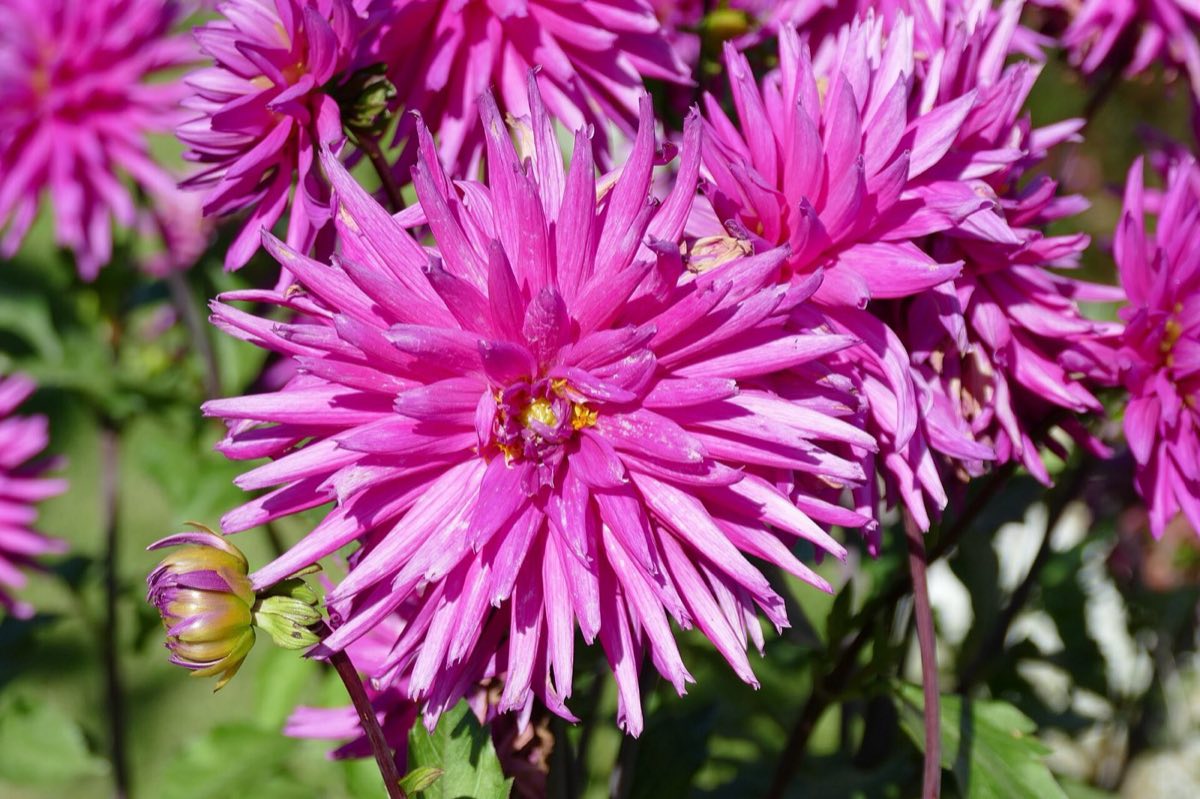
Fully double, with narrow, pointed petals rolled outwards for more than half their length, giving a spiky, starburst look.
Semi-cactus Dahlia
Flowers: July to October. Height: 90 to 150 cm.
Halfway between cactus and decorative. Petals are broad at the base and rolled only towards the tips, so the flower is spiky but fuller.
Starting tubers indoors
In a cold climate, the summer is too short to plant dry tubers straight into the ground in late May and expect a long display. Starting them in pots indoors gives a four to six week head start, earlier flowers and a plant big enough to survive the slugs.
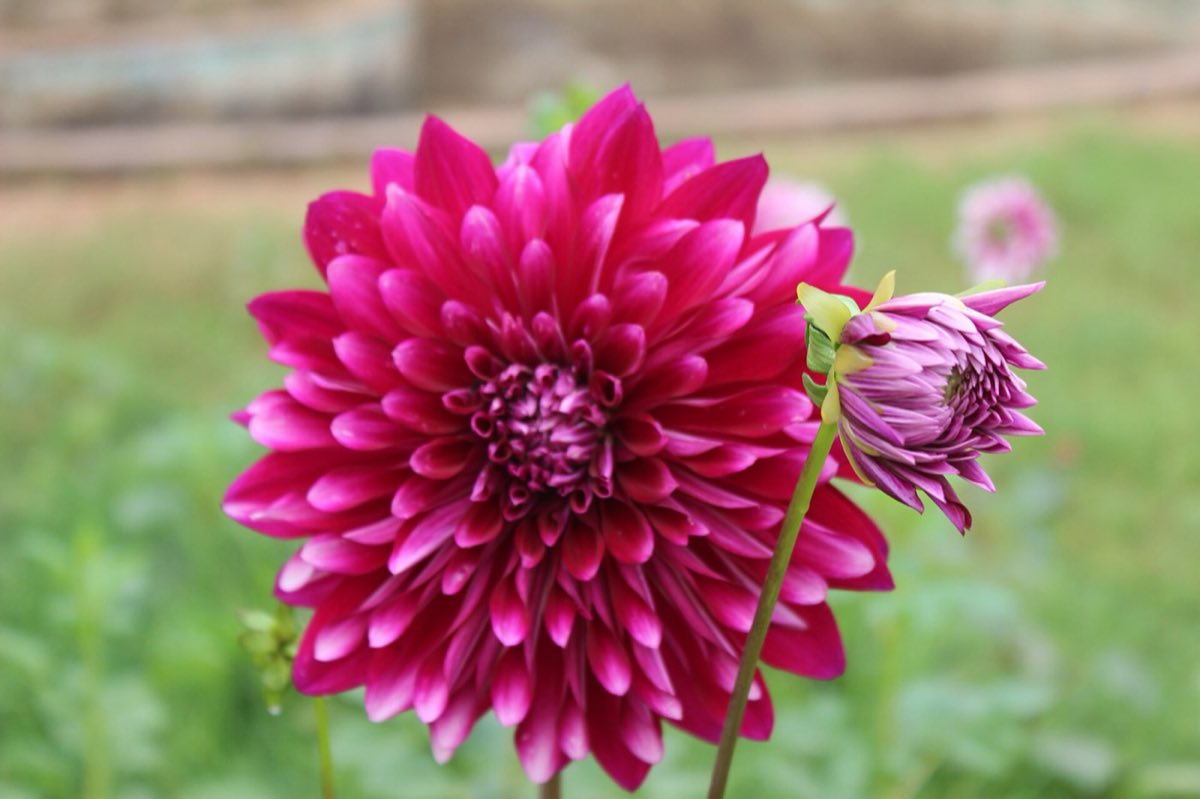
Start tubers from late March to mid April, about six to eight weeks before the last frost. Check each one first: a healthy tuber is firm, like a potato. Remove any soft or rotten parts with a clean knife, and discard tubers that are hollow and papery.
Plant each clump in a pot of 3 to 5 litres, or several in a deep crate, with the tubers covered and the old stem and crown just at the surface. Use barely moist compost and do not water again until shoots appear. A tuber sitting in cold, wet compost with no leaves to use the water simply rots.
Keep the pots somewhere bright at about 15 to 18 °C: a cool greenhouse, a porch or a light windowsill. Shoots usually appear in two to four weeks. Once they are growing, water lightly, turn windowsill pots every few days so the plants do not lean, and move them to the coolest light place you have to keep them short and sturdy. Leggy, pale dahlias raised in a warm, dim room never quite recover.
Taking cuttings
Cuttings are the cheapest way to multiply a favourite dahlia. One tuber clump started in March can give five to ten cuttings, and each makes a full flowering plant and its own tuber by autumn.
- Start tubers in early March in a warm place, around 18 to 20 °C.
- When the shoots are 7 to 10 cm tall with two or three pairs of leaves, cut them off with a sharp knife. Take a tiny sliver of the crown at the base, or cut just below the lowest leaf joint. Hollow stems root less reliably, so cut low where the stem is solid.
- Remove the lowest pair of leaves and insert each cutting around the edge of a small pot of gritty compost or a mix of compost and perlite.
- Cover with a clear bag or propagator lid, keep at about 18 to 20 °C in bright light but out of direct sun.
- Roots form in two to three weeks. When new growth appears, pot each cutting on separately.
The tuber keeps producing shoots, so you can take a second and third round of cuttings over the following weeks, and still plant the parent tuber out in May. More on rooting cuttings in general is on the seeds and propagation page.
Planting out
Dahlias are blackened by even a light frost, so plant out only after the last frost has passed, which in a cold garden means late May or early June. Harden off pot-grown plants first: put them outside in a sheltered spot during the day for a week to ten days, bringing them in at night at first, then leaving them out on mild nights.
Site and soil
Dahlias want full sun, shelter from strong wind, and deep, rich, well-drained soil. Dig in a generous amount of well-rotted manure or compost before planting, ideally the autumn before. They are hungry plants and a spade's depth of good soil makes a visible difference to flowering. There is more on building fertile ground on the soil and compost page.
Spacing and depth
- Pompons, singles and other small types: 30 to 45 cm apart.
- Most decoratives, cactus and ball types: 60 cm apart.
- Giant decoratives: 75 to 90 cm apart.
Push in the stake before you plant, so you do not spear the tuber later. Plant pot-grown dahlias 5 to 8 cm deeper than they were in the pot; burying the base of the stem gives extra stability. Dry, unsprouted tubers can be planted straight into the ground in mid May, 10 to 15 cm deep, with the old stem upwards. The soil protects them from late frost, and the shoots emerge two to four weeks later.
Water well after planting, and then only in dry weather until the plants are growing strongly. Watch the forecast for the first two weeks; if a late frost threatens, cover young plants with fleece or an upturned pot overnight.
Pinching and disbudding
A dahlia left alone grows one main stem that flowers first at the top, then branches. Pinching out the tip early makes a bushier plant with many stems, more flowers and longer stems for cutting. It delays the first flowers by about two weeks, but the plant catches up quickly.
Pinch when the plant has three or four pairs of leaves and is about 30 cm tall, usually within two weeks of planting out. Nip out the growing tip just above the third pair of leaves. New shoots will grow from the leaf joints below, giving four to six main stems instead of one.
Disbudding
Dahlia buds usually come in threes at the end of each stem: a central bud with two smaller ones beside it. For larger blooms on longer, cleaner stems, pinch off the two side buds while they are small and leave the central one. Gardeners growing giant decoratives disbud ruthlessly. For borders and small types, most people leave all buds, which gives more, smaller flowers over a longer time. I disbud only the dahlias in my cutting rows, and only the ones whose stems tend to be short.
Staking
Dahlia stems are hollow and brittle. A late summer storm can snap a fully laden plant at the base in seconds, and the big decoratives and cactus types are most at risk. All but the shortest types need support.
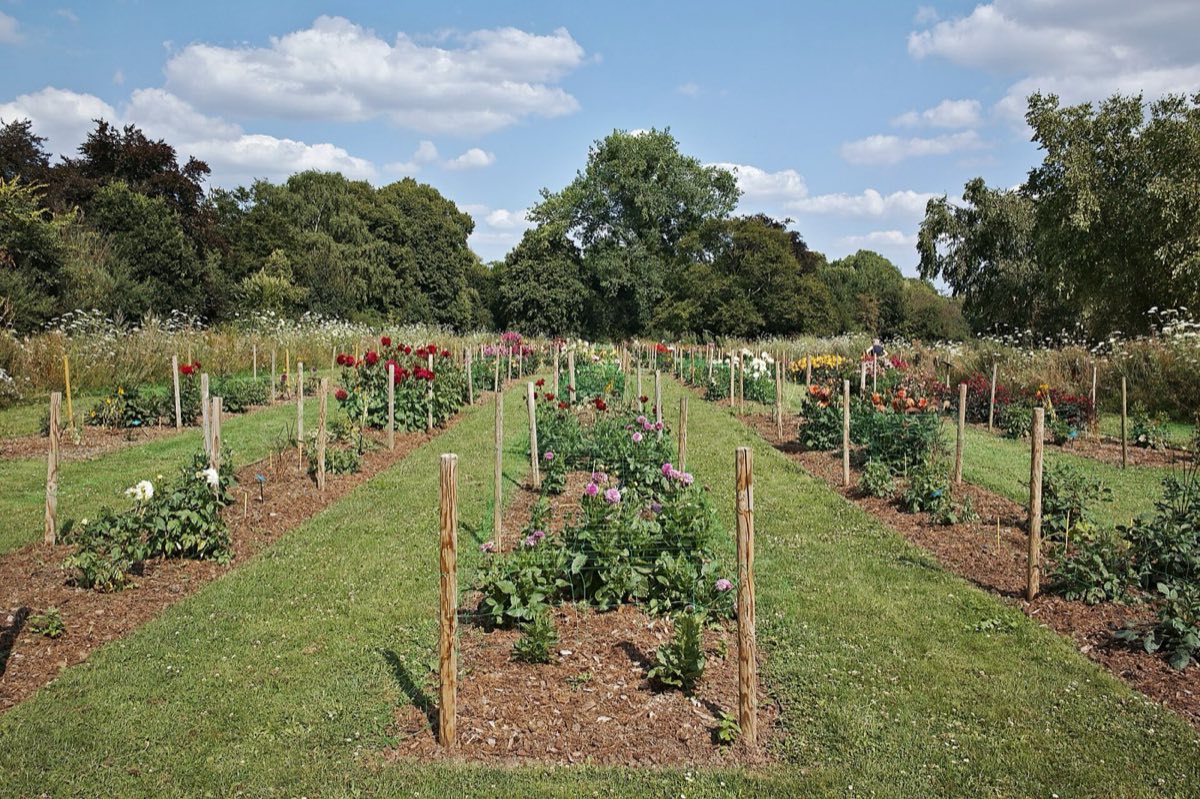
- A single stout stake: a 1.2 to 1.5 m stake beside each plant, pushed in 30 cm deep at planting time. Tie the main stems loosely with soft twine every 30 cm as they grow.
- Three canes in a triangle: better for bushy plants. Push three canes in around the plant and run twine around them at intervals, creating a corral that supports every side shoot.
- Posts and string for rows: in a cutting garden, set posts at each end and every two metres along a row, and run twine down both sides at 40, 70 and 100 cm.
Start tying in from late June and keep going. A plant that has already flopped is hard to straighten without breaking stems. In a windy garden, shorter types such as pompons, singles and collarettes are more forgiving than giants.
Feeding and watering
Dahlias grow from a small tuber to a plant over a metre tall in a few months and then flower continuously for ten weeks or more. That takes a lot of food and water.
Feeding
If the soil was well prepared with manure or compost, scatter a balanced general fertiliser around each plant at planting. That is enough until the buds form. From early July, when flowering starts, give a liquid feed high in potash every ten to fourteen days, the same kind used for tomatoes. Avoid high-nitrogen feeds: they produce masses of soft, dark green leaves, fewer flowers, weaker stems and tubers that store poorly. Stop feeding in early September so the tubers can ripen.
Watering
Dahlias wilt quickly in heat, but they hate cold, waterlogged soil early in the season. Water sparingly until they are growing strongly in late June. From then on, water deeply in dry weather, about 10 litres per plant once or twice a week, rather than a little every day. Water at the base in the morning to reduce powdery mildew, which often appears in late summer on stressed plants.
Once the soil has warmed up, usually by late June, a 5 cm mulch of compost or grass clippings keeps the soil moist and cool. Mulch too early and you keep the soil cold, which slows growth.
Cutting for the vase
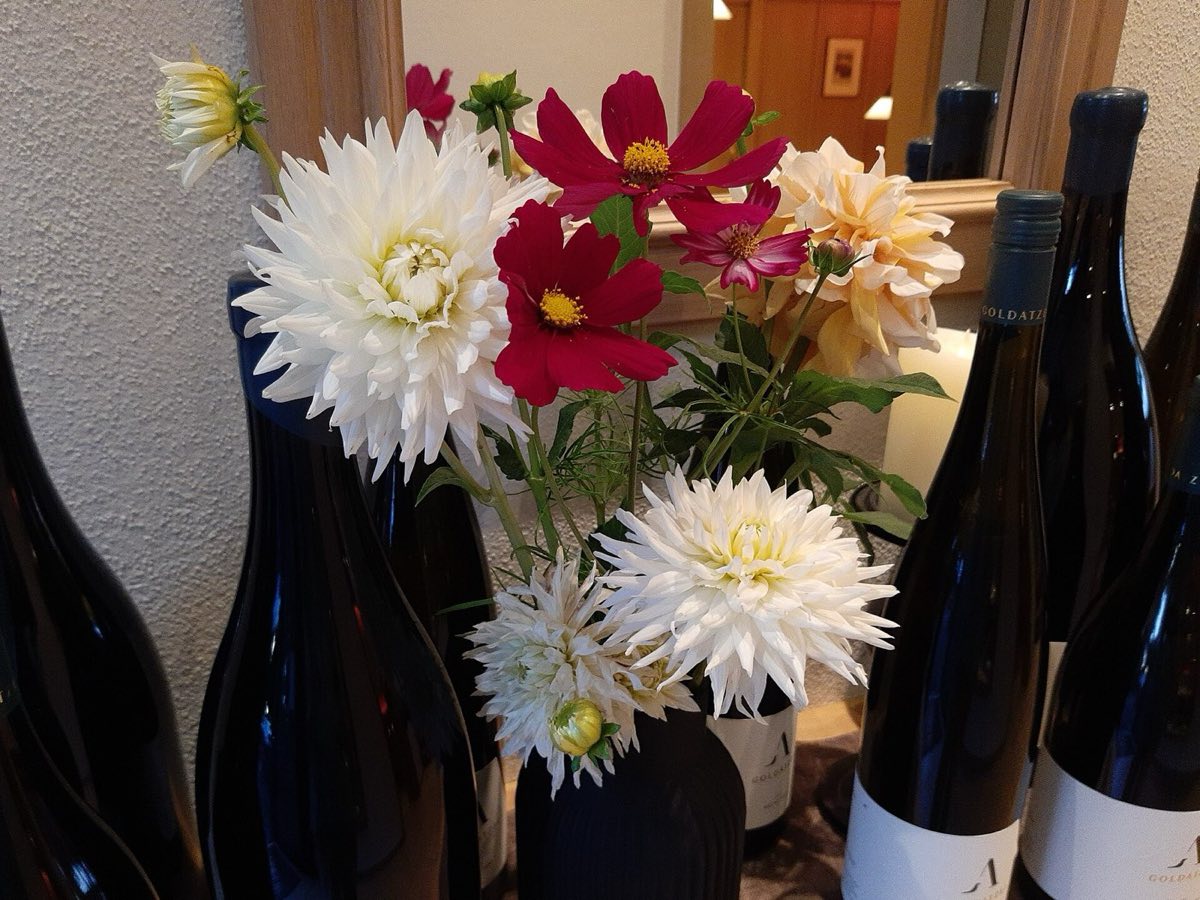
Dahlias are made for cutting. The more flowers you cut, the more the plant produces, since every cut stem prompts new shoots below. A well-grown plant can give fifty or more stems in a season.
When and how to cut
Unlike peonies, dahlias open very little after cutting, so pick them when the flower is almost fully open, about three quarters to fully open. Look at the back of the flower: the outer petals should be firm and fresh. If they are papery or drooping, the flower is past its best and will not last.
Cut in the cool of early morning or evening. Cut long, deep into the plant, just above a pair of leaves or a side shoot. This seems wasteful at first, but it encourages new stems with real length, rather than ever shorter ones.
Conditioning
Put the stems straight into a bucket of water. Indoors, strip the lower leaves, recut the stems and stand the ends in 5 to 8 cm of very hot, freshly boiled water for about a minute, then move them to cool water for a few hours before arranging. This seals the hollow stems and prevents early wilting. Dahlias last four to six days in the vase. Change the water every day or two.
Deadhead regularly the flowers you do not cut, or seed heads will slow down flowering. A spent flower head is pointed and conical; a bud is round and fat. With a little practice you can tell them apart at a glance. There is more on growing dahlias with other cut flowers on the cut flower garden page.
Slugs and earwigs
Dahlias have a few enemies, and two of them are the same every year. General advice on pests is on the pests and diseases page.
Slugs and snails
Slugs are the main danger in late May and June. They love young dahlia shoots and can reduce a newly emerged plant to a stump in one night, and a dry tuber planted outdoors may be grazed again and again as each shoot appears. Starting plants in pots helps because a larger plant survives some damage. Go out with a torch on damp evenings and collect slugs by hand, place traps such as sunken containers of beer, and keep the area around young plants clear of weeds and debris where slugs hide. Encourage frogs, toads, hedgehogs and birds, which eat many of them. The risk drops sharply once plants are 30 cm tall.
Earwigs
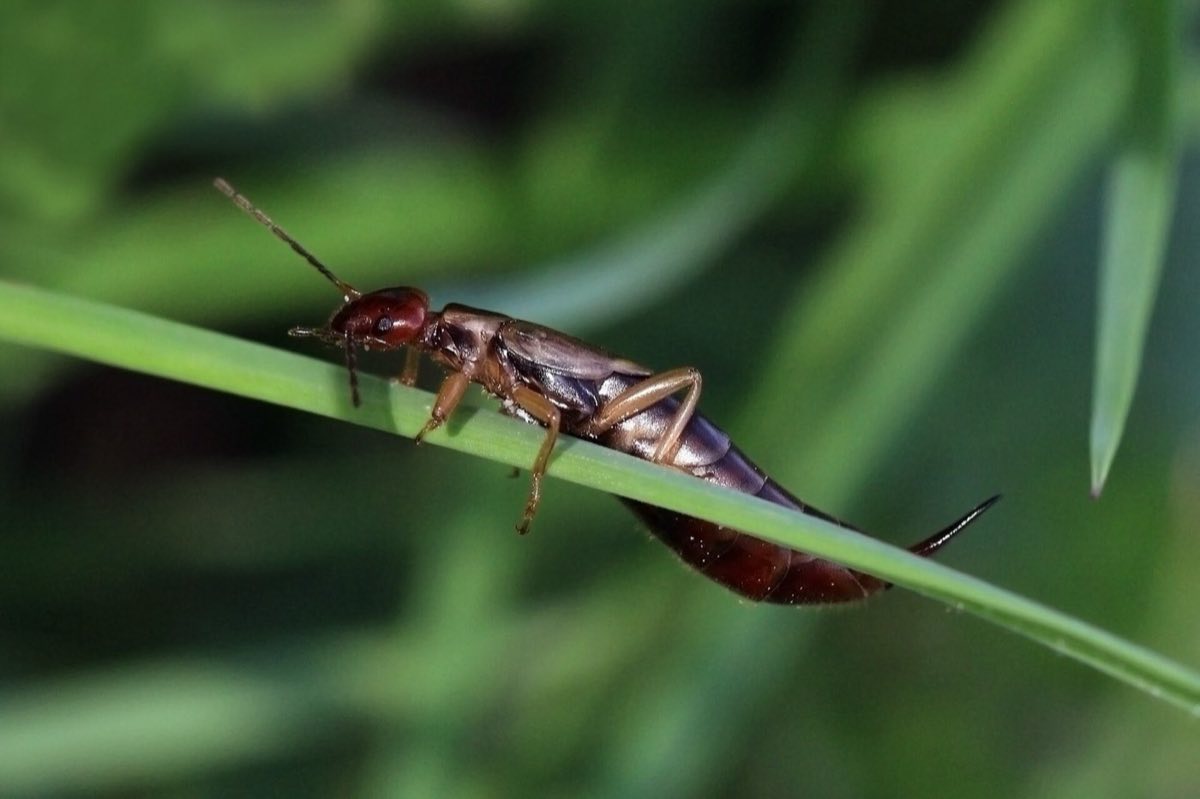
In late summer, earwigs chew ragged holes in dahlia petals and young leaves at night, then hide in the flowers by day. You often find them when you shake a cut stem. Trap them by placing small flower pots stuffed with straw upside down on top of canes among the plants. Earwigs crawl in to shelter by morning; empty the pots away from the dahlias.
Earwigs also eat aphids, so a few are useful. The trouble starts only when numbers are high.
Other problems include aphids on young shoots, red spider mite in hot, dry summers, which causes mottled, bronzed leaves, and powdery mildew in late summer. Keep plants well watered and spaced, and most of these remain minor.
Colour planning
Dahlias come in every colour except true blue, from white and lemon to orange, scarlet, magenta, purple and near black, with many bicolours and blends. That range makes it easy to end up with a clashing jumble. A little planning makes a far better picture.
- Choose a mood first. A hot palette of scarlet, orange and deep yellow, perhaps with dark-leaved singles, sits beautifully with crocosmia, rudbeckias and bronze grasses. A soft palette of apricot, peach, blush and cream looks good with salvias, grasses and silver leaves.
- Use a family of related colours and add one contrast. Shades of apricot and coral with a single deep burgundy, for example, look rich and deliberate.
- Think about size. Several large blooms of different colours side by side overwhelm each other. Mix a few large flowers with plenty of small singles, pompons and balls.
- Use dark foliage. Varieties with bronze or near-black leaves add depth to the border long before they flower.
Colour also changes with the season. In the cool nights of September, many dahlias deepen in tone: pinks become richer, apricots turn more orange. The flowers you photographed in August may look different a month later.
The best thing I did with dahlias was to stop buying one of everything. Five varieties in three related colours give a better border than twenty in all of them, and the vase fills itself.
Lifting and storing tubers
In a garden where the ground freezes from November to April, dahlias must be lifted every autumn. The signal is the first frost that blackens the leaves, usually in late October. Leave them for a few days after that frost; it helps toughen the tuber skins. Lift them before the ground freezes hard.
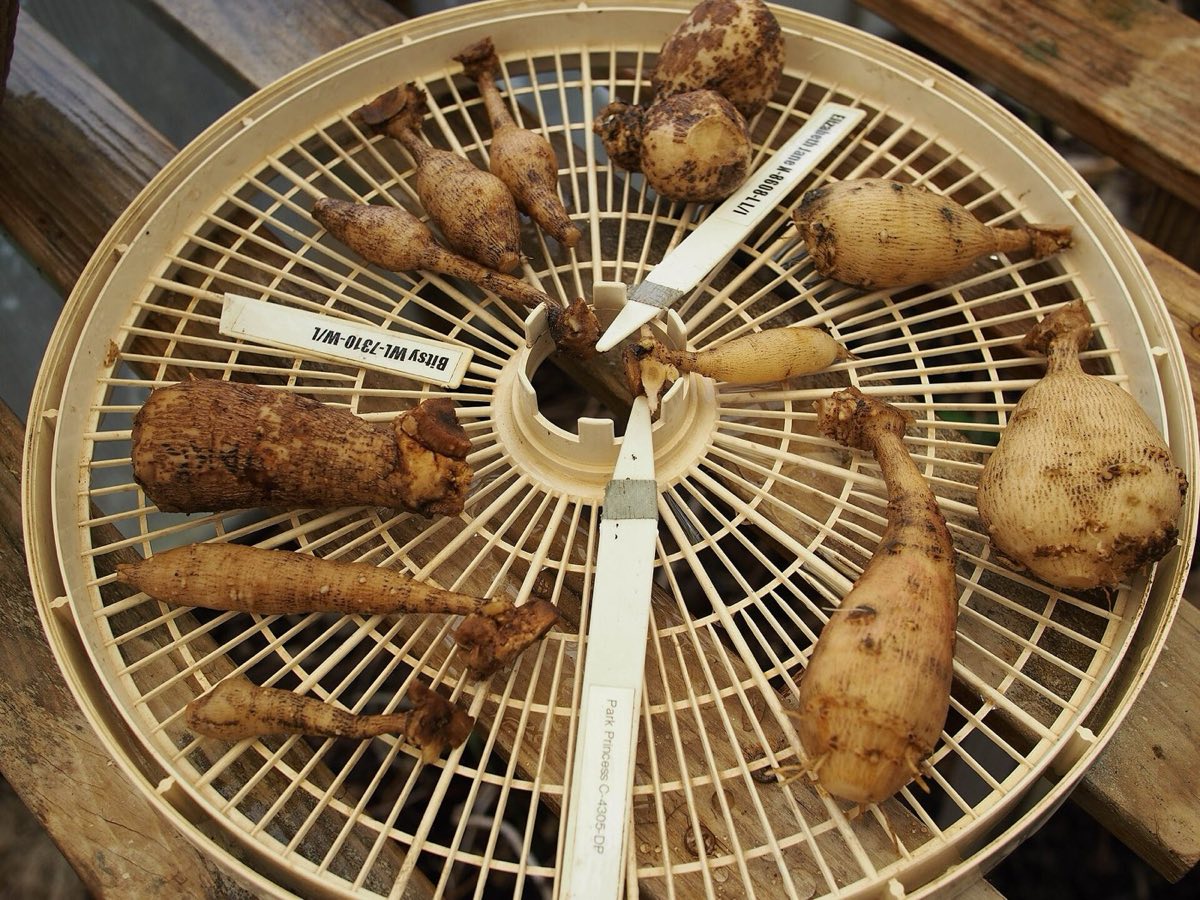
- Cut the stems down to 10 to 15 cm and tie a label to each stump at once. All tubers look the same in winter.
- Loosen the soil in a circle 30 cm from the stem with a fork, then lever up the whole clump. Lift from below rather than pulling the stem, which can tear the clump apart.
- Shake or gently wash off the soil.
- Turn the clump upside down for a few days in a dry, frost-free shed or garage, so water drains from the hollow stems. Water left in the stem rots the crown.
- Pack the clumps in crates or boxes of dry compost, vermiculite, sand or wood shavings, with the crown just showing.
Store them in a cool, frost-free, dark place at about 4 to 8 °C, such as a cellar, cool garage or unheated room. Too warm and they sprout early or shrivel; too damp and they rot; frozen, they die. Check the tubers every month. If one is shrivelling, mist the packing lightly. If you find a soft or mouldy patch, cut it out to healthy tissue and let the cut surface dry.
Dividing tubers
A dahlia clump grows larger every year, and a big clump gives a crowded, weaker plant. Dividing keeps plants vigorous and multiplies your stock. It can be done when you lift in autumn or before starting the tubers in spring. Spring is easier for beginners, because the eyes are swelling and easy to see.
Understanding the eyes
This is the crucial point. A dahlia tuber does not have eyes on its body, as a potato does. The eyes, the buds that make new shoots, are found only on the crown: the woody ring where the tubers join the old stem. A tuber cut off without a piece of crown, or with a broken neck, will stay healthy all winter, but will never sprout.
- Clean the clump so you can see its structure. In spring, wait until the eyes are visible as small pink or green bumps on the crown.
- Cut the old stem down the middle with a sharp, clean knife or secateurs, then work around the crown, cutting it into pieces.
- Each division needs at least one healthy, firm tuber, an intact neck, and a piece of crown with at least one eye.
- Discard broken, rotten or hollow tubers, and tubers without an eye.
- Leave the cut surfaces to dry for a day before storing or potting.
Divisions with one good tuber and one or two eyes make better plants than large chunks with many tubers. In my experience, a medium-sized clump gives three to six good divisions.
Leaving them in the ground
In mild regions with only short, light frosts, dahlias are often left in the ground over winter, especially in well-drained soil. After the first frost, the stems are cut down and the crown covered with a deep mulch, 10 to 15 cm of bark, straw, leaves or compost. In spring the plants grow again and sometimes flower earlier than lifted plants.
The two dangers are cold and wet. Frost that reaches the tubers kills them, and so does soil that stays waterlogged in a wet winter. Even in mild areas, losses are common on heavy clay.
In a garden with frost from late October to April and soil that freezes deep, leaving dahlias in the ground is not a realistic option. A deep mulch will not prevent frost from penetrating over months. Some gardeners try a single plant at the foot of a south-facing wall with a thick blanket of mulch as an experiment, but they should be ready to lose it. Lifting takes an afternoon and saves the stock you spent years choosing. For the rest of the dahlia year, from starting tubers in March to lifting in October, see the garden calendar and the autumn page.