 Mayday Flowers
Flower Garden Calendar
This calendar follows one cold-winter garden through twelve months, from the first snowdrops to the last forced bulbs on the windowsill. For each month it lists what is in flower, what to sow, what to plant and the jobs that matter most, with notes on timing and the mistakes that are easiest to make.
Using this calendar
All the timings here assume a temperate garden with properly cold winters, where the first frost usually arrives in late October and the last one comes some time in April, occasionally later. If your frosts end earlier, move the spring jobs forward by a week or two; if you garden higher up or further inland, hold them back.
The most useful single date in any flower garden is your average last frost. Everything tender (dahlias, cosmos, zinnias, cannas, bedding) is planted out after it, usually with a safety margin of two or three weeks. In this garden that means the second half of May. The second most useful date is the first autumn frost, which ends the season for those same plants and sets the clock for lifting tubers.
Plants listed as "in flower" are the common, reliable ones in each month. The exact week varies from year to year by as much as a fortnight, which is one good reason to keep your own journal. For the detail behind each job, see the seasonal guides to spring, summer, autumn and winter.
January
The quietest month outdoors and the busiest at the kitchen table. On mild days the first snowdrops open, hellebores lift their heads, and witch hazel scents the path. When the ground is frozen or waterlogged, stay off it.
| January | What |
|---|---|
| In flower | Snowdrops, Christmas and early Lenten roses, witch hazel, winter jasmine, winter viburnum, sweet box, Cyclamen coum |
| Sow | Pelargoniums and begonias from seed in a heated propagator; perennials that need cold, such as hellebores and some primulas, in pots left outdoors |
| Plant | Bare-root roses, shrubs and hedging whenever the soil is workable |
| Jobs | Order seeds, check stored tubers, cut old hellebore leaves, prune wisteria, feed birds |
Go through the seed tin before you order anything new, and test doubtful packets on damp kitchen paper. Check stored dahlia and canna tubers once a fortnight: any that have gone soft or mouldy should be cut back to clean tissue or thrown away before the rot spreads. Shrivelled tubers can be revived by misting the storage compost very lightly.
Wisteria gets its winter prune now, cutting the summer-shortened side shoots back to two or three buds. On frosty mornings keep off the lawn, and after heavy snow shake it from hedges and conifers before the weight splays them.
February
The light changes in February even when the weather does not. Days lengthen noticeably, birds start singing in the mornings, and the first crocuses open in any sunny spell. It is the start of the indoor sowing season for slow plants.
| February | What |
|---|---|
| In flower | Snowdrops, winter aconites, early crocuses, netted irises, Lenten roses, witch hazel, dwarf daffodils toward the end of the month |
| Sow | Sweet peas in deep pots, snapdragons, petunias, lisianthus and other slow annuals indoors |
| Plant | Snowdrops and aconites in the green; bare-root roses and shrubs |
| Jobs | Prune late flowering clematis, cut back deciduous grasses, put up nest boxes, start dahlia tubers for cuttings |
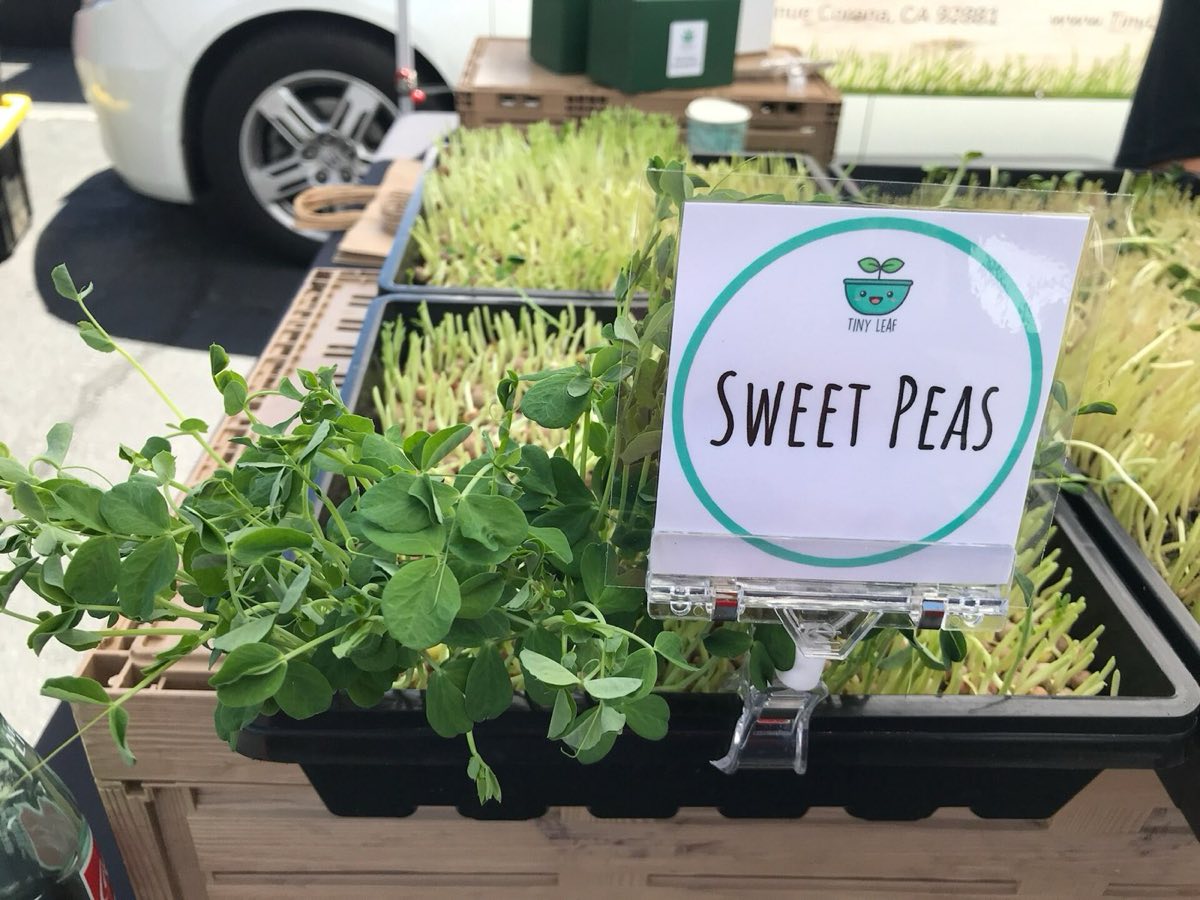
Sweet peas sown now in long pots or cardboard tubes, at about 1 to 2 cm deep, two seeds per pot, make strong plants for setting out in April. Keep them cool once they are up: a cold frame or an unheated porch is better than a warm windowsill, where they become pale and spindly. Pinch out the tip when they have three or four pairs of leaves to encourage side shoots.
Late flowering clematis are cut back to about 20 to 30 cm, just above a pair of fat buds. Deciduous ornamental grasses should be cut to near the ground before the new green shoots appear among the old straw, otherwise you end up snipping the tips off the new growth.
If you want dahlia cuttings, pot up a few tubers in late February in a warm, bright place, with the crown just at the surface. The shoots that appear in three or four weeks can be taken as cuttings when they are 8 to 10 cm long. The dahlias page explains how.
March
March is the month when everything starts at once and the weather refuses to commit. Warm afternoons alternate with snow showers. Bulbs carry the garden, and pruning should be finished before buds break.
| March | What |
|---|---|
| In flower | Daffodils, crocuses, squills, glory of the snow, lungworts, primroses, hellebores, forsythia, star magnolia late in the month |
| Sow | Half-hardy annuals indoors in the second half of the month: cosmos, cleome, tobacco plants, rudbeckia; hardy annuals in modules under cover |
| Plant | Lily bulbs in pots, summer bulbs under cover, perennials, autumn-sown sweet peas into the ground at the end of the month |
| Jobs | Prune roses, butterfly bush and dogwoods; divide summer perennials; cut down old stems; mulch |
The old stems left standing through winter come down now, cut to the base or to 20 cm stubs for overwintering insects. Clear around the crowns, pull the first weeds while they are small, and spread a 5 cm mulch of compost or well-rotted manure on moist soil. Never mulch dry or frozen soil; the mulch keeps the soil in whatever state it was when you covered it.
Divide clumps of summer and autumn perennials that have become congested or bare in the middle: asters, heleniums, phlox, hardy geraniums. Lift the clump, split it with two forks back to back, and replant the young outer pieces. Roses are pruned from late February through March, when the buds are swelling but before leaves open.
April
April is the month of tulips and of false starts. The garden fills with colour, but frost can still come on any clear night. Keep fleece handy and do not be tempted to plant out anything tender.
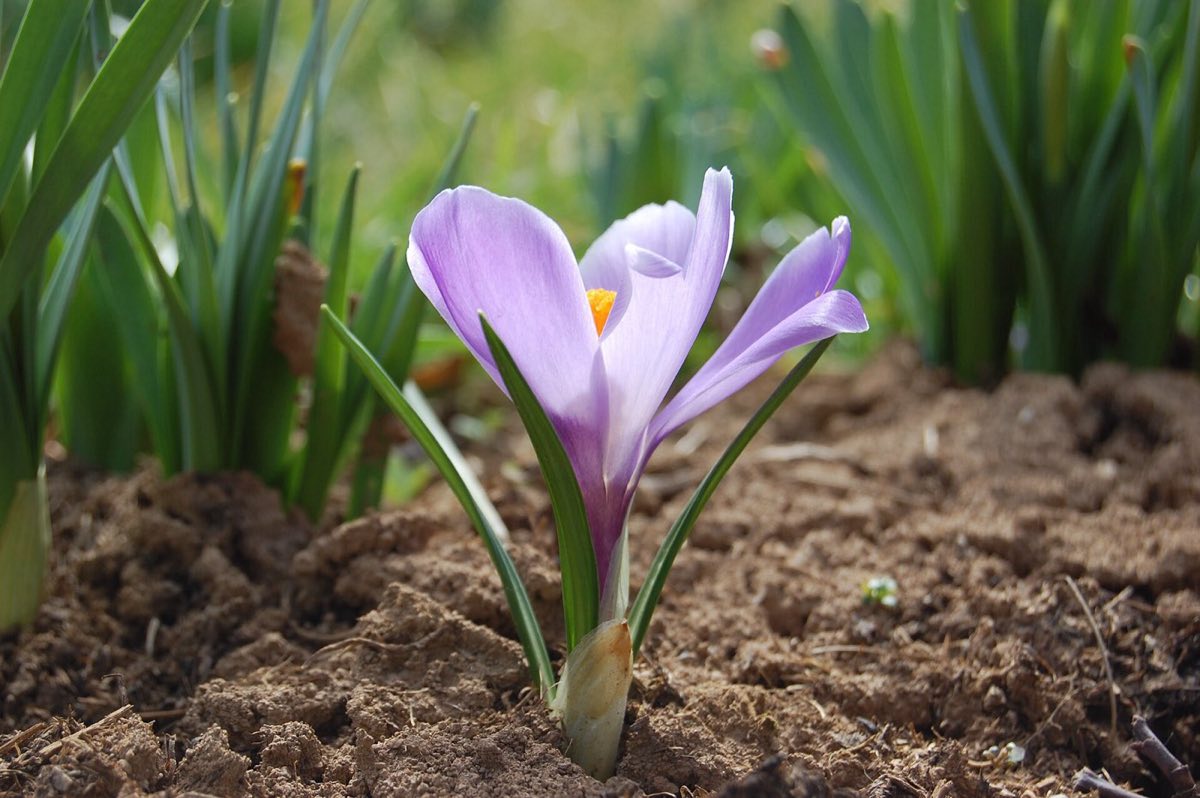
- In flower: tulips, late daffodils, grape hyacinths, snake's head fritillaries, crown imperials, primulas, elephant's ears, pasque flowers, barrenworts, flowering cherries, magnolias.
- Sow outdoors: hardy annuals where they are to flower, once the soil is workable: cornflowers, love-in-a-mist, pot marigolds, larkspur, annual poppies, clarkia.
- Sow indoors: zinnias, sunflowers and the remaining half-hardy annuals early in the month; these grow fast and should not be started too soon.
- Plant: sweet peas against supports, gladioli corms 10 to 15 cm deep in batches for a long season, new perennials, hardened-off hardy annuals.
- Jobs: put plant supports in place, deadhead daffodils, hoe weeds, start hardening off, watch for lily beetle and slugs.
Supports for peonies, delphiniums and other tall perennials should go in now while the shoots are short, so the plants grow up through them. Put in later, supports look clumsy and damage stems. Deadhead daffodils by snapping off the seed pod behind the flower, but leave the leaves for at least six weeks; they are feeding next year's flower bud. Tying or knotting the leaves is a mistake for the same reason.
May
The garden fills out at astonishing speed in May. Late tulips overlap with alliums, irises and the first peonies. The month is also a test of patience, because the last frost can fall in the first week or two and the urge to plant out tender plants is strongest just before it.
| May | What |
|---|---|
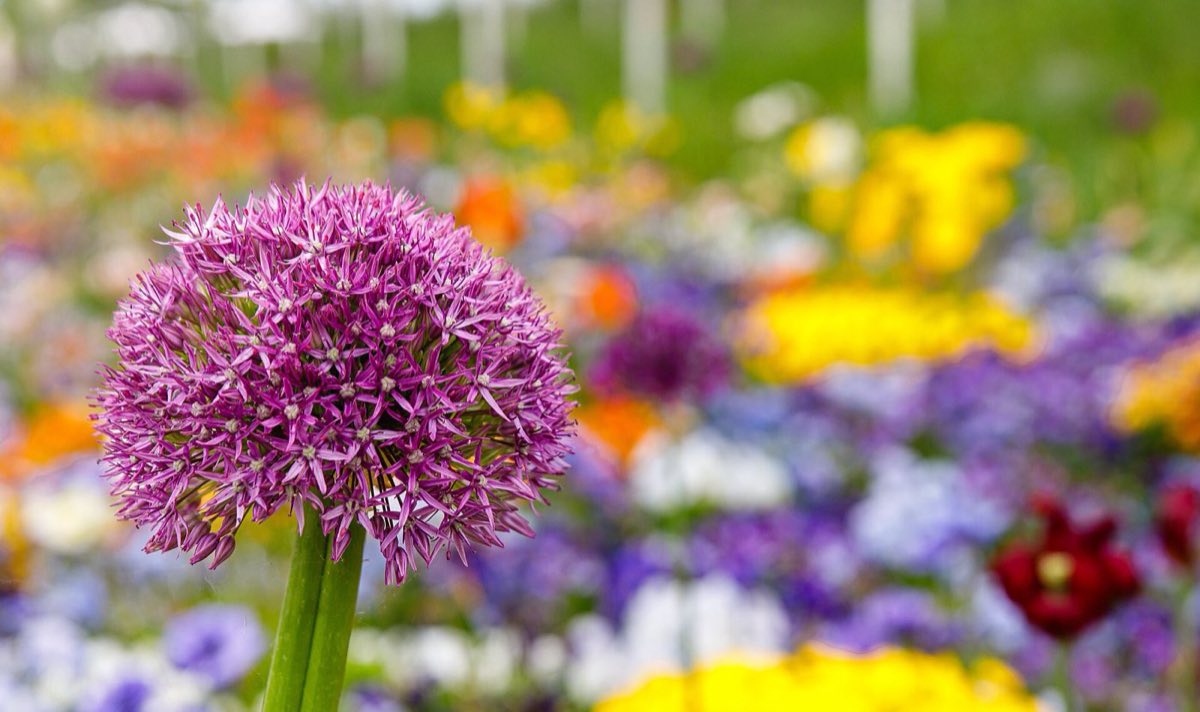
| In flower | Late tulips, alliums, columbines, wallflowers, bearded irises, lilac, wisteria, early peonies, forget-me-nots, the first roses at the end of the month |
| Sow | Biennials such as foxgloves, sweet williams and wallflowers; zinnias, sunflowers and nasturtiums direct outdoors at the end of the month |
| Plant | Dahlias, cannas, cosmos and other tender plants after the last frost, usually the second half of the month |
| Jobs | Thin hardy annuals, tie in sweet peas, cut back some perennials to delay them, deal with tulips |
Thin direct-sown hardy annuals to their final spacing in stages, usually 15 to 25 cm apart. It feels wasteful, but crowded annuals flower briefly and collapse. Sweet peas need tying in every few days now; the tendrils alone will not hold a heavy plant upright.
At the end of the month you can cut back by a third to a half some late-summer perennials such as phlox, stonecrops, heleniums and asters. They flower a little later and on shorter, sturdier stems that need less staking. Cutting only half of a clump staggers the flowering.
Tulips can be left in the ground if they are a reliable perennial type and the soil drains well, or lifted once the leaves have yellowed and stored dry. Most large hybrid tulips flower well for only one or two years and are best treated as annuals. See bulbs for detail.
June
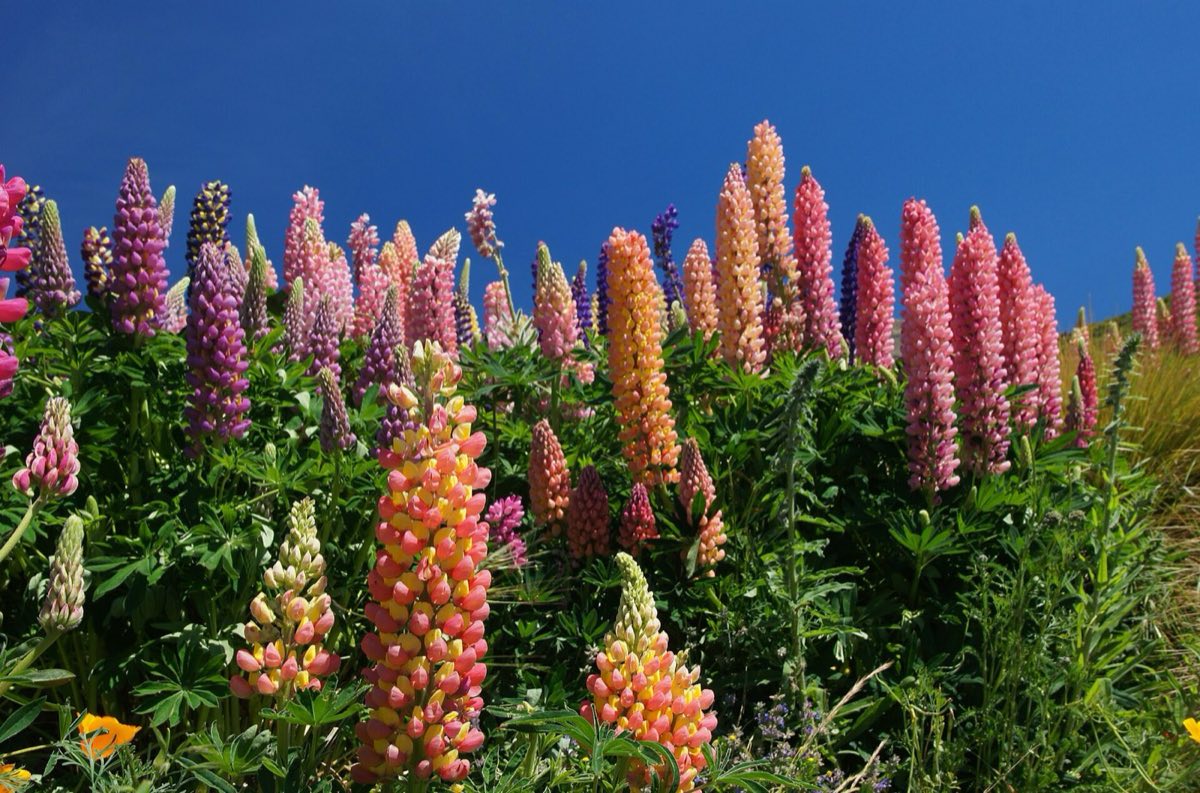
For many flower gardens June is the peak. Peonies, roses, irises and lupins all overlap, the days are long and the borders are at their fullest. The jobs are mainly about keeping things going: watering, cutting, deadheading and staking.
| June | What |
|---|---|
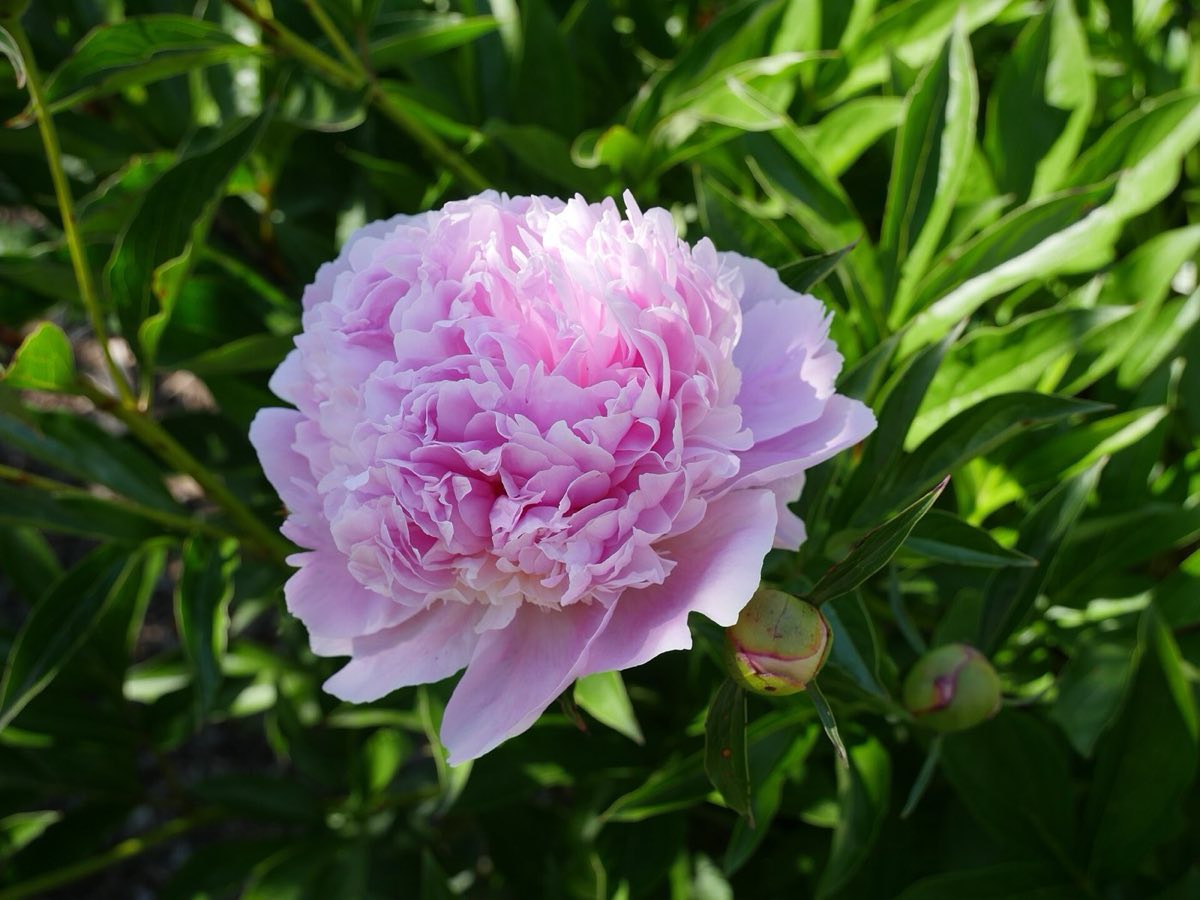
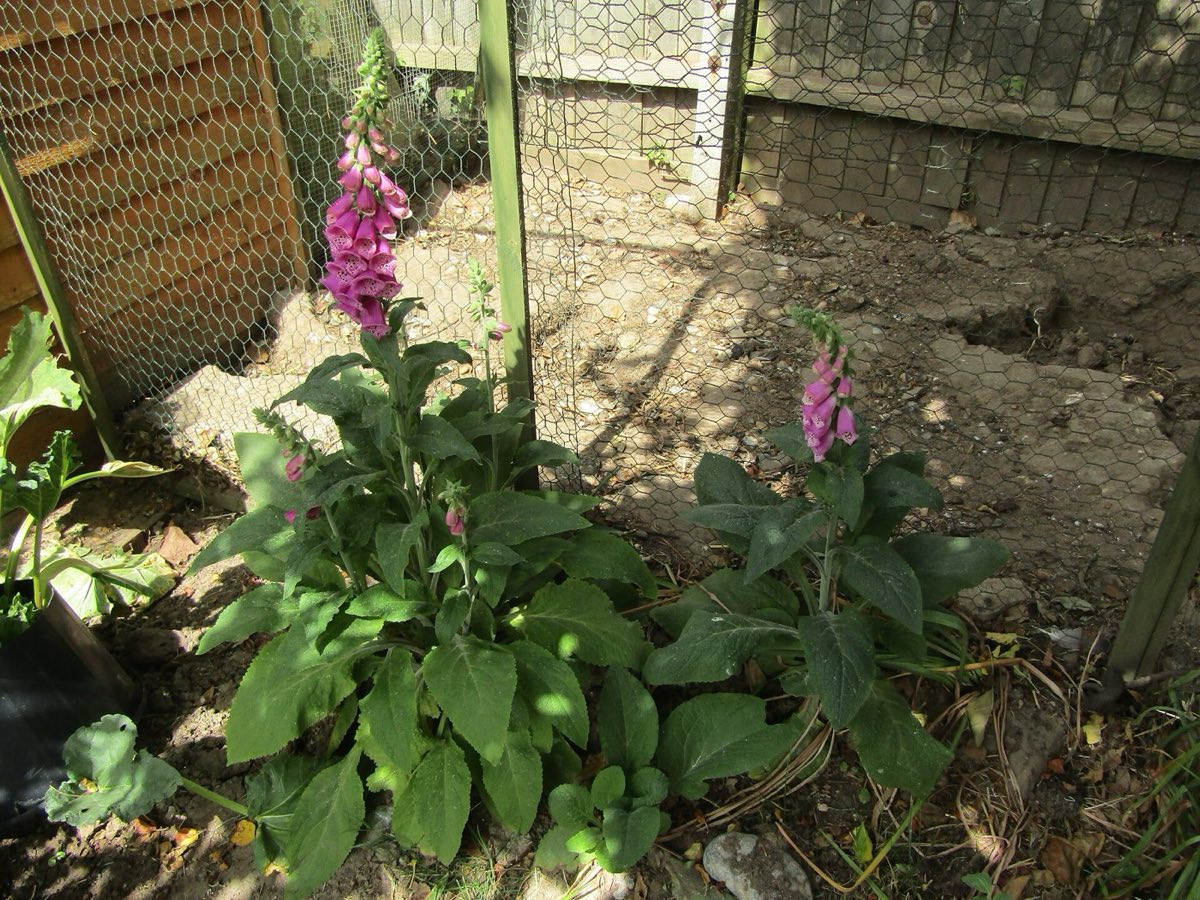
| In flower | Peonies, roses, lupins, delphiniums, foxgloves, bellflowers, hardy geraniums, catmint, sweet peas, oriental poppies, early lilies |
| Sow | Biennials and perennials from seed in a nursery bed or pots; a last batch of quick annuals for autumn colour |
| Plant | Remaining tender plants and summer containers early in the month |
| Jobs | Deadhead roses, pick sweet peas, feed containers, water new plantings, cut back early perennials |
Sweet peas must be picked every two or three days. Once a plant sets seed pods it slows and then stops flowering. Roses that repeat should be deadheaded back to the first full leaf below the spent flower. Peonies are best cut for the house at the soft bud stage, when the bud feels like a marshmallow and shows colour.
After their first flush, oriental poppies, hardy geraniums and catmint can be cut almost to the ground. They produce fresh leaves within a few weeks, and the geraniums and catmint often flower again. Water deeply and less often rather than a little every day: a thorough soak once a week sends roots down, while daily sprinkles keep them at the surface.
July
High summer brings heat, long evenings and sometimes weeks without rain. The emphasis moves from planting to maintaining. Water early in the morning, deadhead regularly and cut flowers for the house freely, since cutting encourages more.
- In flower: lavender, lilies, phlox, coneflowers, yarrow, salvias, repeat-flowering roses, hydrangeas, sweet peas, cosmos, the first dahlias and sunflowers.
- Sow: wallflowers, forget-me-nots and other biennials by the middle of the month; pansies and violas for autumn and spring.
- Plant: autumn flowering bulbs such as colchicums at the end of the month.
- Jobs: harvest lavender, deadhead, water containers daily in hot weather, feed dahlias and tubs, arrange watering for holidays.
Lavender for drying is cut when the first few flowers on each spike have opened. Once flowering is over, trim the whole plant by about a third, keeping a little green growth on every stem. Never cut back into bare old wood, because lavender rarely regrows from it.
Containers in full sun may need watering twice a day in a heatwave. Grouping pots together, moving them into light shade for a week and standing them in saucers all help. A liquid feed high in potash every week or ten days keeps annuals and dahlias flowering into autumn.
The garden in a dry July shows you exactly where the soil is good. The plants on deep, mulched ground carry on; the ones on thin, bare soil give up by the middle of the month.
August
August belongs to the late daisies, the dahlias and the sunflowers. Growth slows in dry weather, and the light already has an autumn tint by the end of the month. It is the main time for collecting seed and taking cuttings of tender perennials.
| August | What |
|---|---|
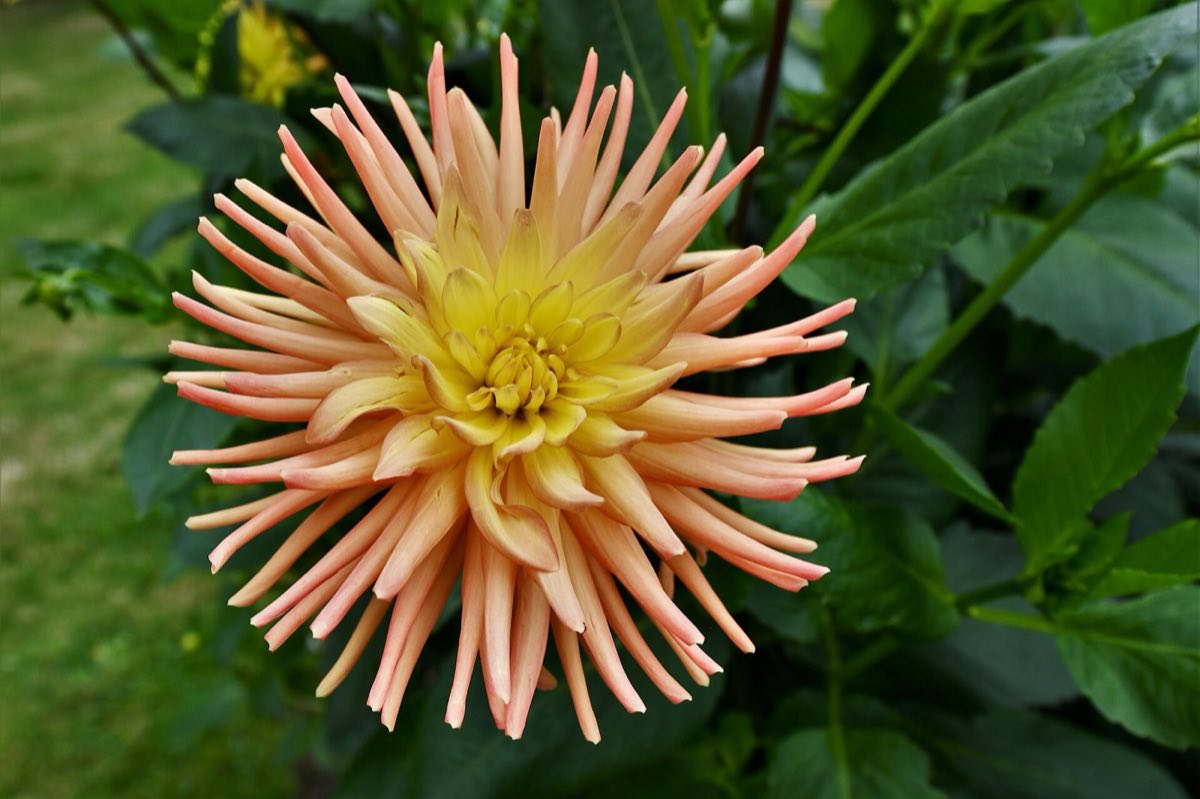
| In flower | Dahlias, sunflowers, crocosmia, rudbeckias, Japanese anemones, agapanthus, phlox, hydrangeas, cosmos, zinnias, the first asters and stonecrops |
| Sow | Hardy annuals for overwintering from the end of the month: cornflowers, love-in-a-mist, larkspur, pot marigolds, annual scabious |
| Plant | Colchicums, autumn crocuses, Madonna lilies very shallowly; order spring bulbs |
| Jobs | Collect seed, take cuttings of pelargoniums, penstemons and salvias, trim hedges, keep deadheading and watering |
Collect seed on a dry day once the pods or heads have turned brown and rattle. Cut whole heads into paper bags, leave them somewhere airy for a week, then shake out and clean the seed. Store it in labelled paper envelopes in a cool, dry place. Seed from hybrid plants will not come true, but seed from species and old open-pollinated annuals usually does.
Cuttings of tender perennials root quickly now. Take non-flowering shoots 8 to 10 cm long, trim below a leaf joint, remove the lower leaves and set them round the edge of a pot of gritty compost. They give you insurance plants for next year in case the parents are lost to winter.
Disbud dahlias grown for cutting by pinching out the two side buds next to each central bud, which gives longer stems and larger flowers. Check stakes and ties after summer storms.
September
September is a second spring for gardeners: the soil is warm, rain returns, and it is the best month of the year for planting perennials and for starting bulbs. The borders are full of asters and stonecrops humming with bees.
| September | What |
|---|---|
| In flower | Asters, stonecrops, dahlias at their peak, Japanese anemones, rudbeckias, cosmos, salvias, colchicums, nerines, late roses |
| Sow | Hardy annuals for early flowers next year; sweet peas at the end of the month in cold areas under cover |
| Plant | Daffodils and most spring bulbs, perennials, biennials into flowering positions, prepared hyacinths for forcing |
| Jobs | Divide spring perennials, collect seed, make leaf mould bins, prepare to bring tender plants in |
Daffodils make roots early and should be planted in September, at about three times the depth of the bulb, so 10 to 15 cm for most. Small bulbs such as crocuses, squills and grape hyacinths go in now too. Tulips are better left until later, as explained under October.
Perennials planted now have months to root before the summer, and they need far less watering than spring-planted ones. Divide spring-flowering perennials such as primulas, lungworts and irises. Set out the foxgloves and wallflowers sown in early summer, 25 to 30 cm apart.
By the end of the month, watch the forecast. Move tender plants in pots, such as pelargoniums and citrus, under cover before the first frost, and have fleece ready for dahlias and late annuals on the first cold night.
October
October usually brings the first frost, and with it the end of the tender plants. Until then the garden can still be full of dahlias, asters and chrysanthemums, and the colour of autumn leaves adds to it.
| October | What |
|---|---|
| In flower | Asters, chrysanthemums, dahlias until frost, nerines, colchicums, late salvias, ivy-leaved cyclamen, monkshood |
| Sow | Sweet peas in deep pots in a cold frame; hardy annuals in milder spots |
| Plant | Tulips from the end of the month, alliums, wallflowers, perennials while the soil is warm |
| Jobs | Lift dahlias after the first frost, bring tender perennials in, rake leaves for leaf mould, clean the greenhouse |
After the first frost blackens dahlia foliage, cut the stems back to about 10 cm, lift the tubers with a fork, turn them upside down for a few days to drain the hollow stems, then store them in dry compost or sand somewhere cool and frost-free, ideally 5 to 8 °C. Label every clump as you lift it; you will not remember which was which in spring.
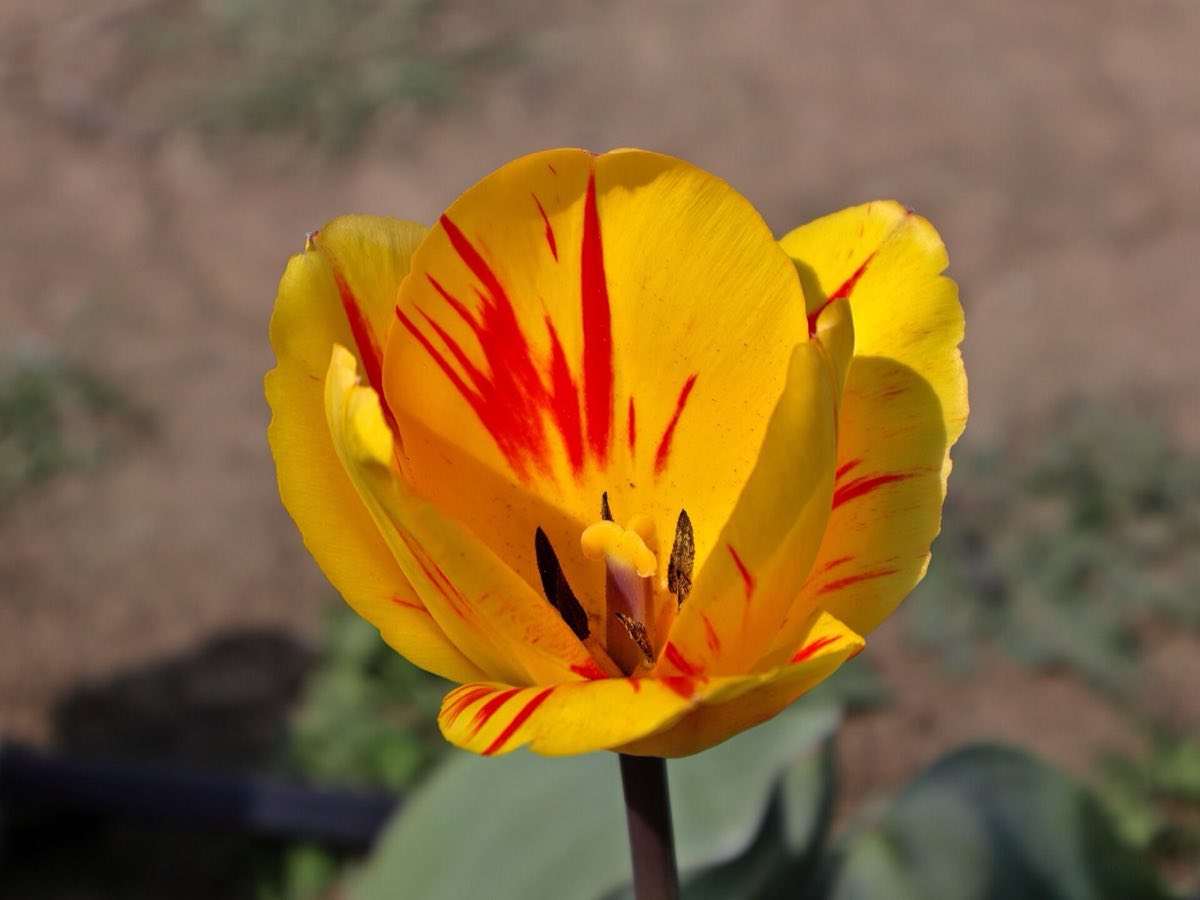
Tulips are planted later than other bulbs, from late October into November, at 15 to 20 cm deep. Cold soil reduces the risk of tulip fire, a fungal disease that spreads in warm, wet conditions. Plant alliums at the same time, roughly three times their own depth.
Fallen leaves are a resource, not litter. Pack them into a simple wire bin or black bags with a few holes, dampen them, and in eighteen months to two years they become leaf mould, the best mulch and seed compost ingredient there is. See soil and compost.
November
The garden goes to sleep in November, but it is a good month for planting woody plants, finishing the bulbs, and tidying with a light hand. The first winter flowers already appear on the viburnums and the winter jasmine.
- In flower: late chrysanthemums, winter flowering viburnum, winter jasmine, mahonia, Algerian iris in a warm sheltered spot, the last asters.
- Sow: sweet peas if not sown in October; seeds of hardy perennials and shrubs that need winter cold, left outside in pots.
- Plant: the last tulips, bare-root roses, hedging, shrubs and trees once they arrive dormant.
- Jobs: protect pots, shorten tall roses against wind rock, clear soft foliage, collect leaves, clean and store tools, start paperwhites indoors.
Bare-root plants are cheaper than potted ones, establish better and are available from now until early spring. Soak the roots in a bucket of water for an hour or two before planting, dig a hole wide enough to spread them out, and plant at the depth of the old soil mark on the stem. For roses, set the graft union a few centimetres below the soil surface in cold areas.
Clear foliage that has turned to slime, such as hostas and peony leaves, but leave sturdy stems and seed heads for birds and insects. Wrap pots of borderline plants and stand them close to the house. If you missed planting tulips, you can still plant them until the ground freezes; they flower a little later but rarely fail.
December
The shortest days of the year leave little light for gardening, but plenty to enjoy: frosted seed heads, scented shrubs, the first Christmas roses and a windowsill of forced bulbs. Most of the work is indoors and in the head.
| December | What |
|---|---|
| In flower | Christmas roses, winter viburnum, winter jasmine, mahonia, sweet box, early witch hazels; indoors forced hyacinths, paperwhites, amaryllis, cyclamen |
| Sow | Very little; seeds that need a cold spell in pots outdoors |
| Plant | Bare-root plants when the ground is not frozen or waterlogged |
| Jobs | Feed birds and keep water ice-free, knock snow off evergreens, check stored tubers, plan and read |
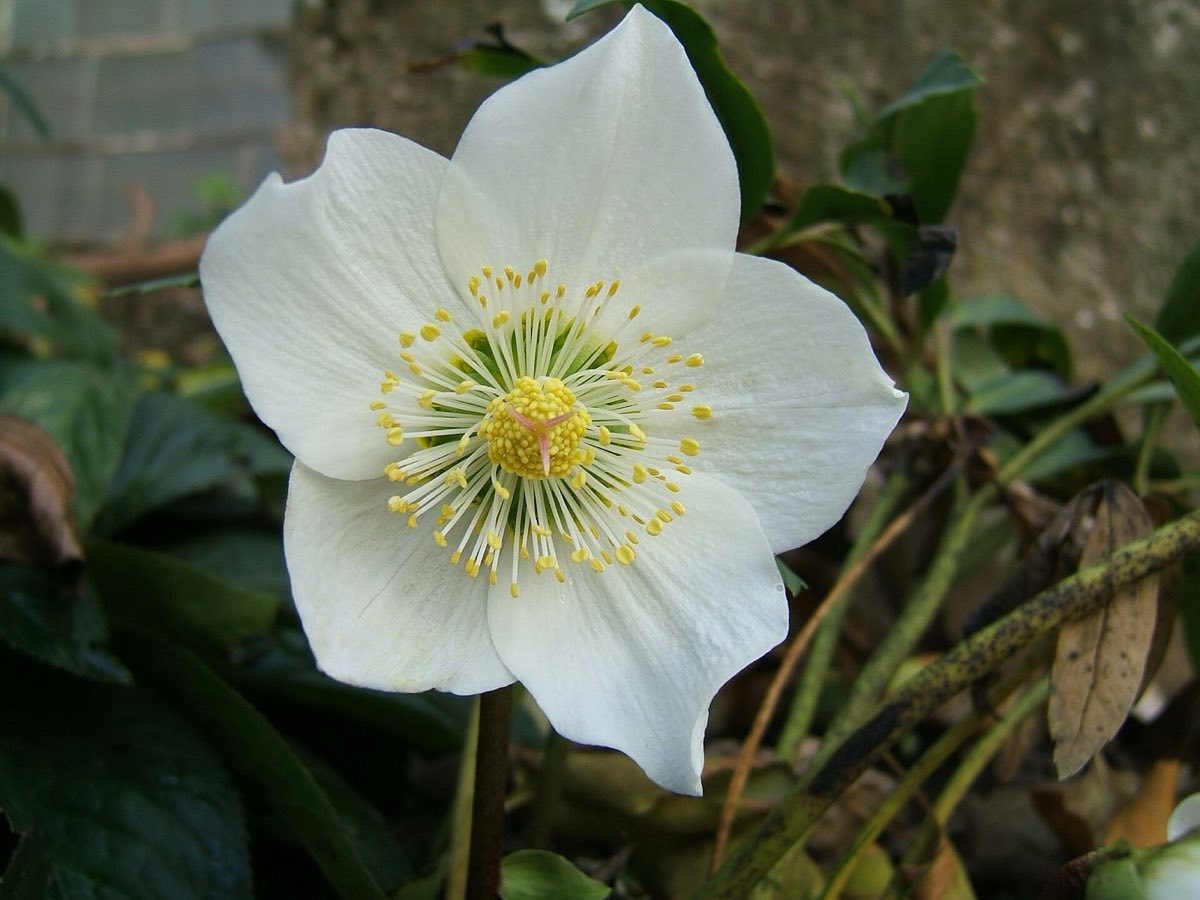
Bring in a few stems for the house: winter viburnum, sweet box and witch hazel scent a room for days, and holly, ivy and conifer trimmings make the rest of the arrangement. Cut lightly and from the back of the shrub.
Prepared hyacinths planted in September come out of the dark now if their shoots are 3 to 5 cm high. Amaryllis started in November will be sending up flower stems; turn the pot regularly so the stem grows straight.
And then there is the notebook. December is the time to write up the year: first and last frost, what flowered when, which plants earned their space and which did not. Next year's plan starts here.