 Mayday Flowers
Autumn
Autumn is the season that makes next year. The borders are still full of late daisies and dahlias, the light turns low and gold, and underneath it all runs a long list of jobs that decide how the garden will look next spring. Then one clear night in October the frost comes and the year turns over.
Asters and late daisies
From late August to the first hard frost, the border is held up by daisies. They are the last big meal of the year for bees, hoverflies and butterflies, and on a sunny September afternoon a clump of asters can be so full of insects that it hums. Most of them are tall, tough, completely hardy and easy to grow, which makes them some of the best value plants in a cold-climate garden.
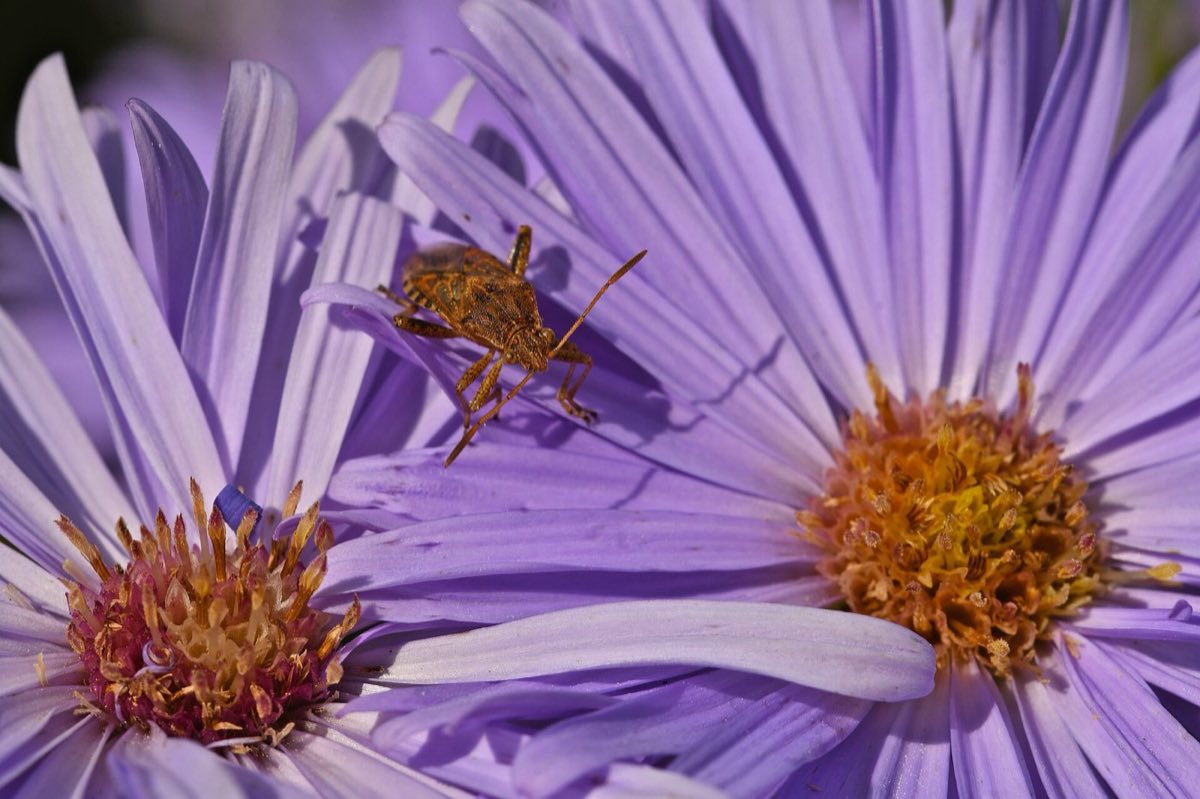
New England aster Symphyotrichum novae-angliae
Flowers: September to October. Height: 120 to 150 cm.
Tall stiff stems topped with sprays of daisies in purple, violet, rose and cerise, with yellow centres. The leaves are rough and slightly hairy, and they are remarkably resistant to mildew. The flowers close at night and in dull weather, which some people dislike, but on a bright day they are dazzling. Stake them in June or give them the Chelsea chop in early summer to keep them shorter.
New York aster, Michaelmas daisy Symphyotrichum novi-belgii
Flowers: September to October. Height: 40 to 120 cm.
Smooth leaves and clouds of smaller flowers in lilac, blue, pink, white and deep purple, with many dwarf types for the front of a border. They are prone to powdery mildew in dry summers, which grey the lower leaves by August. Plant them in moisture-retentive soil, keep them watered in drought, and divide every two or three years to keep them healthy.
Black-eyed Susan Rudbeckia fulgida
Flowers: August to October. Height: 60 to 80 cm.
Golden yellow daisies with a dark brown, almost black, button centre. It spreads steadily into weed-proof clumps and flowers for two months without pause. It is happy in heavy soil, tolerant of some shade and never needs staking. The dark cones stand all winter and look wonderful in frost.
Cutleaf coneflower and tall rudbeckias Rudbeckia laciniata
Flowers: August to September. Height: 150 to 200 cm.
Tall, airy plants with lemon-yellow drooping petals around a green cone. The double form is the old cottage garden "golden glow". They can run at the root and need support, but at the back of a border they are a glorious late wall of yellow.
The annual rudbeckias, grown from seed each spring, are also excellent here. They have larger flowers in yellow, orange, bronze and mahogany, often with banded petals, and they stand up well to the first light frosts. Many of them are technically short-lived perennials but rarely survive a cold winter in the open, so treat them as annuals.
Japanese anemones, sedums and chrysanthemums
Alongside the daisies, three other groups carry the autumn border, each with quite a different character.
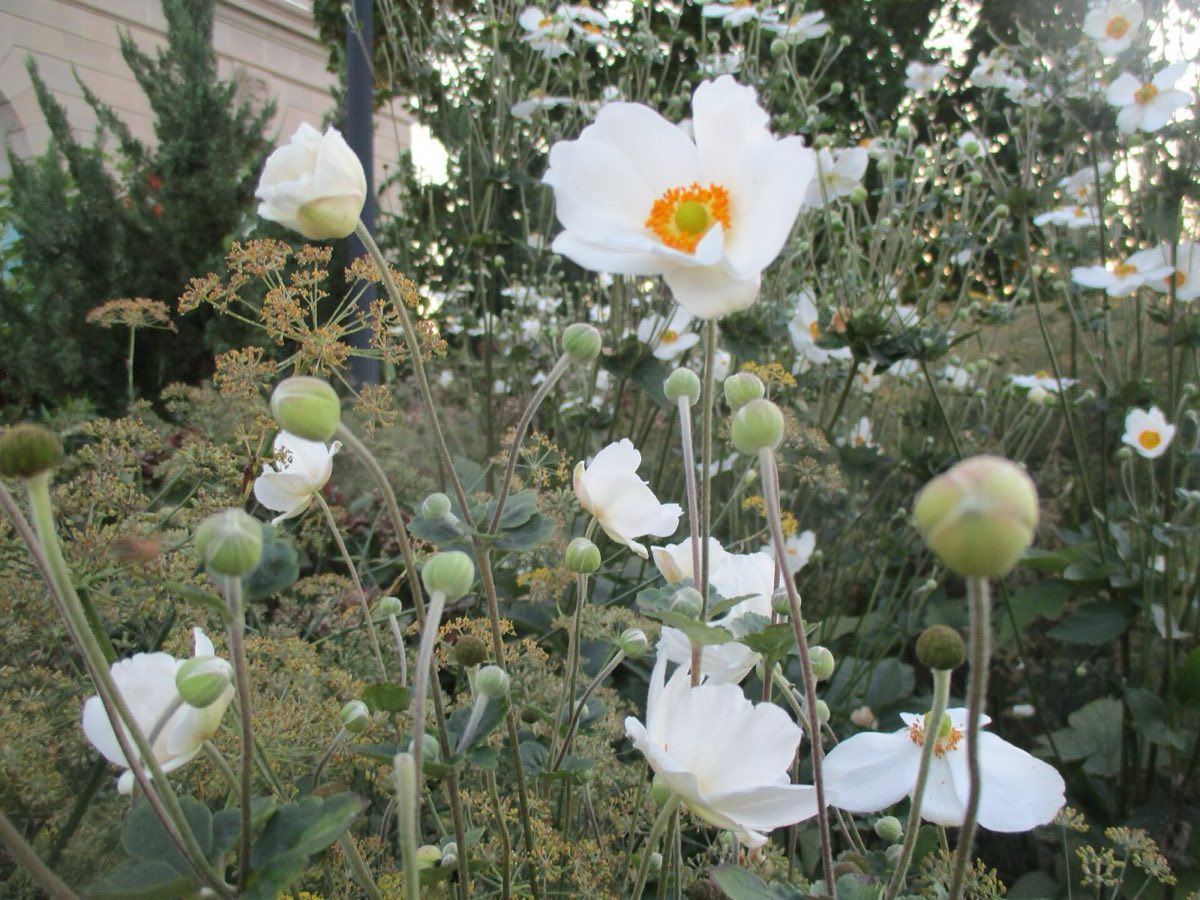
Japanese anemones
Japanese anemones (Anemone × hybrida and Anemone hupehensis) produce saucer-shaped flowers of white or soft pink, with a ring of golden stamens around a green centre, on wiry stems 80 to 120 cm tall. They flower from late August to October and look their best in light shade, where the white ones almost glow at dusk.
They are slow to settle, often doing very little for the first year or two, then spreading by underground runners into large colonies. Once established they are almost impossible to remove, as any fragment of root left in the soil will regrow. Plant them where they can roam, such as under trees or at the back of a shady border, and do not try to move them in autumn; spring is the time.
Sedums
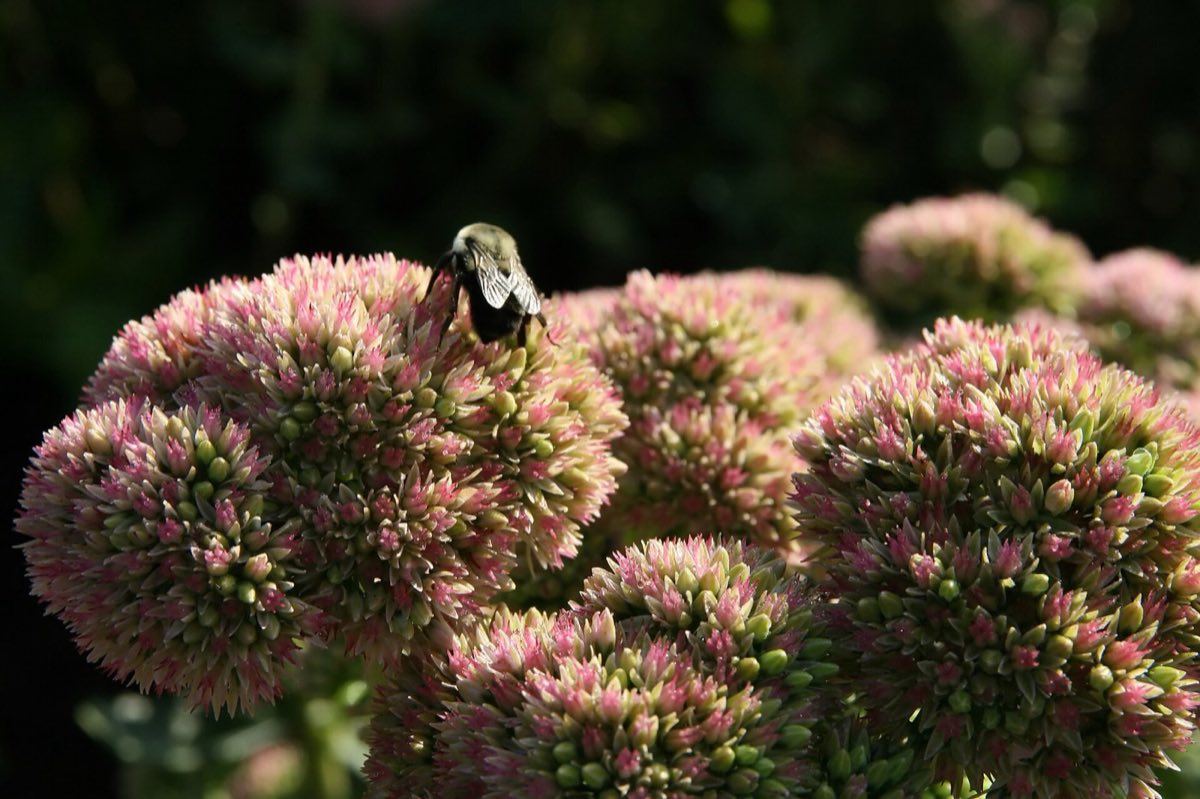
The tall sedums, now properly called Hylotelephium, are succulent perennials with fleshy grey-green or purple leaves and flat heads of tiny star-shaped flowers. The buds form in July and look like heads of broccoli, then open pink in late August and deepen to rust and brick red through autumn. Butterflies and bees cover them on warm days. In winter the dried heads stay upright and catch snow.
Sedums want full sun and well-drained soil, and grow lax and floppy in rich soil or shade. If they splay open in the middle, give them the Chelsea chop in early June next year, or lift and divide them in spring. They are among the easiest perennials to propagate: a single leaf laid on gritty compost will root.
Hardy chrysanthemums
Chrysanthemums are the last flowers of the year, often opening in October and carrying on under light frosts into November. The large-flowered florists' chrysanthemums are tender here and are grown in pots and brought under cover. But the old hardy garden types, with small single, double or pompon flowers in bronze, rust, pink, yellow and cream, will survive the winter in well-drained soil.
Their spicy, bitter scent is unmistakable. Grow them in full sun and a sheltered spot, because the flowers open late and the earlier the frost, the less you see of them. Leave the old stems on through winter as protection for the crown, mulch with a loose layer of leaves, and cut down in spring. If they do die in a wet winter, it is almost always waterlogging at the roots, not cold.
Dahlias in autumn
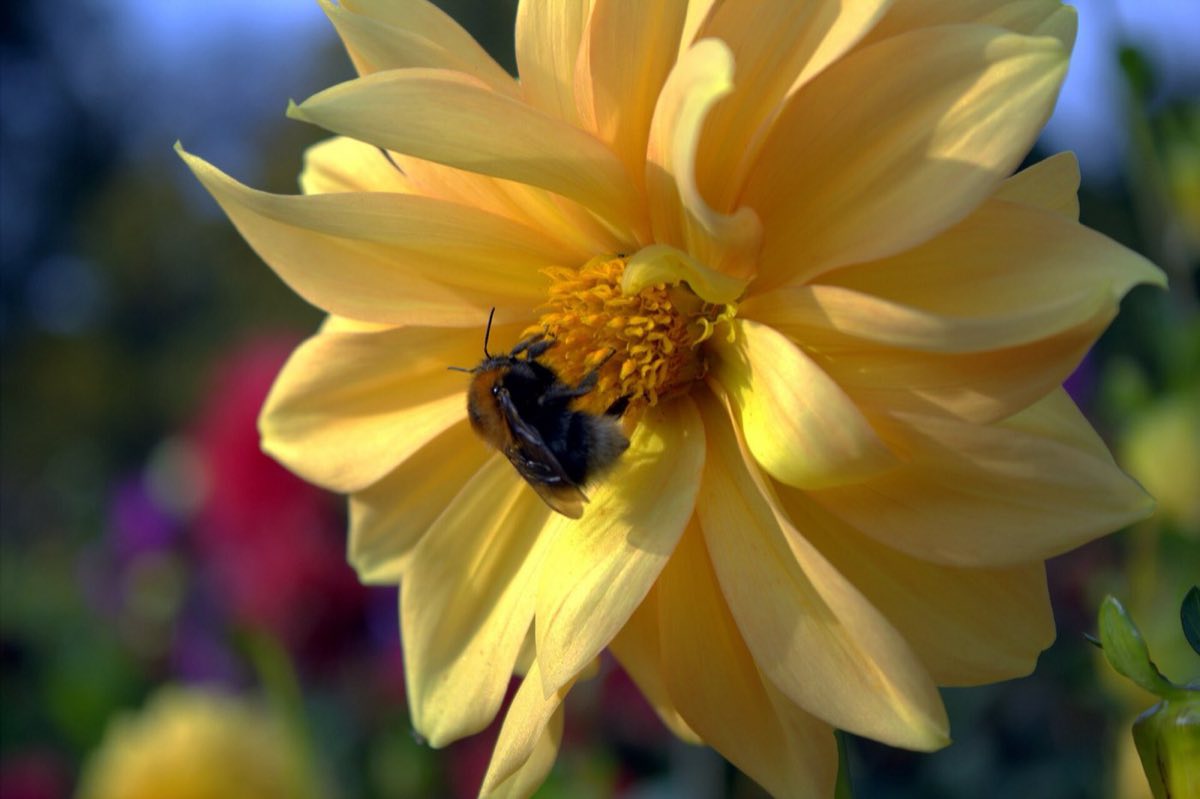
Dahlias are at their absolute best from late August until the first frost. The nights cool, the plants have filled out, and they produce more flowers, with richer colours, than at any point in summer. In this garden they are the reason to go outside every morning in September.
Keeping them going
- Keep cutting. Dahlias are cut-and-come-again plants. Cut stems long, right down to a pair of buds or a side shoot, and new flowers follow. Deadhead anything you do not cut: the faded flowers are pointed and cone-shaped, the new buds round.
- Check the stakes. Autumn storms can split heavy plants at the base. Add a second tie halfway up the main stake and a third near the top.
- Stop feeding by the end of August. From then on the plant should put its energy into ripening the tubers.
- Watch for earwigs. They chew ragged holes in petals at night. Upturned pots stuffed with straw on canes trap them; empty them each morning away from the dahlias.
Autumn is also the time to make notes on your dahlias while they are in flower. Which ones flowered early and hard, which ones were tall and weak, which ones had short stems useless for cutting, which colours actually work together. Label the plants clearly with a tag tied to the main stem before the frost, because once the tops are blackened every dahlia looks the same. The dahlias page covers the full year, from starting tubers in spring to storage.
Late September. Cut a full bucket of dahlias every two days now. The dark red ball dahlia has made forty flowers since August. The tall pale pink cactus is beautiful but snaps in every wind. Next year: stronger stakes for that one, or give it away.
Seed saving
Saving your own seed costs nothing and, over a few years, gives you plants adapted to your own garden. It also gives you more seed than you could ever sow, which is how gardening friendships start.
What to save
Seeds from open-pollinated plants and species come back reliably similar to their parent. Seeds from F1 hybrids, which are labelled as such on seed packets, do not; their offspring are mixed and usually inferior. Plants that cross easily, such as cosmos and zinnias, may give a mix of colours, which can be a pleasure rather than a problem.
| Plant | When ripe | How to collect |
|---|---|---|
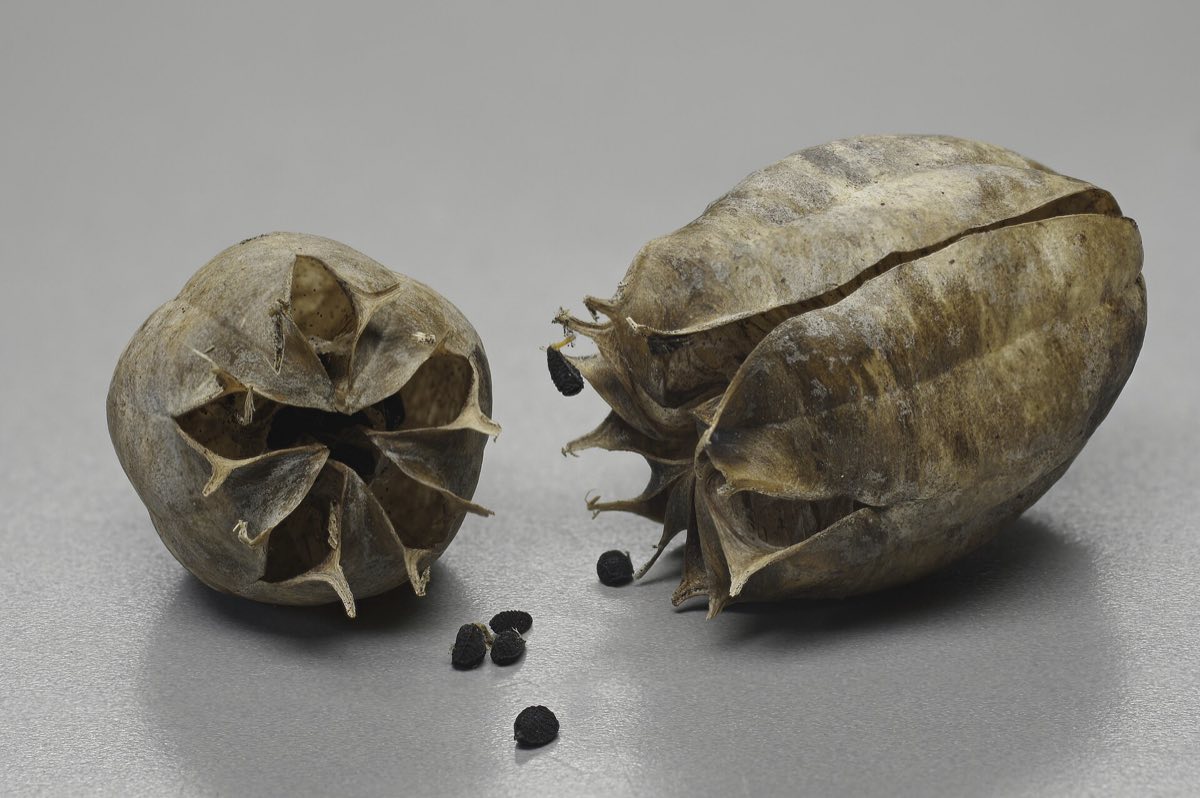
| Nigella (love-in-a-mist) | August to September | Pick the inflated pods when papery and brown; shake seed out |
| Calendula | August to October | Collect the curled brown seeds from dry flower heads |
| Cosmos | September to October | Seeds turn dark and come away easily from the seed head |
| Sweet peas | Late August to September | Leave a few pods to dry brown on the plant; open indoors |
| Foxgloves | Late July to August | Cut spikes when the lower pods split; shake over paper |
| Poppies | August | Cut seed heads when the holes under the cap open; tip out |
| Aquilegia | July to August | Collect when pods turn brown and split at the tip |
| Echinacea | October | Break apart the dry cone; seeds are mixed with sharp chaff |
How to collect and store
Collect on a dry day, after any morning dew has gone. Cut whole seed heads into a paper bag, never plastic, which traps moisture and causes mould. Hang the bags somewhere dry and airy for a week or two until the seed falls freely. Then clean it by shaking it through a kitchen sieve and picking out the bits of stalk and husk.
Store seeds in labelled paper envelopes inside an airtight tin or jar, in a cool dry place. A fridge is ideal. Write the plant, the colour and the year on every envelope. Most flower seed keeps for two to four years; some, such as delphiniums and primulas, lose viability quickly and are better sown fresh or within a year.
Some hardy perennials and biennials are best sown as soon as the seed is ripe rather than stored. Hellebores, primulas and many woodland plants germinate far better from fresh seed sown in autumn in pots left outside over winter. The cold breaks their dormancy naturally. The seeds and propagation page explains this cold treatment in more detail.
Planting bulbs
Every spring flower on the spring page starts with a bulb planted in autumn. Bulbs need a period of cold to trigger flowering, which is why they are planted now and not in spring. The key is timing: early enough for roots to grow before the ground freezes, late enough to avoid diseases that thrive in warm soil.
| Bulb | When to plant | Depth to base | Spacing |
|---|---|---|---|
| Daffodils | September | 12 to 15 cm | 10 to 15 cm |
| Crocuses, scillas, chionodoxa | September to early October | 8 to 10 cm | 5 to 8 cm |
| Dwarf irises | September | 10 cm | 5 to 8 cm |
| Alliums | September to October | 15 to 20 cm | 15 to 30 cm |
| Hyacinths | September to October | 12 to 15 cm | 15 cm |
| Lilies | October, or spring | 15 to 20 cm | 20 to 30 cm |
| Tulips | Late October to early November | 15 to 25 cm | 10 to 15 cm |
How to plant
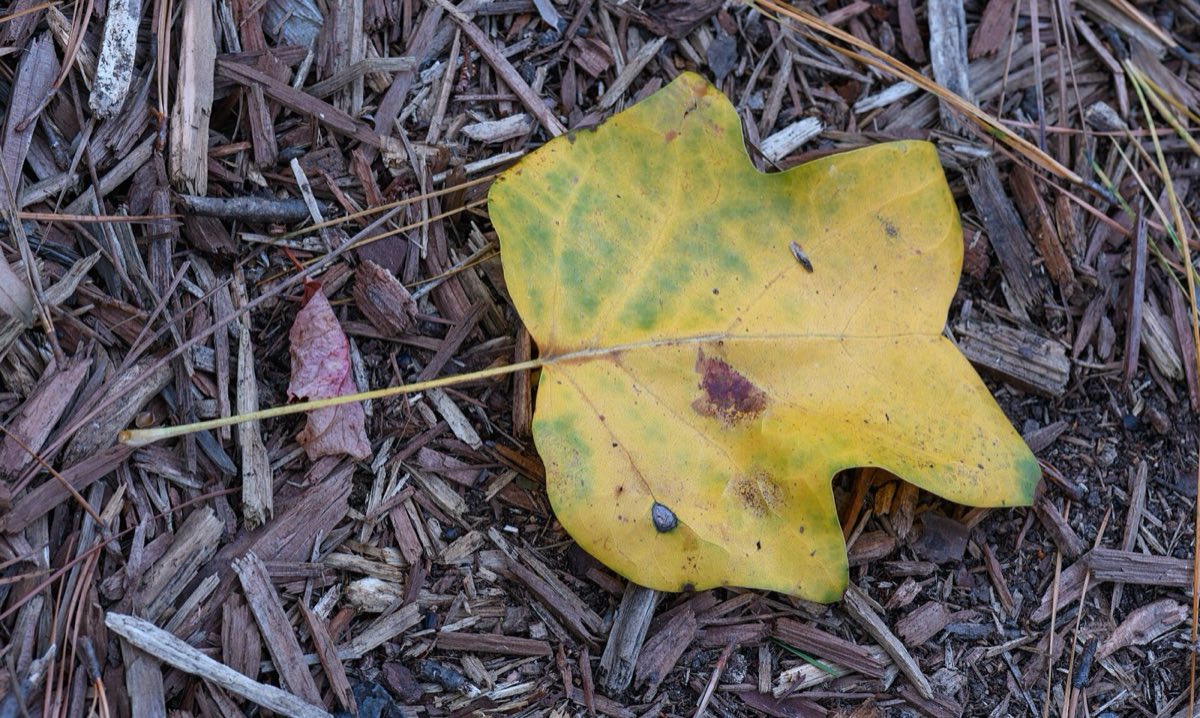
Choose firm, heavy bulbs without soft patches, mould or shrivelling. Small, light bulbs often fail to flower. Plant with the pointed end up; if you cannot tell which end is which, lay the bulb on its side and it will find its way. In heavy soil, add a handful of grit in the bottom of each hole. Plant in groups rather than lines, and in large numbers: a drift of fifty small bulbs looks better than five scattered clumps of ten.
For a long season in one spot, try layering bulbs in a pot or a large planting hole: tulips at the bottom, daffodils above them, crocuses or scillas at the top. They flower in succession from April to May.
Squirrels and voles dig up and eat crocus corms and tulip bulbs in some gardens. Laying a piece of chicken wire over the planted area, just below the surface, stops them; the shoots grow through the mesh in spring. Daffodils and alliums are left alone by all animals. For more detail on choosing, lawns and pots, see the bulbs page.
Dividing perennials
Most perennials benefit from being lifted and divided every three to five years. Over time a clump grows outward and the centre becomes woody, bare and flowerless, while the young growth at the edge keeps going. Division renews the plant, controls its spread and gives you new plants for free.
Autumn or spring?
In a cold climate, timing matters more than in milder gardens. The safe rule is to divide spring and early summer flowering perennials in early autumn, from late August to mid September, when the soil is still warm and they have about six weeks to root before the ground freezes. Divide late summer and autumn flowering perennials, such as asters, sedums, Japanese anemones and grasses, in spring as growth begins. Plants divided too late in autumn have no time to root and are often heaved out of the ground by frost.
| Divide in early autumn | Divide in spring |
|---|---|
| Peonies, hostas, irises (after flowering), day lilies, hardy geraniums, primulas, oriental poppies, lady's mantle | Asters, sedums, Japanese anemones, rudbeckias, phlox, heleniums, ornamental grasses, chrysanthemums |
How to divide
- Water the plant well the day before.
- Cut the stems back to about 10 cm so you can see the crown.
- Dig all around the clump with a spade or fork, at least 15 cm out from the edge, and lever it out with as much root as possible.
- Shake off loose soil. For fibrous-rooted plants, push two forks back to back into the middle and prise them apart. Tough clumps can be cut with a sharp spade or old bread knife.
- Discard the old woody centre. Keep the healthy outer pieces, each with several shoots or buds and a good amount of root.
- Replant at the same depth as before, in soil improved with compost. Firm in and water well.
Peonies need particular care. Divide them in early September, cutting the root clump into pieces each with three to five pink buds, often called eyes, and a good piece of root. Replant with the buds no more than 3 to 5 cm below the surface. Planting deeper is the main reason peonies fail to flower, sometimes for years. More detail is on the peonies page.
Leaves and leaf mould
Fallen leaves are one of the most valuable things a garden produces and one of the most commonly thrown away. Rotted down, they make leaf mould: a dark, crumbly, sweet-smelling material that improves soil structure, holds moisture and is the ideal mulch for woodland plants.
Where to leave leaves
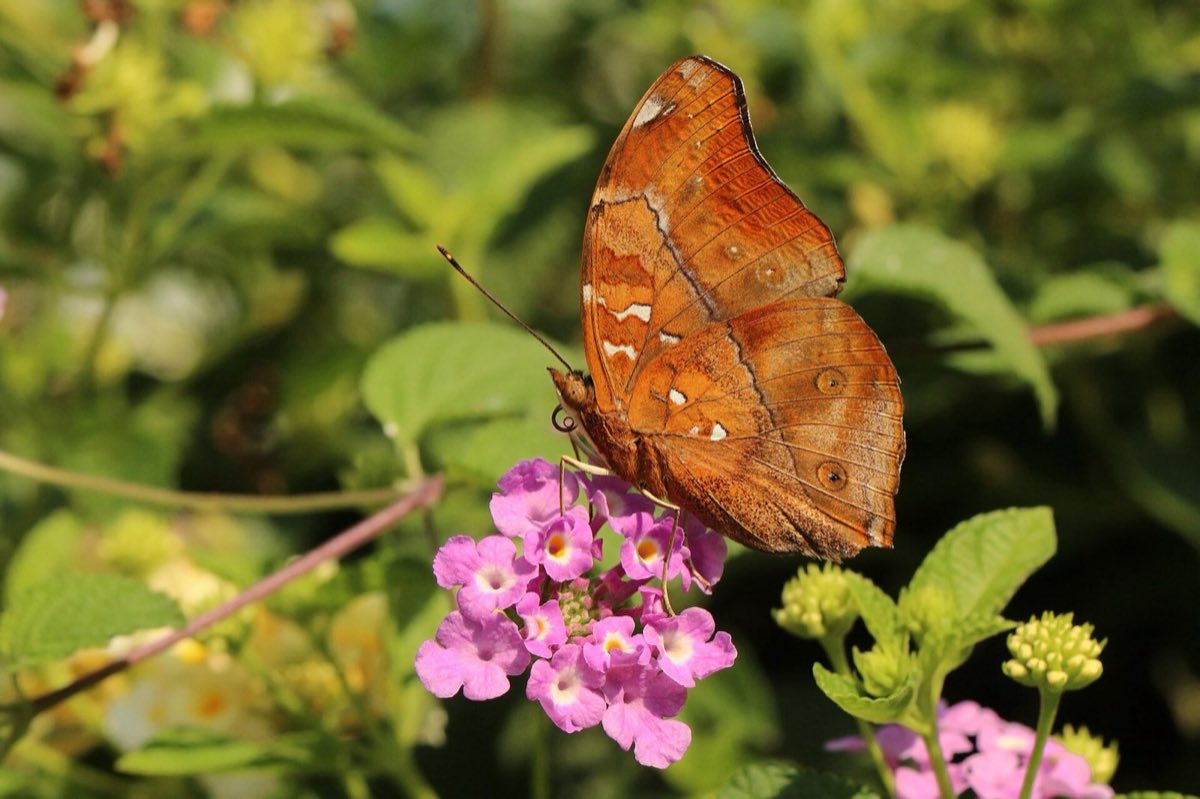
Leaves on lawns should be raked up, as they block light and cause yellow patches and moss. Leaves on paths and on top of small low plants, such as alpine cushions or rosettes of primulas and foxgloves, should be cleared too, as they cause rot. But a light layer of leaves left on bare soil in a border, under shrubs and around woodland perennials does good: it protects the soil from frost and erosion, shelters insects and is gradually pulled in by worms.
How to make leaf mould
Leaf mould is made by fungi, not bacteria, so it rots slowly and does not need the heat and mixing of a compost heap. All it needs is moisture and time.
- In a cage: make a simple square bin from four stakes and chicken wire, about 1 m across. Fill it with leaves, tread them down, and leave it. Water the heap in a dry autumn.
- In bags: stuff damp leaves into old compost or rubbish bags, tie the top, punch a few holes in the sides with a fork, and stack them behind a shed.
Shredding leaves first, for example by running a mower over them on the lawn, speeds things up considerably. After one year the leaves will have broken down enough for a mulch; after two, the result is fine enough for potting compost. Most deciduous leaves are fine. Oak and beech make the best leaf mould. Thick, leathery leaves such as those of evergreens take years to rot and are better put on the compost heap or shredded. See the soil and compost page for how leaf mould fits in with the rest of the soil care.
Lifting tender plants
Dahlias, cannas, gladioli, tuberous begonias and tender salvias cannot survive a winter in frozen ground. They must be lifted and stored frost-free, or brought indoors as plants.
Dahlias
Leave dahlias in the ground until the first frost blackens the leaves; this signals the tubers to go dormant. Wait a week, then on a dry day cut the stems back to 10 to 15 cm. Lift the clump carefully with a fork, starting well away from the stems, as the tubers are brittle and spread wider than you expect. Shake off loose soil and turn the clump upside down in a shed or garage for a few days so water drains out of the hollow stems, which otherwise rot the crown.
When dry, store the tubers in shallow boxes of slightly damp sand, peat-free compost, or wood shavings, in a cool frost-free place, ideally between 4 and 8 °C. Check them once a month through winter. Cut out any soft or mouldy parts and dust the cuts with sulphur or let them dry. If the tubers start to shrivel, mist the storage material lightly.
Gladioli and other corms
Lift gladioli after the leaves start to yellow, usually in early October, before a hard frost. Cut off the leaves, dry the corms for two weeks in an airy place, then break off and discard the old shrivelled corm at the base of the new one. Store in paper bags or trays in a cool dry place.
Cannas and begonias
Canna rhizomes are lifted like dahlias after the first frost and stored in barely damp compost. Tuberous begonias in pots can be allowed to dry off gradually in their pots, then the tubers knocked out, cleaned and stored dry in paper bags at about 10 °C.
Tender perennials as cuttings
Plants like tender salvias, pelargoniums and fuchsias are easier to overwinter as cuttings than as big plants. In late August or early September, take short cuttings of non-flowering shoots, root them in small pots of gritty compost and keep them on a cool, bright windowsill through winter. They take up very little space and make strong plants by May.
Preparing beds for winter
The aim of autumn bed work is not to make the garden tidy. It is to leave the soil protected, the plants safe and the ground ready for spring.
- Clear what is diseased. Remove leaves with blackspot from around roses, mildewed leaves of phlox and asters if badly affected, and any foliage with rust or grey mould. Do not compost these unless your heap gets properly hot.
- Cut back only what looks bad. Soft, mushy perennials such as hostas and day lilies collapse after frost and can be cleared. Plants with stiff stems and seed heads, such as echinacea, sedum, grasses and rudbeckia, should stand until March.
- Weed thoroughly. Perennial weeds such as couch grass and bindweed are easier to see and remove now than when the border is full. Annual weeds left to set seed in autumn mean years of seedlings.
- Mulch bare soil. A layer of compost or leaf mould protects soil from heavy rain and freezing, and worms will pull it in over winter. Do it while the soil is still moist and not frozen.
- Prepare new beds. If you plan a new border, autumn is the ideal time to mark it out and cover the turf with cardboard and a thick layer of compost. By spring the grass underneath will have died and the soil will be ready for planting with very little digging.
- Protect the vulnerable. Mound soil or compost 15 to 20 cm high over the base of grafted roses after the ground cools. Cover borderline plants with a loose layer of leaves or conifer branches once the ground is frozen, not before, or mice will move in.
The first frost
The first frost usually comes in the second half of October here, though in some years it arrives by the end of September and in others not until early November. It is almost always preceded by the same weather: a clear, still afternoon, a cold blue sky and the temperature falling fast after sunset.
What happens
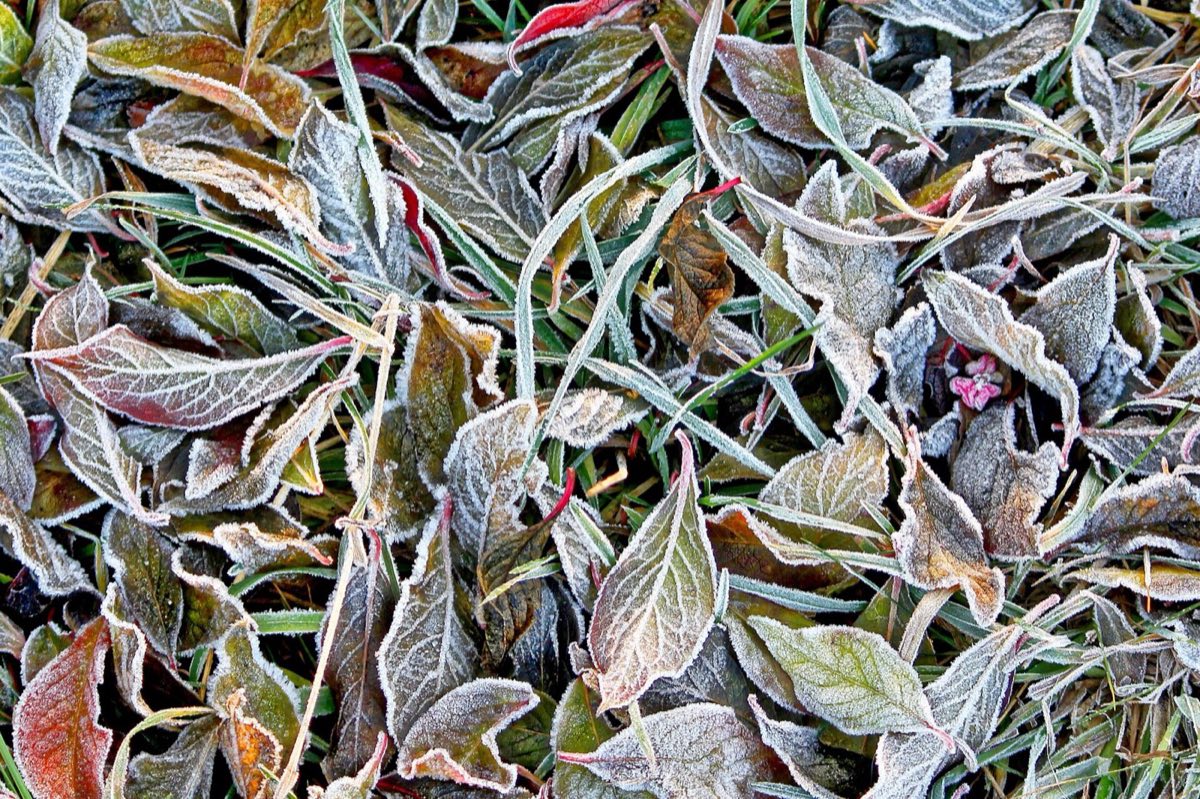
A light frost of minus 1 or 2 °C kills the most tender plants: dahlias, cosmos, zinnias, nasturtiums, cannas, sunflowers and basil. By the next morning their leaves are dark and glassy; by the afternoon they are black and limp. Hardier annuals such as calendula, snapdragons and sweet alyssum often survive several light frosts. Perennials, shrubs and bulbs are unaffected.
A harder frost of minus 4 °C or lower finishes off most remaining annuals and blackens the leaves of hostas and other soft perennials. After it, the garden truly changes.
Getting a few more weeks
Often the first frost is followed by two or three weeks of mild weather. On a night when a frost is forecast, fleece over the best of the dahlias and cosmos can buy several more weeks of flowers. Alternatively, cut everything that is still in good condition the evening before, and fill the house with flowers.
After the frost
Leave frosted dahlias for about a week before lifting, as described above. Clear away blackened annuals and add them to the compost heap. Make the last notes of the year: the date and temperature of the first frost, what survived, what flowered last. Put away hoses before the water freezes in them, and drain outdoor taps.
Frost last night, minus 3 °C at dawn. The garden was white until nine. The dahlias went black by noon, as always. Sad, but also a relief. The year has decided for itself that it is over.
From here the garden moves into its quiet season. Protection, storage and planning are covered on the winter page, and the calendar lists all the autumn jobs in order.